Application Support Engineer Career for Freshers – A 27-Year IT Consultant’s Honest Guide to the IT Job Nobody Talks About (2026)
An application support engineer career for freshers is not the job most BTech students dream about. Nobody puts it on their LinkedIn headline in first year. It rarely comes up when a junior asks me, “Sir, which IT job should I target?” But after 27 years of watching where my students actually land good, stable offers, I keep coming back to this one role. It pays fairly from day one, it hires freshers from every branch, and it teaches you things a pure coding job never will.
I want to walk you through this honestly, the way I would in a one-on-one counselling session in my Bhubaneswar office. No inflated numbers. No “guaranteed six figures” nonsense. Just what an application support engineer career for freshers actually looks like in India in 2026.
What an Application Support Engineer Actually Does
Let me start with the confusion, because most students get this wrong before they even apply.
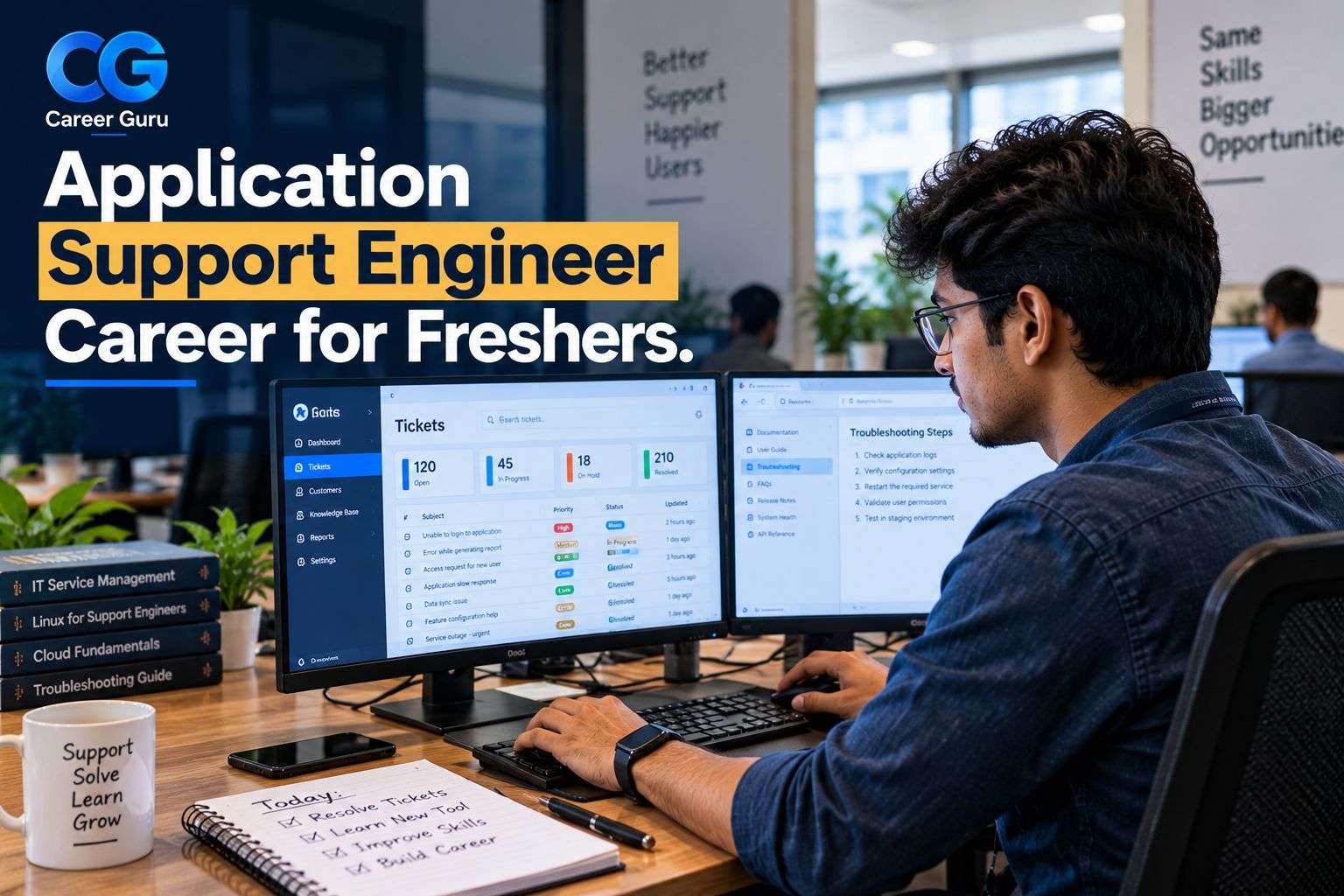
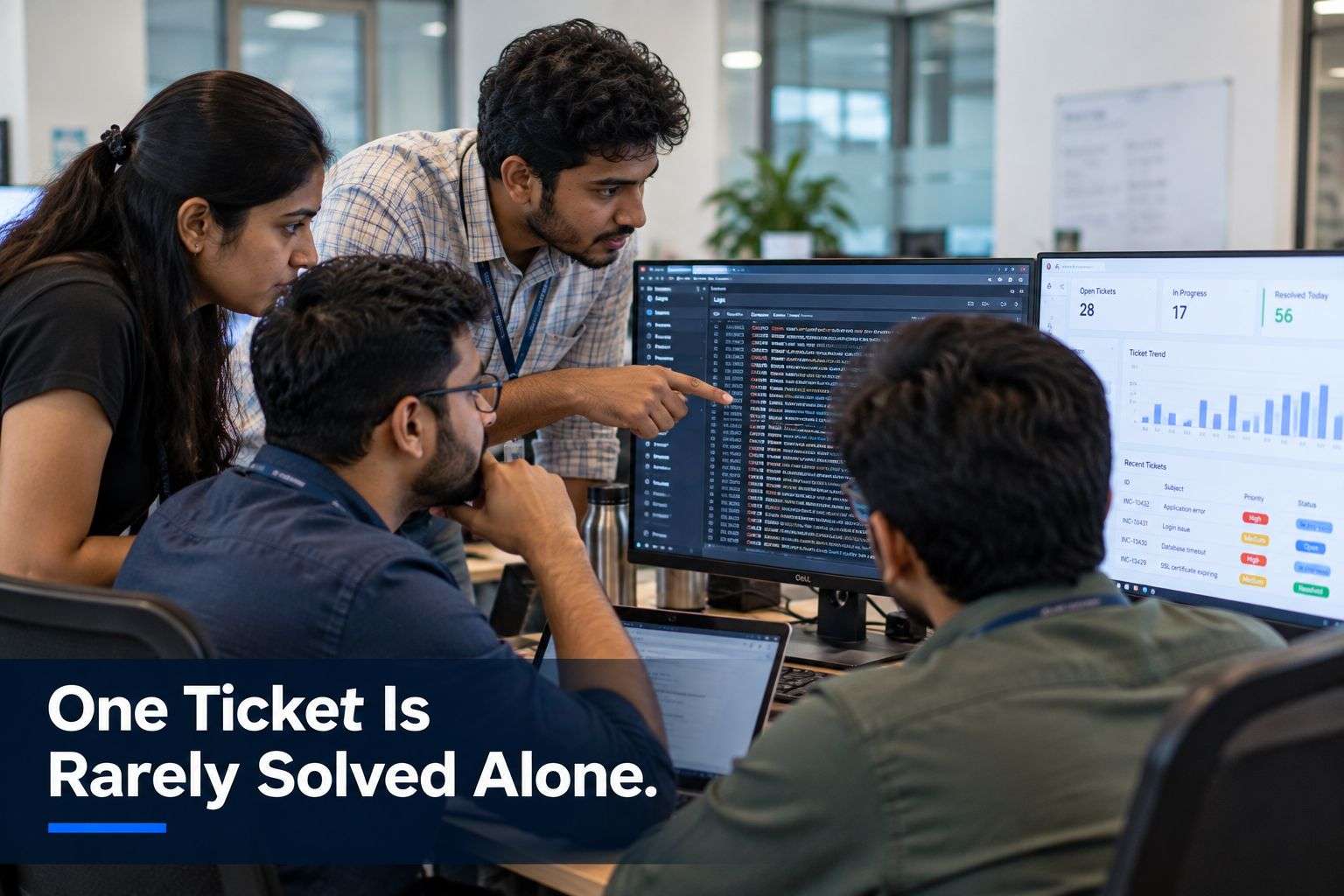
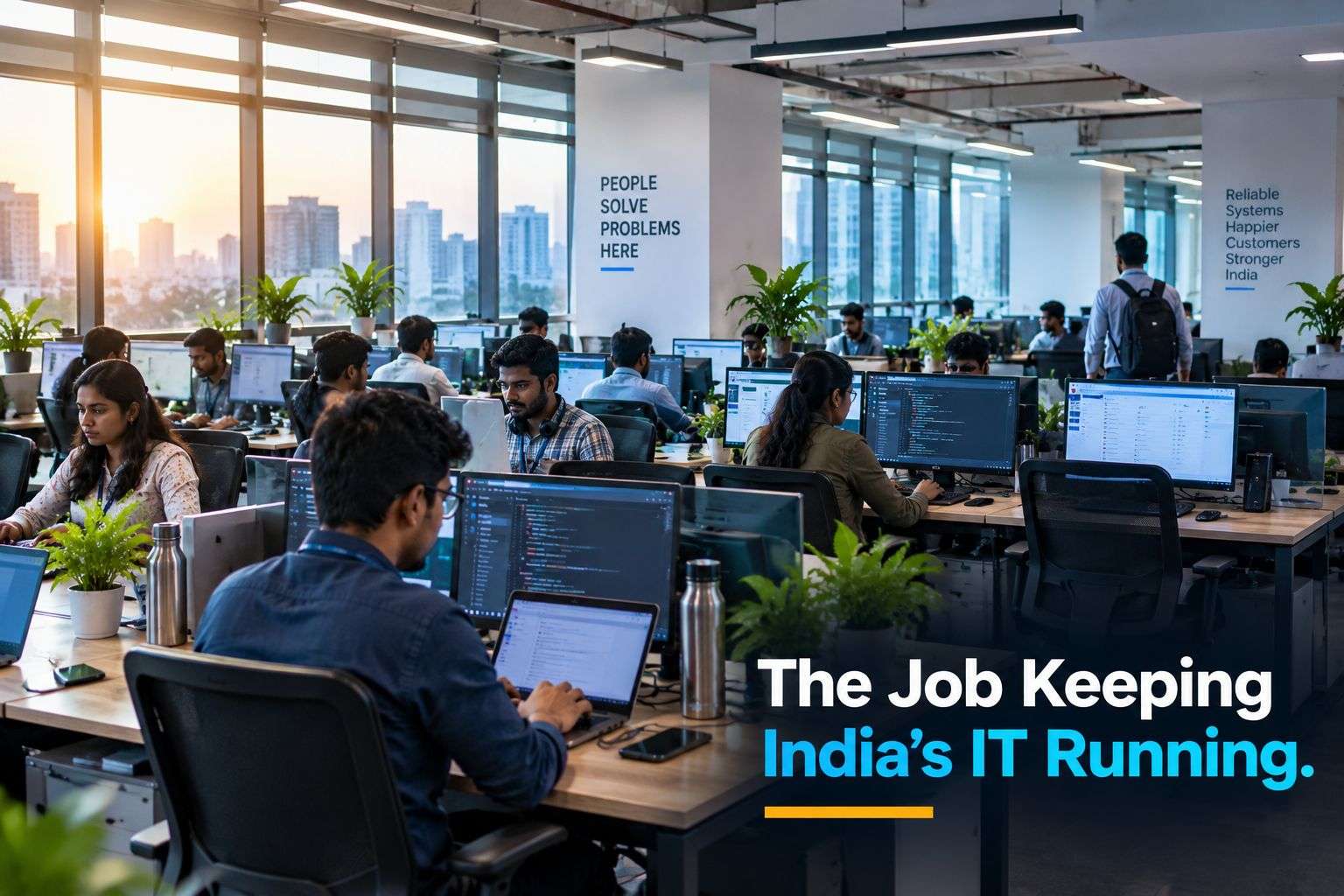
An application support engineer is the person who keeps software running after it has already gone live. Developers build the application. Testers check it before launch. Once it is out in the world — being used by a bank, a hospital, an e-commerce company, an airline — something goes wrong. A payment fails. A report does not generate. A login page throws an error at 2 AM. That is where an application support engineer steps in.
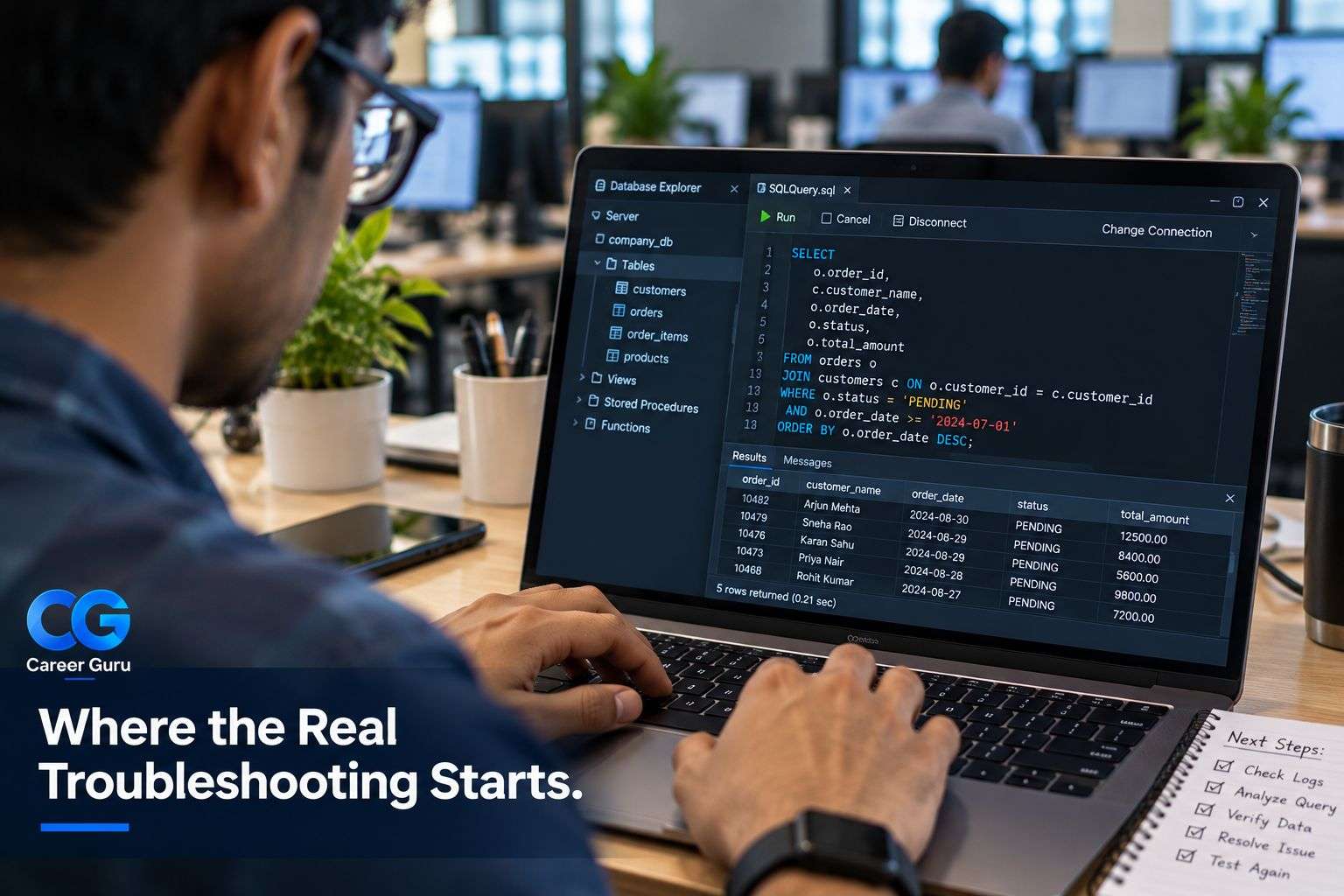
You are not writing the whole application from scratch. You are reading logs, running SQL queries, checking servers, and figuring out why something broke. Then you either fix it yourself or bring in the right person who can. It is detective work more than anything else, and it happens on live systems that real people depend on.
This is exactly why an application support engineer career for freshers works so well for students who like problem-solving but do not necessarily want to sit and write code for eight hours a day.
Why This Career Deserves a Serious Look, Especially in Odisha
Every semester, I meet students from Rourkela, Berhampur, and Cuttack who assume there are only two real IT paths — software developer or nothing. That assumption costs them options.
Application support hires from every engineering branch, not just Computer Science. I have placed Mechanical and ECE students into support roles because banks, insurance companies, and product firms care more about your troubleshooting mindset than your degree stream. The role also tends to open in bulk during placement season, because every company running software in production — which is nearly every company today — needs people to support it.
For a student choosing between a shaky “we will train you” offer and a real application support engineer role at a known company, I would pick the real role almost every time. It is one of the more dependable entry points into an IT career, and that dependability matters more than students realise until they are three months into a job search.
What an Application Support Engineer Career for Freshers Actually Pays in 2026
Here are honest numbers, not the inflated ones you see on job portal banners.
Fresh graduates typically start between ₹2.5 LPA and ₹4.5 LPA at service companies and mid-sized firms. At larger product companies, GCCs, and BFSI players, that entry range moves closer to ₹5 LPA to ₹6.5 LPA, especially if you walk in already knowing SQL and a Linux basics course. Salary data from Glassdoor and Payscale for 2026 puts the median entry-level figure in the ₹2.5 to ₹4.2 LPA band across India, rising quickly once you cross two to three years of experience and pick up ITIL or cloud exposure.
By year three or four, many application support engineers I have counselled are earning ₹7 to ₹10 LPA, particularly those who moved into product-based companies or BFSI technology teams. This is not a dead-end job. It is a steady climb, and the climb tends to be faster than students expect.
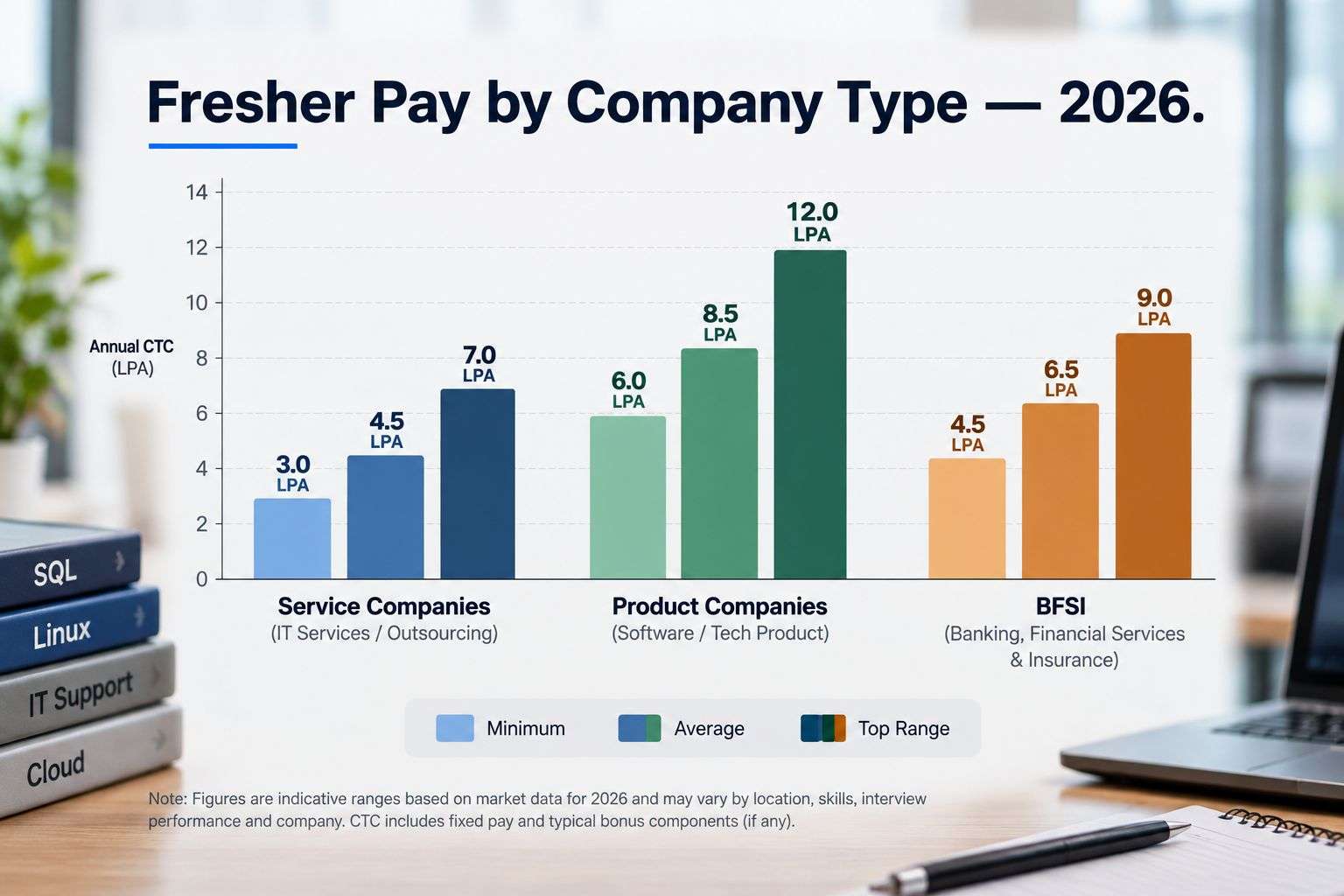
Compare this against our honest fresher salary guide for 2026 before you decide anything — knowing where support pay sits against other entry roles helps you negotiate properly.
L1, L2, L3 — Understanding the Application Support Career Ladder
This is the part nobody explains clearly to freshers, so let me break it down simply.
L1 support is the first point of contact. You log tickets, do basic troubleshooting, and follow a documented process. Most freshers start here. It sounds junior, but it is where you learn how real production systems behave under pressure.
L2 support is where you start digging deeper — reading logs, running queries, understanding why an issue happened, not just logging that it happened. Most application support engineers move here within twelve to eighteen months if they are proactive about learning.
L3 support works closely with developers on the trickiest issues, the ones L1 and L2 could not resolve. This is where deep technical knowledge and a few years of experience come together.
Understanding this ladder matters because it shows you an application support engineer career for freshers is not a flat, static job. It has a clear growth path built into how the role itself is structured, which is rare for an entry-level position.
Skills You Actually Need to Start
Forget the long, intimidating skill lists you see online. Here is what genuinely moves the needle for a fresher application.
SQL — you will write queries constantly to check data and diagnose issues. Basic to intermediate SQL is non-negotiable.
Linux or Unix basics — most enterprise applications run on Linux servers. Knowing how to navigate a terminal, check logs, and read file permissions puts you ahead of most fresher applicants.
One ticketing tool — ServiceNow, Jira Service Desk, or Zendesk. You do not need mastery, just familiarity with how tickets move through a system.
Basic networking concepts — understanding what an API call is, what a timeout means, how a request travels from a browser to a server.
Communication — this genuinely surprises students. A large part of this job is explaining a technical issue to a non-technical stakeholder without causing panic. I have seen technically weaker candidates get hired over stronger ones purely because they communicated calmly under pressure in the interview.
None of this requires a four-year specialisation. A focused two to three month effort — a short course plus hands-on practice — is usually enough to build a credible application support engineer career for freshers.
Read our top tech skills employers actually look for in freshers for the broader picture beyond this specific role.
Which Companies Hire Freshers for Application Support in India
This role shows up everywhere once you start looking. Accenture, TCS, Wipro, and Cognizant run large support teams for banking, insurance, and retail clients. Product companies like Oracle, Cadence, and Broadcom hire application support engineers to support their own enterprise software. Global Capability Centres — the same ones expanding into tier-2 India — run entire support functions locally, because production issues need round-the-clock coverage close to the business.
BFSI is a particularly strong hiring ground for this role, since banking applications cannot afford downtime. If that interests you, read our guide on BFSI IT jobs for freshers alongside this one — the two overlap more than students expect.
Application Support vs Software Development — Which Should You Choose
I get asked this constantly, so let me answer it plainly.
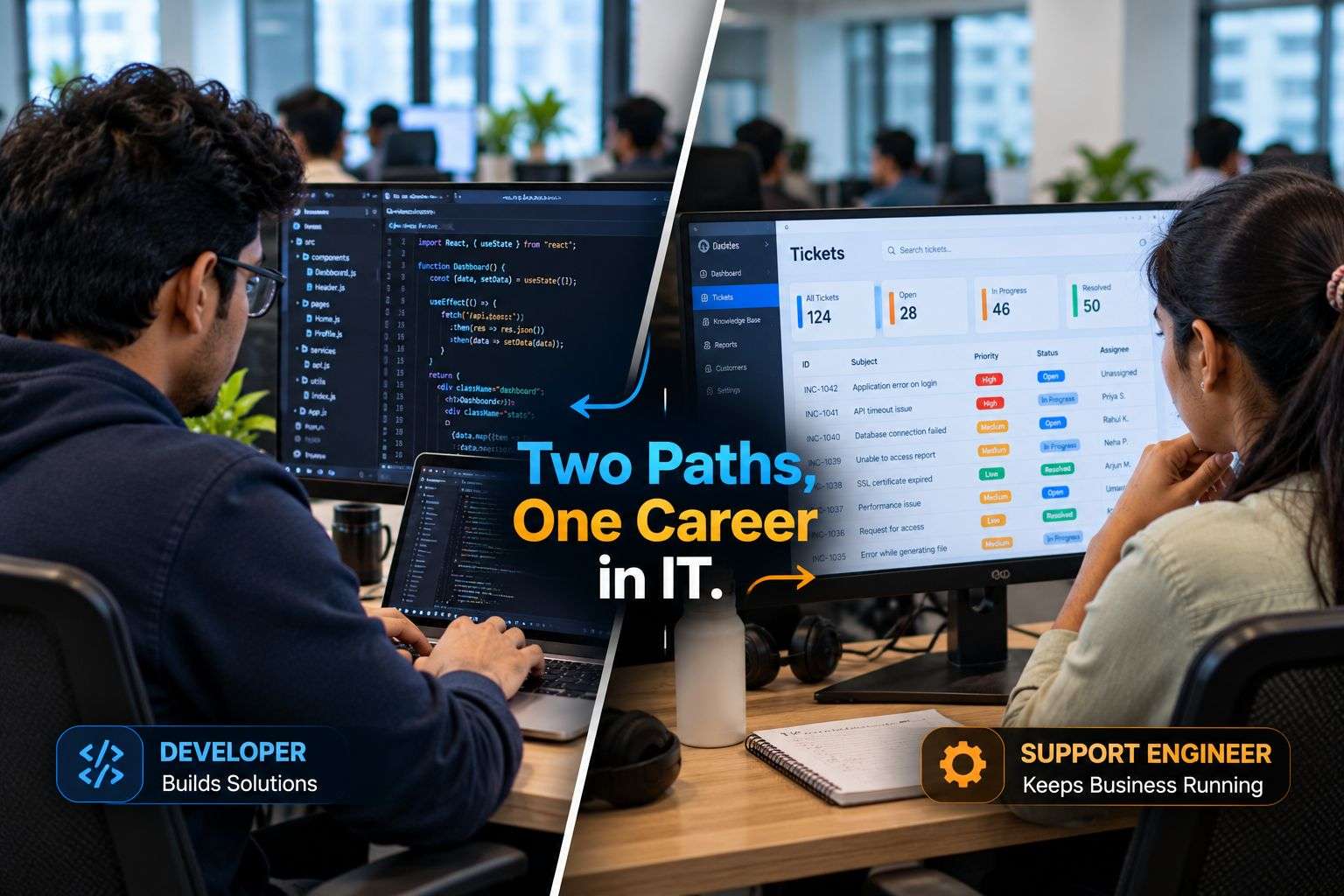
If you enjoy building things from a blank page, chase software development. If you enjoy solving puzzles inside something that already exists — understanding why a system behaves a certain way and fixing it — application support will genuinely suit you better, and you may enjoy your first two years more than a friend stuck debugging someone else’s legacy code as a junior developer.
Here is what I tell every student honestly: an application support engineer career for freshers is not a lesser choice than software development. It is a different kind of thinking. Some of my most successful former students spent two or three years in support, learned the business and the systems deeply, and then moved into development, DevOps, or Site Reliability Engineering roles with a much stronger foundation than peers who went straight into coding.
Where This Career Can Take You After 3–5 Years
This is the honest answer students actually want, even if they do not ask it directly.
Application support is not a dead end. It is a launchpad. Engineers who spend two to three years here typically move in one of three directions: deeper into DevOps and Site Reliability Engineering, sideways into software development once they have picked up scripting and automation, or upward into technical leads and application managers who run entire support functions for a client.
I have watched former students go from an L1 support desk to a DevOps engineer role within three years, simply because they used their support years to learn scripting, cloud basics, and automation on the side. The support role gave them exposure to real production systems that most junior developers never get in their first two years.
Our piece on your first three years in an Indian IT company covers exactly this kind of early-career growth, regardless of which entry role you start in.
Your Action Plan — What to Do This Month
If you are in first or second year — Do not worry about specialising yet. Get comfortable with basic SQL and Linux commands through free resources. Join a college project that touches a real database. That early exposure alone puts you ahead of most classmates when placement season arrives.
If you are in third year — Start building the specific skill set now — SQL, Linux fundamentals, and one ticketing tool. A short, focused certification here works better than a broad one. Look for summer internships tagged “IT support,” “application support,” or “production support” — they are more available than most students realise, and they do not always require prior experience.
If you are in final year — Apply broadly for application support, technical support, and production support roles alongside your regular developer applications. Do not dismiss a support offer as a “backup” — for many students it turns out to be the stronger long-term choice. Practice explaining a technical problem in simple language out loud before interviews; this is tested more often than students expect.
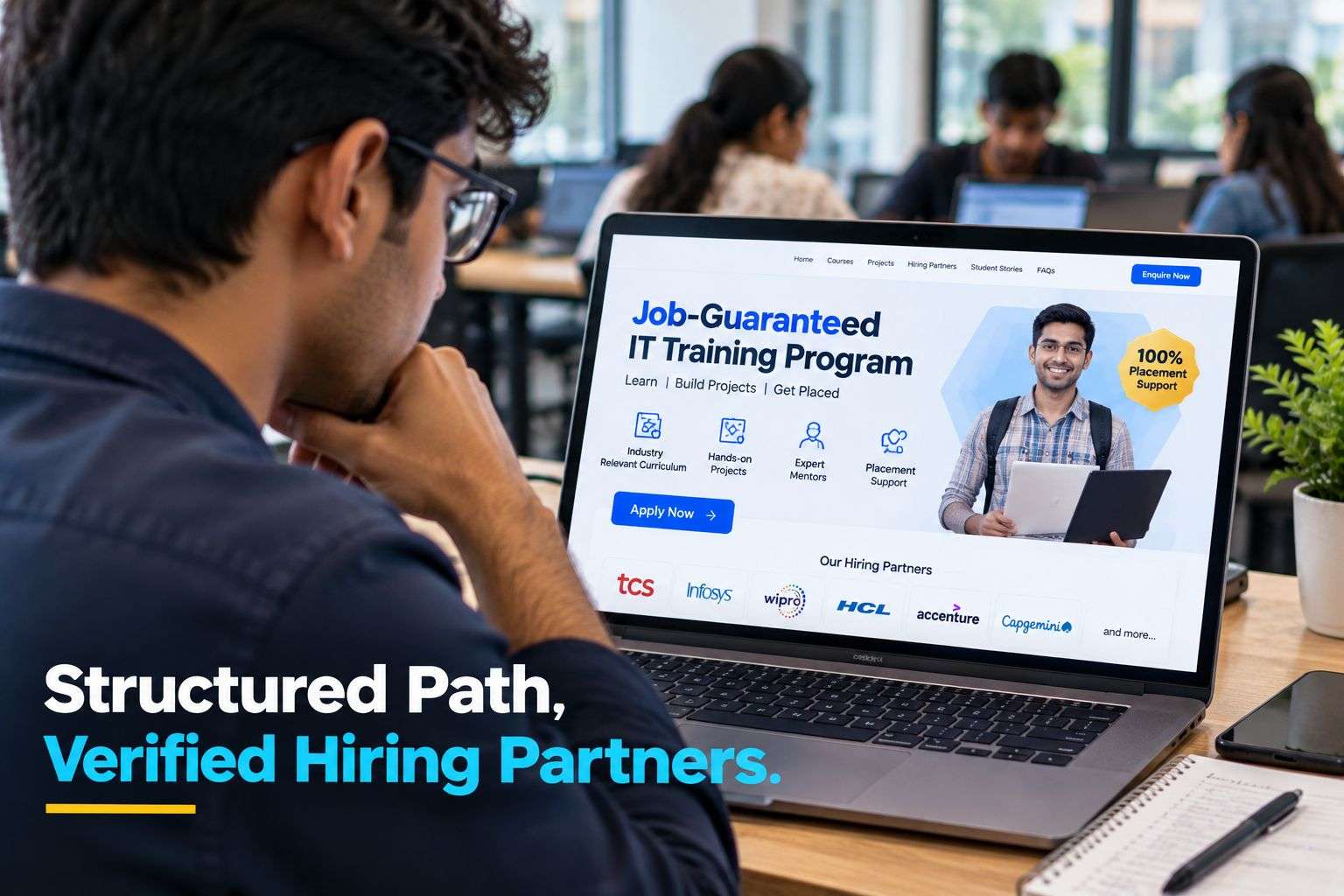
If you have already graduated and are still searching — Consider a structured, job-oriented training path if independent applications are not converting. Rooman Technologies runs government-sponsored job-guaranteed IT training programs in Odisha that build exactly this kind of practical, production-ready skill set, with real hiring partners on the other end rather than an open job search alone.
Internal Links — Read These Next
- 📌 Remote Tech Jobs for Freshers 2026
- 📌 Fresher Salary in India 2026
- 📌 Top Tech Skills Employers Look for in Freshers in India 2026
- 📌 Your First 3 Years in an Indian IT Company
- 📌 BFSI IT Jobs for Freshers — Honest Guide to Banking Tech Roles
FAQs — Application Support Engineer Career for Freshers
FAQ 1 — Is an application support engineer career for freshers a good first job, or should I hold out for a developer role?
Honestly, it depends on the specific offer, not on the job title alone. An application support engineer career for freshers at a known company with a real team and clear growth path is a stronger start than a shaky developer offer at an unknown firm. What matters is the company, the mentorship, and whether you will actually learn something in year one — not whether the title says “support” or “developer.”
Consultant’s Note — I have seen students turn down a solid application support offer to “wait for a coding job” and end up unemployed for four extra months. Take the real opportunity in front of you.
FAQ 2 — Do I need a Computer Science degree to start an application support engineer career for freshers?
No, and this is one of the most accessible IT entry points for non-CS branches. I have personally placed Mechanical, ECE, and Electrical students into application support roles. What companies actually check is your comfort with SQL, basic Linux, and your ability to stay calm while troubleshooting — not your degree stream.
Consultant’s Note — Branch matters far less than the specific, demonstrable skill on your resume. I tell every non-CS student the same thing before an interview.
FAQ 3 — What is the realistic starting salary for an application support engineer career for freshers in India?
Based on 2026 salary data, freshers typically start between ₹2.5 LPA and ₹4.5 LPA at service companies, and ₹5 LPA to ₹6.5 LPA at product companies, GCCs, and BFSI firms. If a listing promises significantly more than this for zero experience, treat it with caution rather than excitement.
Consultant’s Note — I always tell students to compare the full offer, not just the number — shift allowance, on-call pay, and annual hikes matter as much as the base figure.
FAQ 4 — How long does it take to move from L1 to L2 support?
Most engineers move from L1 to L2 within twelve to eighteen months, provided they are actively learning rather than just closing tickets. The engineers who move faster are the ones who ask why an issue happened, not just how to close the ticket quickly.
Consultant’s Note — I tell every fresher starting in L1 to keep a personal log of tricky issues they solved. It becomes powerful interview material for your L2 move.
FAQ 5 — Can an application support engineer career for freshers lead to a software development role later?
Yes, and I have seen it happen repeatedly. Engineers who use their support years to pick up scripting, basic automation, and cloud fundamentals on the side often move into development or DevOps roles within two to three years, arriving with far stronger production knowledge than someone who went straight into coding.
Consultant’s Note — The support-to-developer switch works best when you treat your support years as active learning, not just a waiting period.
FAQ 6 — What is the difference between application support and technical support?
Application support focuses specifically on software applications — the logic, the data, why a specific feature is failing. Technical support is broader and often includes hardware, network, and general IT issues alongside application problems. Application support tends to pay slightly better and offers a clearer path into development-adjacent roles.
Consultant’s Note — When a listing is vague about which one it is, ask directly in the interview. The day-to-day work differs more than the job titles suggest.
FAQ 7 — Which companies in Odisha or nearby hire for application support roles?
GCCs and IT service companies expanding into Bhubaneswar and other tier-2 cities are increasingly opening support functions locally, alongside the larger national service companies that already run support teams for BFSI and retail clients. This is a genuinely growing hiring category for students who want to stay close to home.
Consultant’s Note — I tell students in Odisha to check both local GCC openings and remote-eligible support roles with companies elsewhere — apply to both rather than picking one lane.
FAQ 8 — What certifications actually help for an application support engineer career for freshers?
You do not need an expensive, lengthy certification. A short, practical course covering SQL fundamentals, Linux basics, and one ticketing tool genuinely moves the needle. ITIL Foundation is a reasonable add-on once you are already employed, but it is not essential to land your first role.
Consultant’s Note — I would rather see a student spend two months building real, hands-on SQL practice than four months collecting certificates nobody in the interview room will ask about.
FAQ 9 — Is application support a stressful job because of on-call hours?
Some roles involve rotational shifts or on-call coverage, particularly in BFSI and global support teams working across time zones. This is worth asking about directly in your interview. It is genuinely demanding at times, but it is not unique to this role — most production-facing IT jobs carry some version of this trade-off.
Consultant’s Note — I always tell students to ask about shift structure before accepting an offer, not after. It saves a lot of frustration three months in.
FAQ 10 — How is AI changing the application support engineer career for freshers?
AI tools are automating some of the repetitive, lower-level ticket resolution that used to occupy junior L1 engineers, which means the role is shifting toward genuine analysis and root-cause thinking faster than before. This is not bad news for freshers — it means the entry bar for meaningful, skill-building work is actually lower than it used to be, since AI now handles the truly repetitive tasks.
Consultant’s Note — I tell students not to fear this shift. Learn to work alongside these tools rather than compete with them, and you will be ahead of most of your batch.
Final Word on the Application Support Engineer Career for Freshers
An application support engineer career for freshers will not make headlines the way an “AI Engineer” title does. It will not impress your relatives at a wedding the way “software developer at a big product company” does. But it pays fairly, it hires from every branch, it teaches you how real systems actually behave, and it opens doors into development, DevOps, and technical leadership over time.
I would rather see a student take this seriously in year one than dismiss it and spend six extra months waiting for a “better sounding” offer that never comes. Apply honestly, ask the right questions in your interview, and let the actual opportunity — not the job title — decide.
Watch next:
- What is the role of an Application Support Engineer? — Career Guide
- Technical / Production Support Engineer Salary Reality in India — Fresher to 10 Years
- Production Support to Software Developer — Career Switch Guide
Further reading: