
Data Science Career in India — A 27-Year IT Career Consultant’s Honest Guide for Students in 2026
By Aslam Rahman | 27 Years of IT Career Mentoring | cguru.co.in
A data science career is the one almost every second-year student brings up in my counselling room now, and they usually bring up the same fear along with it. Here is a number that should make you sit up. NASSCOM estimates a 51 per cent gap between the demand and supply of data science professionals in India, and for roles like Data Scientist and ML Engineer specifically, that gap widens to 60–73 per cent. That is not a small shortage. That is an entire generation of companies unable to hire fast enough.
And yet, most students I meet in Bhubaneswar, Cuttack, and Rourkela still ask me the same three questions on loop. Is a data science career only for coders? Is it only for people who are “good at maths”? And is it too saturated to bother with in 2026? I want to answer all three honestly in this guide, the way I would if you were sitting across from me at my office in Chandrasekharpur.
What a Data Science Career Actually Involves

A data science career means using data to answer questions a business cannot answer by guessing. That is the plain-language version. Strip away the buzzwords, and a data scientist spends their day cleaning messy data, building models that spot patterns, and explaining those patterns to people who don’t code.
It is not one job. It is a family of roles — data analyst, data scientist, machine learning engineer, data engineer — that all sit under the same umbrella. Each one needs a different mix of statistics, programming, and business sense. This is exactly why so many students get confused before they even start. They think “data science” is one ladder to climb, when it is really three or four different ladders standing next to each other.
I always tell my students this: a data science career rewards curiosity more than raw genius. You don’t need to be a maths topper. You need to be the kind of person who sees a number on a dashboard and wants to know why it moved.
The Real Demand Behind a Data Science Career in India
Let’s talk numbers, because vague optimism doesn’t pay rent. According to NASSCOM’s State of Data Science and AI Skills report, India’s demand for data and AI professionals is expected to cross one million by 2026, while the current supply covers barely half of that. Roles like Data Scientist, ML Engineer, DevOps Engineer, and Data Architect show the widest demand-supply gap of any tech role tracked in the report.
There’s a second, less flattering number worth knowing too. Only around 16 per cent of India’s IT professionals are currently considered AI-skilled, per government data cited by NASSCOM. That gap is not closing on its own — it is closing one trained fresher at a time. If you are willing to put in the work now, a data science career in 2026 is one of the few places where the odds are genuinely in your favour, not against you.
This demand isn’t limited to Bangalore and Hyderabad anymore. GCCs (Global Capability Centres) are opening data and analytics teams in Tier-2 hubs, and Odisha’s IT corridor is starting to see spillover hiring from this trend. If you want to understand how GCCs are reshaping fresher hiring more broadly, I’ve written about GCC jobs for freshers in India in detail.
Data Science Career Salary in India—What You’ll Actually Earn
This is the section every student scrolls straight to, so let’s not waste your time.
- Fresher, IT service companies: ₹4.5–7 LPA
- Fresher, product-based companies: ₹8–15 LPA
- Fresher from IIT/NIT with a strong portfolio: ₹12–20 LPA, sometimes higher through campus placement
- 1–3 years experience (junior data scientist): ₹8–14 LPA
- 3–6 years experience (mid-level): ₹12–22 LPA
- Senior / specialised AI roles at GCCs: ₹40–60+ LPA
A data science career pays more, on average, than most other entry-level IT roles — but the range is wide, and where you land depends far more on your GitHub profile and project work than on your college name. I have watched students from tier-2 BPUT colleges out-earn IIT graduates within two years, simply because they built real projects instead of just collecting certificates.
One honest caution: your CTC is not your in-hand salary. Many 2026 offers carry a 10–20 per cent variable component. Always ask what percentage of the number on your offer letter is fixed. I’ve broken this down in more detail in my guide on in-hand salary versus CTC, which is worth reading before you sign anything.
Data Analyst vs Data Scientist — Which Data Science Career Path Fits You
Almost every confused email I get starts here, so let’s settle it.
A data analyst looks at data that already exists and explains what happened. A data scientist builds models that predict what will happen next. The analyst path is faster to enter — strong Excel, SQL, and visualisation skills can get you hired within six to nine months of focused learning. The data scientist path takes longer — usually twelve to eighteen months — because it demands programming, statistics, and machine learning together.
Here’s the part nobody tells students plainly: you don’t have to choose forever. Most data scientists I know started as analysts. If you’re unsure which data science career path to commit to first, start as an analyst. It’s the lower-risk on-ramp into the same field, and the transition upward is a well-worn path, not a leap of faith.
Skills That Actually Matter for a Data Science Career
I’ve sat through hundreds of hiring conversations with recruiters over 27 years, and the skill list that actually gets a fresher shortlisted hasn’t changed as much as LinkedIn influencers claim. Here’s what matters, in order:
- Python — non-negotiable. Focus on pandas, NumPy, and basic scikit-learn before anything fancier.
- SQL — more interviews are lost over weak SQL than weak Python. Practice writing joins and window functions until they’re second nature.
- Statistics fundamentals — probability, hypothesis testing, regression. Not a PhD level. Just enough to explain your model’s output without hand-waving.
- Data visualisation — Power BI or Tableau. Recruiters want to see that you can turn numbers into a story a manager understands.
- One machine learning framework — scikit-learn to start, then TensorFlow or PyTorch if you move toward deep learning.
- Communication — genuinely underrated. A data scientist who can’t explain their findings to a non-technical stakeholder is only doing half the job.
Notice what’s missing from that list — a fancy college brand, a stack of paid certificates, and a computer science degree. None of those are required for a data science career, though a CS or statistics background does make the first year easier. If you want the fuller picture of which skills are trending across all tech roles right now, not just data science, I covered that in top in-demand skills for freshers in 2026.
How to Start a Data Science Career — A Realistic Timeline
Forget the “become a data scientist in 3 months” promises. Here’s a timeline I’ve seen actually work for students starting from zero:
Months 1–3: Learn Python basics and SQL. Do small, ugly projects — analyse a cricket dataset, clean a messy Excel sheet from Kaggle. The goal is comfort, not mastery.
Months 4–7: Add statistics and one visualisation tool. Start your first real project — something with a dataset you actually care about, not a tutorial clone.
Months 8–11: Learn scikit-learn and build two to three portfolio projects you can explain end-to-end in an interview. Put everything on GitHub with clear README files.
Months 12+: Apply while continuing to build. Don’t wait for “ready” — a data science career, like most tech careers, rewards people who start applying while still learning.
This roadmap holds whether you’re doing it through a paid course, a free YouTube playlist, or a mix of both. If you’re weighing whether a paid certification is worth the money at all, I’ve written an honest breakdown in are online certifications worth it for freshers.
The Three Mistakes That Sink a Data Science Career Before It Starts
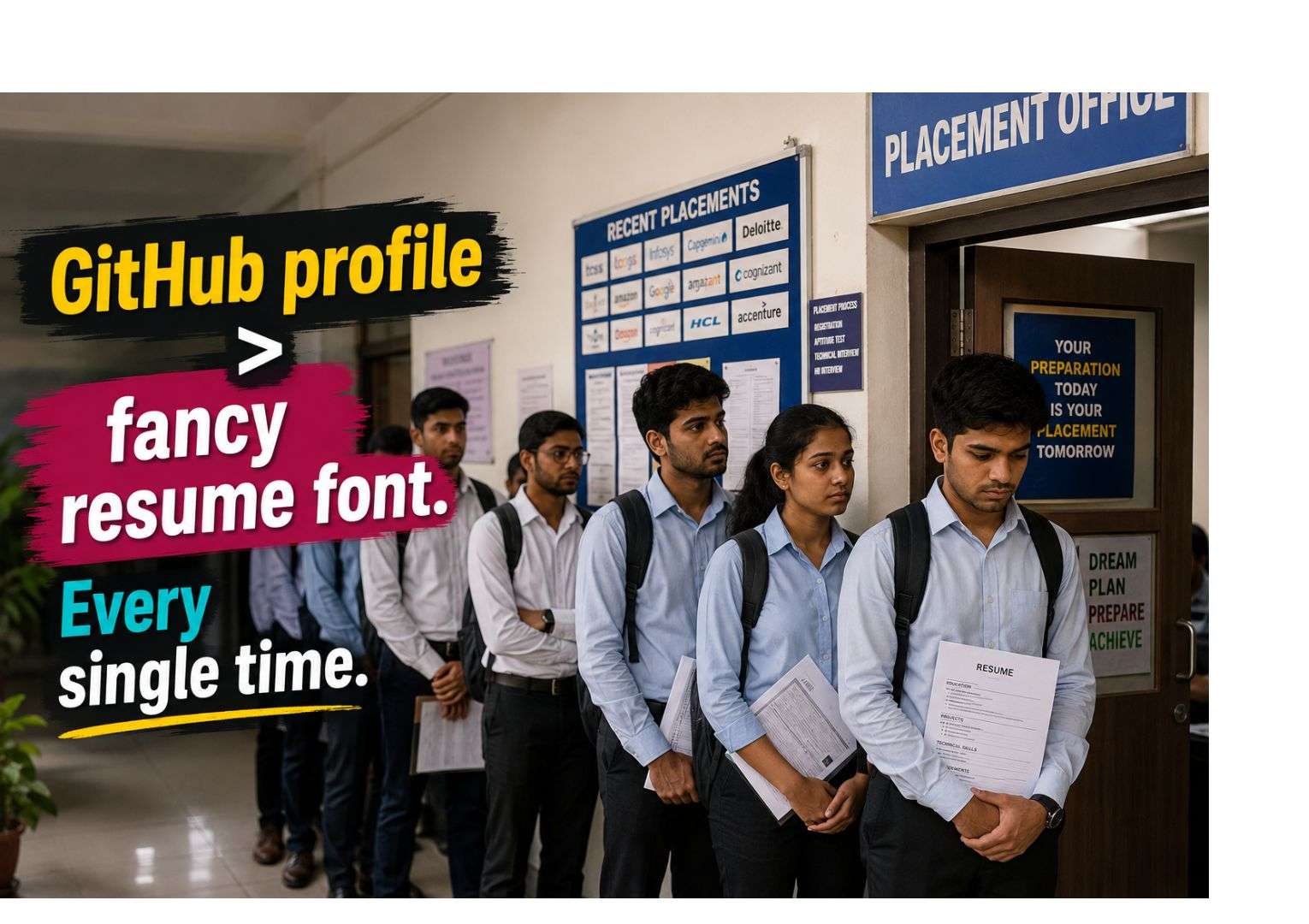
Mistake one: collecting certificates instead of building projects. A certificate proves you sat through a course. A project proves you can think. Recruiters know the difference within thirty seconds of looking at your resume.
Mistake two: skipping SQL because it feels “less exciting” than machine learning. I’ve watched brilliant students fail technical rounds over a basic SQL join. Don’t repeat this.
Mistake three: chasing every new AI tool instead of finishing fundamentals. 2026 has no shortage of shiny new frameworks. A data science career is built on statistics and clean thinking first — tools change every eighteen months, fundamentals don’t.
If your resume already has this problem and you’re not sure how to fix the framing, my guide on building an AI-recruiter-proof resume for Indian freshers walks through exactly what to change.
Action Plan by College Year

First year: Don’t specialise yet. Get comfortable with basic Python and Excel. Read about data roles broadly so second year isn’t a blind jump.
Second year: Start SQL and one visualisation tool. Complete your first small project by the end of the year, even an imperfect one.
Third year: This is your building year. Complete two to three solid portfolio projects. Start applying for data-related internships — even unpaid ones teach you things a course cannot.
Final year: Polish your GitHub, rewrite your resume around your projects (not your coursework), and apply aggressively — both on-campus and off-campus. Don’t wait for placement season to be your only shot; a data science career is increasingly won through off-campus applications, referrals, and LinkedIn outreach.

Frequently Asked Questions : Data Science Career in India
Q 1- Is a data science career only for computer science students?
No. I’ve placed BTech students from mechanical, electrical, and even civil backgrounds into data analyst and junior data scientist roles. What matters is whether you can demonstrate Python, SQL, and one solid project — not which branch is on your degree. Non-CS students usually need three to six extra months of self-study to catch up, but I’ve seen it done successfully many times.
Consultant’s Note: If your degree isn’t in CS, don’t waste energy feeling behind. Spend that energy on your first project instead.
Q 2:-Do I need a master’s degree for a data science career in India?
Not for entry-level roles. A bachelor’s degree with strong practical skills and a portfolio gets you hired as a data analyst or junior data scientist at most Indian companies. A master’s helps more for research-heavy or senior roles. For most freshers I counsel in Odisha, spending two extra years on a master’s is not the fastest route in.
Consultant’s Note: A master’s degree is a tool, not a requirement. Use it only if your specific goal needs it.
Q 3:- How long does it take to build a job-ready data science career from scratch?
Realistically, 10 to 14 months of consistent, focused effort — not the “90 days” timelines some course platforms sell. This assumes 10–15 hours a week alongside your degree. Students who rush this timeline usually end up with surface knowledge that falls apart in technical interviews.
Consultant’s Note: Speed without depth just delays the real learning to your first job, under much higher pressure.
Q 4:- Is data science oversaturated in 2026 ?
The entry-level market is more competitive than in 2020, but “oversaturated” isn’t accurate given NASSCOM’s own demand-supply numbers. What’s saturated is the pool of people with certificates and no projects. What’s still scarce is people who can solve a real business problem with data.
Consultant’s Note: The market isn’t full. The shallow end of the market is full. Go deeper.
Q 5:- Should I choose data analyst or data scientist as my first data science career move?
If you want to start earning sooner, choose data analyst — shorter learning curve, more entry-level openings. If you enjoy statistics and modelling and can afford a longer runway, aim for data scientist directly. Most professionals I’ve mentored moved from analyst to scientist within two to three years anyway.
Consultant’s Note: Choose the path that lets you start today, not the one that sounds more impressive at a family function.
Q 6:- What programming language should I learn first for a data science career?
Python, without much debate. It has the largest data and machine-learning ecosystem, beginner-friendly syntax, and the widest support in Indian job postings. R still shows up in some analytics and research roles, but Python is the safer, more employable first choice.
Consultant’s Note: Don’t get stuck choosing a language for a month. Pick Python and start today.
Q 7:- Can I switch to a data science career from a non-IT job?
Yes — I’ve guided professionals through exactly this from mechanical roles, teaching, and banking operations. The path is the same as for a fresher: Python, SQL, statistics, projects. But you carry one advantage — domain knowledge, which recruiters value because it means you can speak their business language.
Consultant’s Note: Your old job isn’t wasted experience. It’s a specialisation most fresh graduates don’t have.
Q 8:- How important are Kaggle competitions for a data science career?
Useful, but overrated as a sole strategy. Kaggle sharpens modelling skills, but recruiters respond more to end-to-end projects solving a real, specific problem — ideally with a dashboard and a GitHub repo they can actually open.
Consultant’s Note: A messy real-world project beats a polished Kaggle notebook in almost every interview I’ve sat in on.
Q 9:- Do I need deep learning for a data science career, or is machine learning enough?
For most entry-level roles in India, classical machine learning — regression, classification, clustering — covers the bulk of real job requirements. Deep learning matters more for computer vision, NLP, or generative AI roles specifically. Learn ML fundamentals thoroughly first.
Consultant’s Note: Don’t learn deep learning to sound impressive. Learn it when a specific goal actually needs it.
Q 10:-What’s the biggest reason freshers fail to land their first data science career role?
Weak fundamentals hidden behind a long list of tools. I’ve interviewed students who list five frameworks but can’t explain a basic SQL join or what overfitting means in plain language. Depth in fewer tools beats a long list every time.
Consultant’s Note: Your resume should make claims your ten-minute interview answer can actually back up.
Where to Learn More
If you’re serious about starting, these two YouTube walkthroughs are worth your time: this step-by-step 2026 data scientist roadmap and this complete data science roadmap from basics to advanced. If you’re still torn between analyst and scientist paths, this video on transitioning between data analyst and data scientist roles is a clear, practical watch.
For a deeper technical starting point, my earlier post, the Beginner Data Science Guide, walks through your first steps in more detail. And once your foundations are solid, make sure your GitHub profile actually shows off the projects you build — most students undersell months of real work with a messy, empty-looking profile.
A data science career in 2026 isn’t a shortcut and it isn’t hype. It’s one of the few tech paths where India’s own demand data backs up the opportunity. Build the fundamentals, build real projects, and be honest with yourself about how much work “job-ready” actually takes. That’s the whole secret — I’ve just watched it work often enough to say it with confidence.
Sources: NASSCOM — State of Data Science & AI Skills in India | NASSCOM — India’s AI Talent Crisis | Data Scientist Salary in India 2026 — Futurense





One Comment