Capgemini Hiring Process for Freshers in India 2026 — I Have Seen Hundreds of Students Clear It and Here Is What Actually Works
The Capgemini hiring process for freshers in India in 2026 is different from what most students expect. This is not a standard aptitude test. It has game-based assessments, a spoken English round, pseudocode questions, and a coding round that directly decides your salary. Here is everything you need to know — honestly.
The Capgemini Hiring Process for Freshers in India 2026 Is Not What You Think
The Capgemini hiring process for freshers in India in 2026 is one of the most misunderstood selection processes in Indian campus placement.
Students come to me having prepared for a standard aptitude test. They expect quantitative reasoning, logical sections, and a verbal test. The kind they practised for TCS NQT or Infosys InfyTQ.
Then they sit for the Capgemini assessment and encounter game-based tests that measure cognitive speed. Pseudocode questions that test logical thinking without requiring them to write code. A spoken English round. And a coding section where the number of problems you solve directly determines your salary package.
Many of them freeze. Not because they are not smart. But because nobody told them what was actually coming.
I am based in Bhubaneswar. I have been counselling engineering students through IT placements for 27 years. I have watched the Capgemini process change multiple times. The 2026 version — built around the Exceller programme — is the most structured and the most predictable it has ever been.
Predictable does not mean easy. It means if you know exactly what to expect and prepare accordingly, your chances of clearing it are very real.
This blog tells you exactly what each round looks like, what it tests, and what to do about it.
What Is the Capgemini Exceller Programme — And Why It Matters
Before I walk you through the rounds, you need to understand what the Exceller programme is.
Capgemini is one of the world’s largest IT consulting and technology services companies. The Exceller programme is Capgemini’s flagship initiative to recruit and develop technical students — giving them opportunities to work on diverse projects, cross-functional teams, and a collaborative network of peers and mentors.
For Indian freshers in 2026, the Exceller programme is the primary hiring route. It runs both on-campus – through colleges registered on the Superset platform – and off-campus, through Capgemini’s official careers page.
Here is what makes the Exceller programme different from other large IT company hiring processes.
The roles and salary packages offered depend on your performance in the assessment rounds — specifically, the coding round. The primary roles available are Analyst at ₹4.25 LPA, Analyst Star at ₹5.75 LPA, and Senior Analyst at ₹7.5 LPA.
That is a significant difference from companies like TCS or Infosys, where the package is fixed for all freshers regardless of assessment performance. At Capgemini, how well you perform — especially in the coding round — directly changes what you are offered.
This makes the preparation strategy different. You are not just trying to clear the selection process. You are trying to perform at a level that earns you the best offer available.
Eligibility Criteria — Check This Before You Apply
Many students skip this step and find out too late that they are not eligible.
The Capgemini Exceller programme requires candidates to have 60% or above throughout their academics, including Class 10, Class 12, and graduation. All engineering branches are eligible. BE, B.Tech, ME, M.Tech, MCA, and M.Sc in Computer Science or IT are accepted.
A maximum one-year gap between academic milestones is allowed. No active backlogs are permitted at the time of application.
Candidates should not have participated in any Capgemini interview process in the last six months.
One practical point — for on-campus hiring, only students from colleges registered with Capgemini via the Superset platform are eligible. Check with your placement cell to confirm your college’s registration status and to get your application link.

The Capgemini Hiring Process for Freshers in 2026 — Round by Round
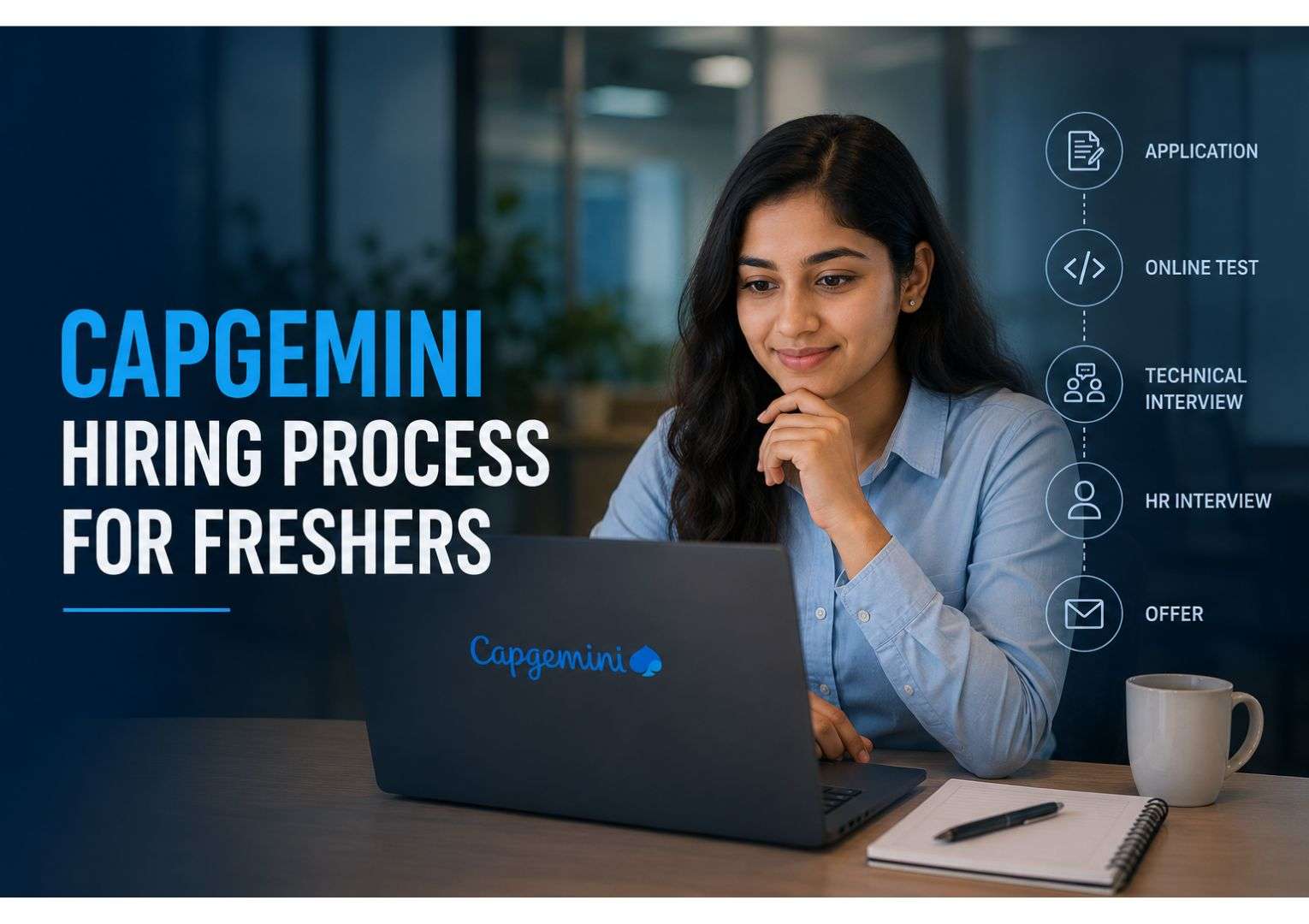
The Capgemini fresher recruitment process has 4 rounds: a Game-Based Assessment, a Technical Online Test, a Technical Interview, and an HR Interview. Depending on the drive, additional rounds — like a Spoken English test or a Behavioural Competency assessment — may also be included.
Let me walk you through each one honestly.
Round 1 — Technical Test (The First Eliminator)
The Technical Test is the first elimination round. You must clear this round to progress to the next stage.
It contains four sections — pseudocode, English communication, a game-based aptitude test, and a behavioural competency test.
Let me break each section down separately.
Pseudocode Section
This is the section that surprises most students.
You must be able to trace loops, conditional logic, and bitwise operations without a compiler. The pseudocode questions test your ability to read and understand code logic — not write it.
This means you need to understand what a piece of code does, step by step, and identify the correct output or error. Students who have only read theory — but never actually traced code execution — struggle here.
Practice pseudocode tracing every day. Pick simple programs — loops, recursive functions, array operations — and trace them manually, step by step, on paper. This builds the skill the Capgemini pseudocode section is testing.
English Communication Test
Most candidates find the English Communication Test more difficult than the other sections.
This section tests your grammar and vocabulary skills. It includes reading comprehension, sentence correction, fill in the blanks, and vocabulary-based questions.
For students from tier-two colleges and non-English-medium backgrounds — which includes many students I counsel in Bhubaneswar and across Odisha — this section requires specific preparation. Do not ignore it. Read one English article every day from The Hindu or BBC. Practice grammar exercises regularly. Your spoken and written English ability also feeds into the next section.
Game-Based Aptitude Test
This is the section nobody teaches students to prepare for — and it shows.
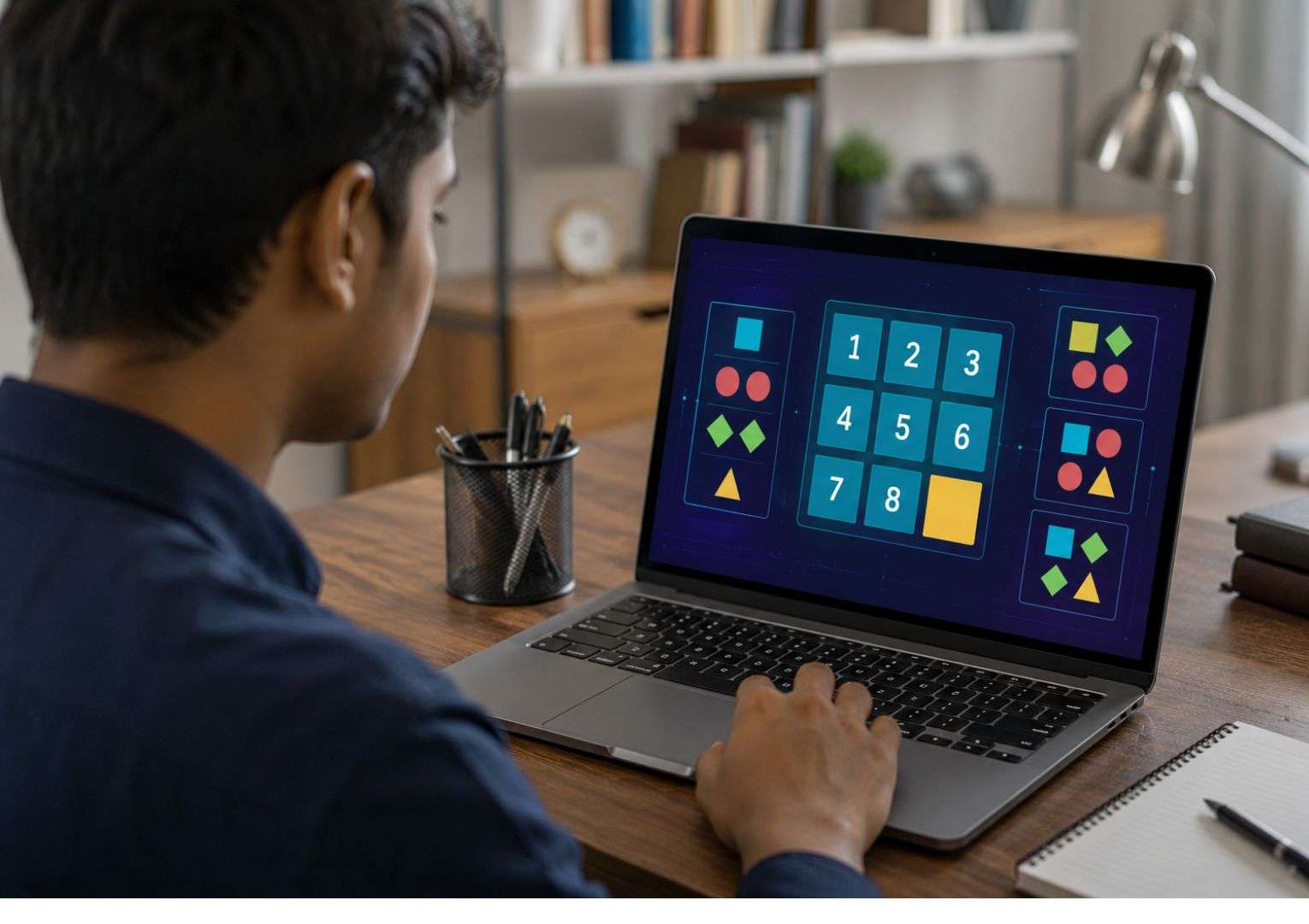
Capgemini uses 4 games out of a pool of 24 possibilities. Games like Grid Challenge, Digit Challenge, and Motion Challenge test your multitasking ability, memory, and spatial reasoning.
There will be 24 games in total, out of which the system selects 4 for you. Your task is to solve those 4 games accurately and quickly, making as few mistakes as possible.
The best way to prepare for this is to practice cognitive games regularly — apps like Lumosity or Elevate, or the free cognitive game practice available on PrepInsta. The goal is to build speed and accuracy, not to memorise specific game types.
Behavioural Competency Test
This section evaluates your workplace behaviour, teamwork style, and decision-making approach. It is a psychometric assessment. There are no “right” or “wrong” answers in the traditional sense — but inconsistent or contradictory responses are flagged.
Answer honestly and consistently. Do not try to game this section. Capgemini uses it to assess cultural fit and they have been doing it long enough to spot inconsistent patterns.
Round 2 — Coding Round (The Package Decider)
This is the round that matters most — financially.
The Capgemini Exceller coding section is for students who have qualified through the earlier rounds. If you solve one coding question, you receive a package of ₹5.75 LPA. If you solve both, you receive ₹7.5 LPA.
The coding round includes 2 to 3 programming problems to be solved in Java, Python, or C++.
Let me be completely honest about what this means for your preparation strategy.
If you only clear the written test and do not attempt or solve the coding questions, you get the base Analyst package of ₹4.25 LPA. That is a respectable starting salary. But if you can solve even one coding problem correctly, your package jumps to ₹5.75 LPA. Solve both and it becomes ₹7.5 LPA.
That is a difference of ₹3.25 LPA — in your very first year — based on one round of preparation.
The coding problems at the fresher level for Capgemini are not advanced competitive programming challenges. They are straightforward data structures and algorithm problems — arrays, strings, basic sorting, and simple pattern-based logic. A student who has practised 30 to 40 easy-to-medium level problems on LeetCode or HackerRank has a genuine chance at solving at least one.
Pick one language — Java is recommended because it is the backbone of many Capgemini enterprise projects. Practice consistently. Aim for clean, working code — not clever but broken solutions.
🔗 Practice coding: LeetCode — start with Easy problems and build up. 🔗 HackerRank Practice: HackerRank — specifically the Java and Python certification tracks.
Round 3 — Technical Interview
The technical interview focuses on your final year project, basic coding concepts in C, C++, or Java, data structures and algorithms, and the latest technologies and tools you have used.
This is the most conversational part of the Capgemini hiring process for freshers. The interviewer is not trying to trick you. They are trying to find out how deeply you understand what you claim to know.
Three things consistently come up in Capgemini technical interviews for freshers in 2026.
Your final year project. Be ready to explain what your project does, what technology it uses, what problem it solves, and what you personally built. Not what your team built — what you built. Interviewers can tell immediately when a student has no real involvement in their own project.
OOP concepts. Classes, objects, inheritance, polymorphism, encapsulation, abstraction. Know these cold. Know how to explain them with simple real-life examples. Not textbook definitions — your own words.
DBMS and SQL basics. Write a few joins on paper. Know what normalisation means and why it matters. Know the difference between primary key, foreign key, and unique key.
🔗 Revise your technical fundamentals: Fresher Job Interview Questions for IT Companies in India 2026

Round 4 — HR Interview
The HR round is the final stage of the Capgemini hiring process for freshers. It is also the round that students underestimate the most.
The HR round checks cultural fit, communication, and attitude. Common questions include — tell me something about yourself that is not on your resume, why do you want to join Capgemini, where do you see yourself in five years, and how do you handle working in a team.
Capgemini has seven core values that drive its culture — honesty, boldness, trust, freedom, fun, modesty, and team spirit. These are not just words on a website. They come up in HR conversations. Know them. Be able to relate at least two of them to something real from your own life.
The answer most students give to “why Capgemini” is generic — “it is a global company with good growth opportunities.” That answer is forgettable. A better answer references something specific — a technology area Capgemini is known for, a type of project you want to work on, or a value that genuinely resonates with you.
Prepare your answers out loud. Say them in front of a mirror or record yourself. You will hear immediately if an answer sounds rehearsed or genuine.
Capgemini Salary Packages for Freshers in 2026 — The Honest Breakdown
I want to be direct about this because salary information is often vague online.
The salary package depends entirely on your performance in the coding round. The Analyst role offers ₹4.25 LPA, which includes ₹4 LPA plus a ₹25,000 one-time incentive. The Senior Analyst role, for top performers in the coding assessment, offers ₹7.5 LPA.
The Analyst Star role, for high performers who solve one coding question, offers ₹5.75 LPA.
To summarise:
- Clear written rounds only → ₹4.25 LPA (Analyst)
- Solve 1 coding problem → ₹5.75 LPA (Analyst Star)
- Solve 2 coding problems → ₹7.5 LPA (Senior Analyst)
This structure makes the coding preparation decision very simple. Every hour you invest in coding practice has a direct, calculable return. Treat it that way.

How to Apply for the Capgemini Hiring Process in 2026
There are two routes.
On-Campus Route Check with your college placement cell. If your college is registered on the Superset platform, your TPO will share the application link when Capgemini drives are active. Register on Superset with your college email. Keep your academic details accurate. Any mismatch at the document verification stage will disqualify you.
Off-Campus Route Visit Capgemini India Careers directly. Filter for fresher roles and the Exceller programme. Only shortlisted candidates are invited for the virtual selection process, which includes online assessments and interviews. Arrange your own laptop or desktop with a stable internet connection for the process.
🔗 Apply directly: Capgemini India Careers — Freshers and Students
Three Mistakes That Kill Capgemini Preparation for Freshers
I see these patterns every placement season. Avoid them.
Mistake 1 — Preparing for a standard aptitude test instead of Capgemini’s specific format
The game-based assessment is unique to Capgemini. Students who prepare only for the quantitative aptitude and logical reasoning sections are caught completely off guard by the cognitive games. Practise the specific format — not a generic aptitude test.
Mistake 2 — Ignoring the English Communication and Spoken English rounds
Students from technical backgrounds often assume the communication round is easy. It eliminates more candidates than the pseudocode section. Take it seriously from Day 1 of your preparation.
Mistake 3 — Treating the coding round as optional because the base package is available without it
Yes, you can get the analyst offer without solving coding problems. But ₹3.25 LPA over a year is not a small difference for a fresher. And the coding problems at this level are genuinely accessible with focused practice. Skip it only if you have tried and genuinely cannot clear it — not because you did not try.
Internal Links — Read These Next
- 📌 How I Help Students Crack IT Interviews in 30 Days
- 📌 Best Certifications for Freshers in India in 2026
- 📌 Top 10 IT Companies in India Hiring Freshers in 2026
- 📌 Fresher Job Interview Questions for IT Companies in India 2026
- 📌 TCS NQT Preparation Guide for Freshers in 2026
- 📌 How to Crack Infosys InfyTQ 2026
- 📌 Wipro NLTH Hiring Guide for Freshers 2026
- 📌 Fresher Salary in India 2026
- 📌 Top Tech Skills Employers Look for in Freshers in India 2026
- 📌 Cloud Computing Career Roadmap for Indian Students in 2026
FAQs — Capgemini Hiring Process for Freshers in India 2026
FAQ 1 — Is the Capgemini hiring process harder than TCS NQT or Infosys InfyTQ for freshers in 2026?
This is a question I get constantly during placement season — and it deserves an honest, specific answer rather than a vague “it depends.”
The Capgemini hiring process for freshers in India in 2026 is not necessarily harder than TCS NQT or Infosys InfyTQ. But it is different in ways that catch unprepared students badly.
TCS NQT and Infosys InfyTQ use formats that students are more familiar with — quantitative aptitude, logical reasoning, verbal ability, and a coding section. These formats are well-documented, widely practised, and extensively covered by preparation platforms. Most students preparing for campus placements have at least seen and practised these question types before.
Capgemini’s Exceller process, by contrast, has sections that students rarely practice for specifically — particularly the game-based cognitive assessment and the pseudocode section. The game-based test has no equivalent in other major Indian IT company hiring processes. Students who encounter it without preparation often lose confidence during the assessment itself, which affects their performance across all sections.
The English communication and spoken English rounds also create a challenge that TCS and Infosys do not present as prominently at the initial screening stage. Students who are technically strong but communicate hesitantly in English face an additional hurdle at Capgemini that they would not face as early in other processes.
The coding round at Capgemini is comparable in difficulty to TCS and Infosys coding sections — standard data structures and algorithm problems at the easy-to-moderate level. The key difference is what is at stake. At Capgemini, the coding round determines your salary package, not just whether you are selected. That raises the motivation — and the pressure.
My honest assessment — if you prepare specifically for the Capgemini format and do not assume it is the same as TCS NQT, it is very manageable. The problem is almost always format-surprise, not intellectual difficulty.
Consultant’s Note — I always tell students to treat each company’s hiring process as a separate preparation project. The common core preparation — technical concepts, coding basics, communication — applies everywhere. But the format-specific preparation is what separates students who clear multiple company processes from those who clear none.
Spend one week specifically on Capgemini’s format before your drive. That one week changes the outcome more than two months of generic preparation.
FAQ 2 — Can a student from a non-premier college or a low CGPA background clear the Capgemini hiring process in 2026?
Yes — and I want to explain precisely why, because this question matters a great deal to the students I work with in Bhubaneswar and tier-two cities across Odisha.
The Capgemini Exceller process has a fixed academic filter — 60% or above in Class 10, Class 12, and graduation, with no active backlogs. If you meet this filter, your college brand name is not a formal barrier. Capgemini’s off-campus drives are specifically designed to access talent beyond premier engineering institutes, and the assessment process itself is skills-based — not pedigree-based.
For their off-campus drives, Capgemini values performance over pedigree. If you can clear the game-based assessment and the coding round, your college name is secondary.
What this means practically is that a student from a state government engineering college in Odisha who has prepared seriously for the pseudocode section, practised cognitive games, and can solve one LeetCode easy problem in Java has a genuinely equal chance in the online assessment as a student from a top-tier private engineering college who assumed the process would be easy and walked in unprepared.
The online assessment format genuinely levels the playing field. It does not ask where you studied. It asks what you can do.
The students I have seen struggle from non-premier colleges are not struggling because of their college. They are struggling because they believe the process is designed against them, and that belief leads to under-preparation. The students who succeed are the ones who treat the Capgemini assessment as a skills test — because that is exactly what it is.
Consultant’s Note — I placed a student from a private engineering college in Bhubaneswar with a 6.4 CGPA into Capgemini’s Analyst Star role in 2025. She did not have a CGPA that would impress anyone. But she had spent three weeks specifically practising pseudocode tracing, cognitive game practice, and Java basics. She solved one coding problem correctly.
She got ₹5.75 LPA. Her batch topper with a 9.1 CGPA, who prepared generically for all companies without Capgemini-specific practice, did not clear the game-based round. Specific preparation beats general preparation, every time.
FAQ 3 — How long does the Capgemini hiring process take from application to offer letter in 2026?
This is a practical question that matters for planning — and the honest answer is that it varies, but there is a typical pattern.
The entire process, from registration to offer letter, typically takes about three to four weeks for on-campus drives. Off-campus drives can take longer — sometimes six to eight weeks — because they involve larger applicant pools and additional screening stages before the online assessment.
Here is how the timeline usually breaks down.
Registration and initial application screening take three to five days. The online assessment — covering the technical test, English communication, game-based aptitude, and behavioural sections — is usually a single-day process. Results from the online assessment are typically communicated within one to two weeks.
Interview rounds – technical and HR — are either conducted on the same day for campus drives, or on separate days scheduled over the following week. Offer letters are typically issued within one to two weeks of clearing the HR round.
One important practical point — Capgemini uses the Superset platform for most campus hiring. Your offer letter and selection communication will come through Superset or your college placement cell, not directly to your personal email in the first instance.
Check your Superset dashboard and your college’s TPO communications regularly during the process. Students who miss timeline updates on Superset sometimes find that deadlines for document submission or virtual joining processes have passed.
Consultant’s Note — Keep a simple tracker. Application date, assessment date, result expected date, interview scheduled date. Do not rely on your memory during a stressful placement season when you may be simultaneously tracking processes with three or four companies.
A basic spreadsheet — or even a notebook page — is enough. The students who miss steps in the process almost always miss them because they were not tracking. Not because the company did not communicate.
Your Action Plan — Based on How Much Time You Have Before the Drive
If your Capgemini drive is more than 6 weeks away —
You have enough time to prepare properly for every round. Start with the Technical Test section this week. Practice pseudocode tracing for 30 minutes every day. Then add English grammar practice in Week 2. Start cognitive game practice in Week 3. Begin your coding practice on LeetCode in Week 4 — 5 easy problems per day, in Java or Python. Use Weeks 5 and 6 for mock tests, spoken English practice, and HR answer preparation. This is the ideal timeline.
If your Capgemini drive is 3 to 5 weeks away —
Compress Week 1 and Week 2 into one. Do pseudocode tracing and English grammar practice simultaneously, 45 minutes each per day. Start cognitive game practice from Day 3 — not Week 3. Begin coding practice no later than Day 10. Use the final week exclusively for mock assessments and interview preparation. Do not start new topics in the final week.
If your Capgemini drive is less than 2 weeks away —
Your priority order is: pseudocode tracing first, coding practice second, cognitive game familiarisation third, English communication fourth. Do one full mock technical test every day. Spend 45 minutes on coding problems every day — even if you are a beginner. Attempting and thinking through a problem, even without solving it fully, builds the approach skill you need in the real round. Prepare your “tell me about yourself” and your project explanation. Sleep properly. Arriving prepared and rested beats arriving panicked and exhausted every time.
If you have already missed the Capgemini drive this season —
The six-month restriction on reapplication applies. Use that time to genuinely build your technical skills — not just for Capgemini but for the IT sector overall. Read our guide on Best Certifications for Freshers in India in 2026 to make that six months count. And look at other companies actively hiring freshers right now. Read Top 10 IT Companies in India Hiring Freshers in 2026 for current options.
The Capgemini hiring process for freshers in India in 2026 is absolutely clear with the right preparation. The process rewards students who prepare specifically, not generically. It rewards students who practise pseudocode, who build cognitive speed, who take the English round seriously, and who treat the coding section as a salary opportunity rather than a barrier.
One specific week of Capgemini-format preparation on top of your general technical foundation will do more for your chances than a month of generic placement preparation.
Start that specific week today.
Ready to begin your IT career preparation? Read our complete guide — How I Help Students Crack IT Interviews in 30 Days — and our comparison of all major company hiring processes at Top 10 IT Companies in India Hiring Freshers in 2026.Need one-on-one guidance before your Capgemini drive? Reach out at cguru.co.in or call 9777278853. I work personally with engineering students and freshers across Bhubaneswar and Odisha before their placement season.