Tier-2 Engineering Jobs India — A 27-Year IT Career Consultant’s Honest Guide to Landing a Top IT Job From Your Hometown (2026)
Tier-2 engineering jobs India is a phrase I did not hear from students five years ago. I hear it every week now, usually from a BTech student in Rourkela or Berhampur who assumes moving to Bengaluru is the only real path into IT. I want to correct that assumption today, with numbers, not motivation-speak.
Here is the number that should make you sit up. IT hiring in India’s tier-2 cities grew 53 percent year-on-year in June 2025, more than double the national hiring growth of 20 percent, according to a report by talent platform foundit. Freshers with zero to three years of experience made up 61 percent of all tier-2 job postings in that same period, according to the same report. storyboard18
That is not a rounding error. That is a structural shift in where India’s IT companies are choosing to hire.
After 27 years counselling engineering students across Odisha, I have watched three hiring waves reshape this industry. This is the first one where staying in your hometown is genuinely a strategic advantage rather than a compromise. This guide explains exactly how distributed hiring works, which companies are behind it, what tier-2 engineering jobs in India actually pay, and how you personally get picked for one.
What “Tier-2 Engineering Jobs India” Actually Means in 2026
Let me define the term properly before we go further, because students often use it loosely.
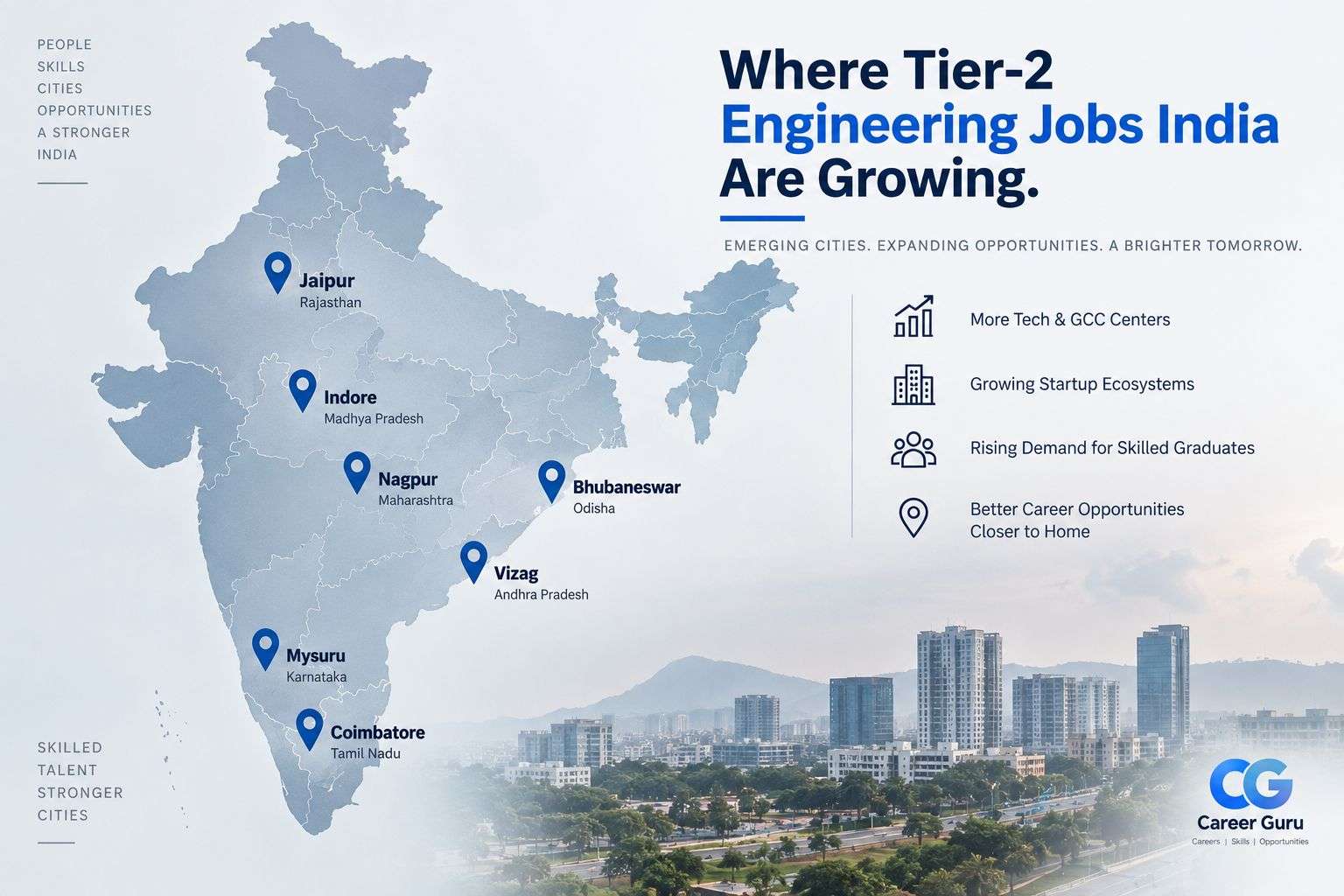
A tier-2 city, in Indian hiring language, means a city outside the six established metros — Bengaluru, Hyderabad, Pune, Chennai, Mumbai, and Delhi NCR. Bhubaneswar, Coimbatore, Indore, Jaipur, Mysuru, Nagpur, Vizag, Lucknow, Bhopal, Vadodara, and Mangaluru all fall into this bucket.
Tier-2 engineering jobs in India used to mean two things only — a support role at a local training institute, or a small local company paying well below metro salaries. That definition is outdated. In 2026 it means three very different things happening at once.
First, established IT giants — TCS, Infosys, Wipro, HCLTech — are opening genuine delivery centres in tier-2 cities, not satellite offices. Second, Global Capability Centres, the in-house tech arms of global corporations, are setting up in cities like Bhubaneswar and Coimbatore rather than only Bengaluru. Third, remote-first hiring means a fresher in a tier-2 city can now be hired for a role physically based in a metro, without relocating at all.
All three are distributed hiring. All three are opening doors that simply did not exist when I started counselling students in the late 1990s.
Why Tier-2 Engineering Jobs in India Are Growing Faster Than Metro Jobs
I want to give you the honest reasons companies are doing this, because understanding their motivation helps you position yourself correctly.
Reality 1 — Metro costs have become unsustainable. Commercial real estate, salary inflation, and attrition in Bengaluru and Hyderabad have pushed companies to look elsewhere. Tier-2 cities can cut operational expenditure by 30 to 40 percent while offering nearly the same quality of engineering talent, according to Taggd’s India Decoding Jobs 2026 report, which also notes that organisations expanding into tier-2 hubs benefit from lower attrition and stronger talent retention.
Reality 2 — India’s GCC boom needs bodies everywhere. India’s Global Capability Centre hiring is projected to cross 5.1 lakh jobs in 2026 across roughly 2,120 centres, and tier-2 hiring within this segment is growing at roughly twice the metro pace , now accounting for around 15 percent of all GCC hiring. A separate ANSR industry report identifies fourteen tier-2 cities — including Bhubaneswar, Coimbatore, Indore, Jaipur, Mysuru, and Vizag — as genuinely GCC-ready destinations, evaluated on talent, infrastructure, and business environment, not just cost based on a first-of-its-kind data-driven assessment across 14 emerging cities. E-Cybertech Solution
Reality 3 — Remote-first hiring has erased the geography penalty. A fresher from a tier-2 engineering college now competes for the same roles as a fresher from a metro college, because location no longer decides who gets shortlisted. In 2023, tier-2 salaries ran 15 to 20 percent below metro salaries for equivalent roles. By 2026, that gap has narrowed to just 5 to 10 percent and continues shrinking as remote-first hiring flips the traditional dynamic between location and opportunity.
Put these three realities together and you get the real story behind tier-2 engineering jobs in India right now. This is not charity. This is companies chasing genuine talent, genuine cost sense, and genuine retention — and finding all three outside the six metros.
The 15 Companies Bringing Tier-2 Engineering Jobs to India Right Now
I am not going to give you a vague list of “IT companies hiring in India.” I am giving you 15 specific companies with confirmed tier-2 city delivery centres, along with their official career pages, so you can go check openings today.
- TCS — Delivery centres in Bhubaneswar, Bhopal, Indore, and Nagpur. Careers page
- Infosys — Major campuses in Mysuru and Mangaluru, plus a Bhubaneswar centre. Careers page
- Wipro — Established centres in Coimbatore and Salem. Careers page
- HCLTech — Delivery centres in Lucknow, Madurai, and Nagpur. Careers page
- Tech Mahindra — Operations in Visakhapatnam, Indore, and Bhubaneswar. Careers page
- Cognizant — Growing Coimbatore and Visakhapatnam presence, with fresh investment planned for Vizag. Careers page
- Capgemini — Centres in Salem and Chandigarh. Careers page
- IBM — A Global Delivery presence extending into Visakhapatnam and Bhubaneswar. Careers page
- Accenture — Delivery operations in Indore and Coimbatore. Careers page
- Genpact — Centres in Jaipur and a growing Bhubaneswar footprint. Careers page
- LTIMindtree — Delivery presence in Bhubaneswar and Nagpur. Careers page
- Hexaware — Expanding tier-2 delivery footprint alongside its metro centres. Careers page
- Mphasis — Operations extending into Visakhapatnam. Careers page
- Persistent Systems — Growing tier-2 engineering hubs alongside its Pune base. Careers page
- Birlasoft — Distributed delivery centres including tier-2 locations. Careers page
A practical note before you bookmark all 15. Do not apply to every single one with the same resume. Pick three or four whose delivery centres are closest to your city or your preferred domain, and apply with intent. My guide on choosing between TCS, Infosys, and Wipro as a fresher walks through how to make that choice properly.
What Tier-2 Engineering Jobs in India Actually Pay
Students always ask me this before anything else, so let me give you honest numbers rather than a marketing range.
Fresher roles at large IT service companies in tier-2 delivery centres — ₹3.5 to ₹6.5 LPA. This is close to metro fresher packages at the same companies, because service companies standardise pay bands across delivery centres for the same role level.
GCC and product-company fresher roles in tier-2 GCC hubs like Bhubaneswar, Coimbatore, or Indore — ₹6 to ₹12 LPA. These roles pay more because GCCs are hiring for genuine engineering and AI-adjacent work, not back-office support — technology and software roles together with BFSI now account for 56 percent of all GCC hiring nationally.
Remote roles for a metro-based company, worked from a tier-2 city — full metro-level pay in most cases, because the company is not adjusting compensation for your address. This is the single biggest financial upside of distributed hiring and most students underestimate it.
Cost of living context that matters as much as the number on your offer letter — housing and living costs in tier-2 cities run 40 to 70 percent lower than in Bengaluru, Hyderabad, or Pune, which means a ₹6 LPA offer in Bhubaneswar often leaves you with more disposable income than the same figure would in a metro.
🔗 Related Read: Fresher Salary in India 2026
Distributed Hiring — How to Actually Get Noticed From Your Hometown
This is the part most students skip, and it is the part that decides whether tier-2 engineering jobs in India actually reach you or pass you by.
Distributed hiring removes the geography filter. It does not remove competition. When a recruiter can no longer shortlist you because your college happens to be near their office, you have to make your case in the application itself. That changes what you need to prepare.

Build a portfolio, not just a resume. A recruiter screening 300 applications for a remote or tier-2 role cannot meet you for a chat over coffee. Your GitHub profile, your project documentation, and your certifications have to do the talking your physical presence used to do. My GitHub profile guide for Indian students covers exactly what recruiters check first.
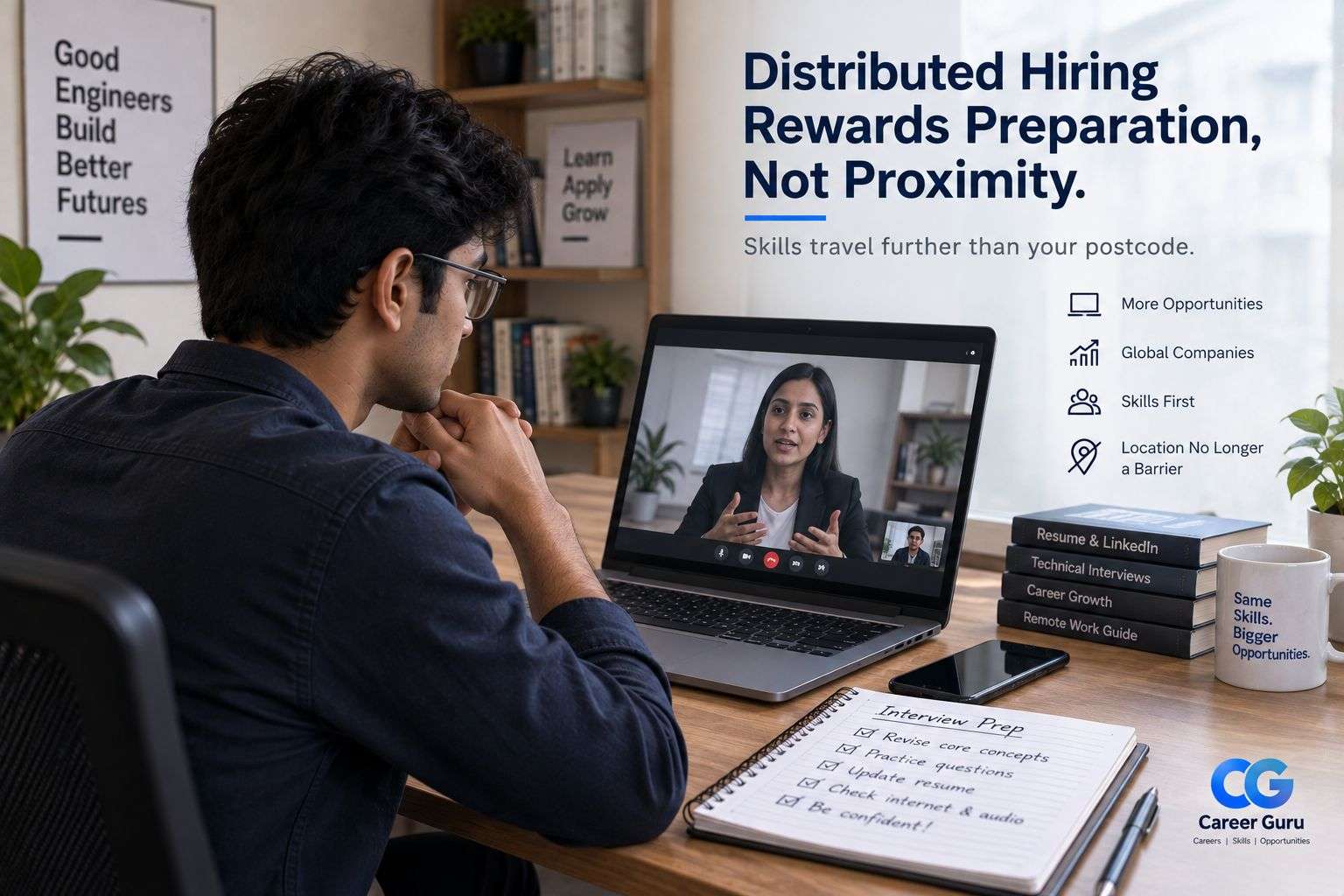
Prepare specifically for virtual interviews. A student who is confident in person can freeze on a video call simply from unfamiliarity with the format. Practise answering technical questions on camera, test your internet and lighting in advance, and treat a virtual interview with the same seriousness as a campus one.
Target companies with declared tier-2 expansion, not just any company. Applying blind to every large IT company wastes your time. The 15 companies listed above have confirmed tier-2 delivery centres right now — start there, and track their career pages weekly rather than relying on aggregator job portals alone.
Do not assume remote means less serious. Some students treat a remote or tier-2-based role as a fallback option and put in less preparation for it. That is a mistake. GCC and product-company tier-2 roles are often more competitive than metro service-company roles, because the pay is higher and the applicant pool is now national, not local.
Three Mistakes That Cost Students Tier-2 Engineering Jobs in India
Mistake 1 — Treating tier-2 hiring as a lesser option. I still meet students who see a Bhubaneswar-based offer as a consolation prize compared to a Bengaluru posting. That thinking cost students real money for a decade. It no longer holds, because pay gaps have narrowed to single digits and GCC roles in tier-2 hubs often pay more than entry-level metro service roles.
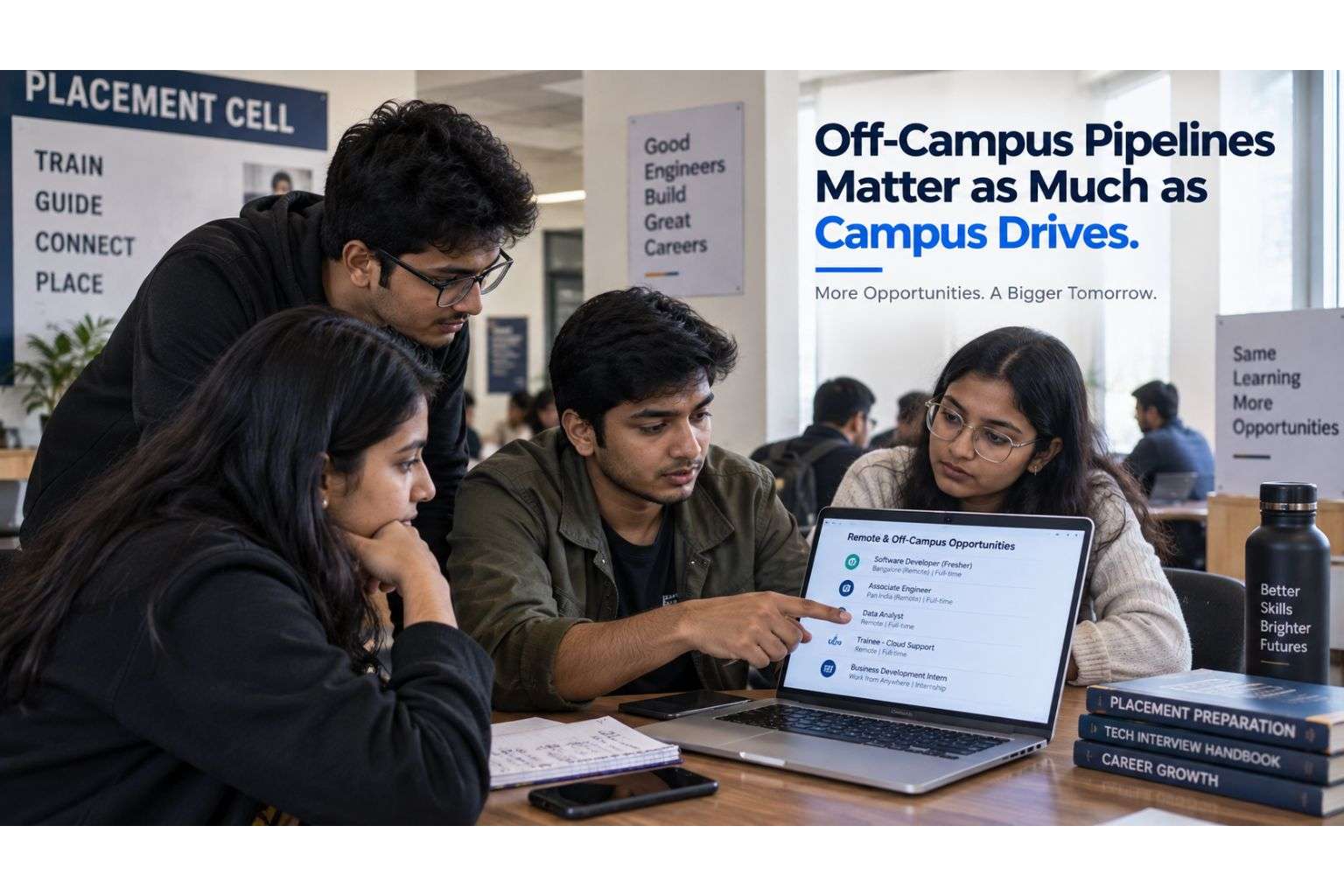
Mistake 2 — Applying only through campus placement and skipping off-campus channels. Not every tier-2 delivery centre recruits through every engineering college’s placement cell. A student who only waits for campus drives misses GCC and product-company openings that are posted directly on career pages. My off-campus placement strategies guide explains how to build a parallel off-campus pipeline.
Mistake 3 — Ignoring the specific skill demand inside tier-2 GCC hiring. About 64 percent of new GCC roles in 2026 require AI, data science, or intelligent-automation skills, according to industry tracking of the GCC hiring shift into tier-2 India. A generic resume with no cloud, data, or AI exposure competes poorly for these specific roles, even though the location advantage is real.
Internal Links — Read These Next
📌 Remote Tech Jobs for Freshers 2026
📌 Odisha GCC Policy 2025 — What It Means for Engineering Freshers
📌 Campus Placements 2026 Are Back
📌 Fresher Salary in India 2026
📌 Top 10 IT Companies Hiring Freshers in India 2026
FAQs — Tier-2 Engineering Jobs India
FAQ 1 — Are tier-2 engineering jobs in India actually as good as metro jobs, or is this just a cost-cutting story dressed up as opportunity?
This is the question I get most often, and I want to answer it honestly rather than defensively. The cost-cutting motive is real. Companies genuinely save money by hiring in tier-2 cities. But that does not make the jobs lesser — it makes them structurally different, and in several ways, better for the person taking them.
The quality of work has changed. A decade ago, a tier-2 delivery centre mostly handled support and maintenance work while the interesting engineering stayed in Bengaluru. That is no longer accurate. Technology and software roles together with BFSI now make up 56 percent of GCC hiring nationally, and this is engineering work, not back-office processing. A tier-2 GCC role in 2026 can genuinely involve product development, AI pipelines, and cloud architecture — the same categories of work a metro fresher would get.
What has not changed is that networking and informal mentorship are still easier to build in a large, established metro tech hub. A first job in Bengaluru still gives you faster access to a wider professional circle than a first job in a newer tier-2 GCC. That advantage is real but shrinking every year as tier-2 hubs mature.
My honest guidance — a tier-2 engineering job at a company genuinely investing in that city, like the ones listed in this guide, is not a downgrade. A tier-2 role at a company that treats the location as a cost play with no real investment in growth or training is where you should be cautious. Research the company’s specific plans for that city before you decide the job itself is the problem.
Consultant’s note — I tell students the honest version of this every counselling season. I have placed students into Bhubaneswar-based GCC roles that pay better and teach more than the metro service-company offer sitting next to it on their table. Do not let the city name alone decide your answer. Look at what the company is actually building there.
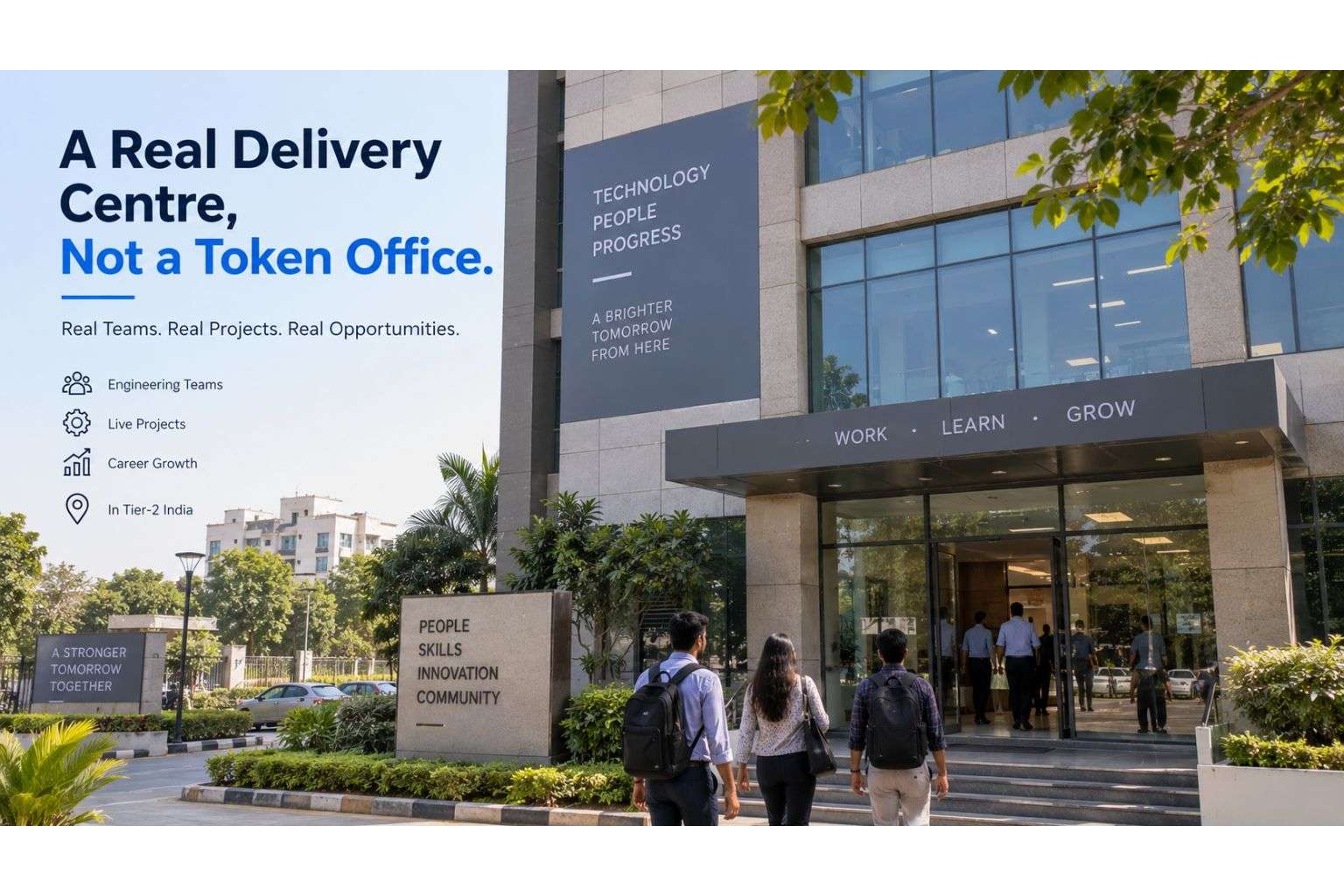
FAQ 2 — How do I know if a company’s tier-2 city presence is a genuine, growing delivery centre or just a small token office?
This is a sharp and important question, because the difference changes your entire career trajectory for the first two to three years.
A genuine delivery centre has publicly stated headcount targets, ongoing hiring drives specifically for that location, and visible investment — new office space, training infrastructure, or a stated multi-year plan. Companies like TCS, Infosys, and Cognizant, for example, have made specific public commitments to expanding hiring and investment in cities like Visakhapatnam, with concrete crore-level investment figures and job number targets attached.
A token office, by contrast, usually has vague language — “presence in multiple cities” without specific headcount — and hiring that happens irregularly rather than as an active, ongoing recruitment channel. If a company’s career page shows the same three job postings in a tier-2 city for six months straight, that is a signal to look elsewhere for that location.
The most reliable check is simple. Search the company name alongside the specific city and the word “investment” or “expansion” for the last twelve months. Genuine delivery centres generate real news coverage — funding announcements, hiring targets, facility openings. Token offices generate almost nothing.
Consultant’s note — I run this exact check with my students before they get excited about any tier-2 opening. A five-minute search saves you from joining a location that gets quietly wound down eighteen months later. Do this homework before you apply, not after you get the offer.
FAQ 3 — Will taking a tier-2 engineering job in India limit my long-term career growth compared to starting in a metro?
This question comes from a real historical pattern, and I want to acknowledge that pattern honestly before explaining why it is weakening.
Historically, career growth in Indian IT was tied to visibility — being physically present where decision-makers, client-facing teams, and leadership sat, which usually meant Bengaluru, Hyderabad, or Pune. A tier-2 role genuinely limited certain kinds of exposure, particularly client-facing and cross-team leadership opportunities.
That pattern is weakening for three specific reasons. First, hybrid and remote-first working norms mean cross-team visibility increasingly happens over video calls and shared documentation, not physical proximity. Second, GCCs specifically are building innovation and R&D mandates into their tier-2 centres, not just delivering routine work, which means genuine skill-building opportunities now exist outside metros too. Third, as tier-2 hiring keeps growing at roughly twice the metro pace, companies are being forced to build real career ladders in these cities to retain the people they are hiring there, rather than treating tier-2 staff as permanently junior.
What has not disappeared entirely is the metro advantage for a very specific kind of role — sales, business development, and senior client relationship roles still cluster heavily in metros because client meetings happen there. If your long-term ambition is specifically that kind of role, a metro base still helps more.
Consultant’s note — I ask every student this question directly during counselling. If your ambition is deep technical mastery — architecture, AI engineering, cloud specialisation — a strong tier-2 GCC role serves you as well as a metro one today. If your ambition is client-facing leadership, factor that in early, because it still tilts toward metro exposure.
FAQ 4 — Should I prioritise a tier-2 role at a large company like TCS or Infosys, or a smaller GCC role that might pay more but feels riskier?
This decision comes down to what you personally value most in your first two years, and I want to give you a direct framework rather than a diplomatic answer.
A large, established company’s tier-2 delivery centre — TCS in Bhubaneswar, for instance — gives you structured training, predictable career progression, and low risk of the office shutting down. The trade-off is that the work, especially in your first year, tends to be more standardised and less specialised.
A GCC or product-company role in a tier-2 hub tends to pay more, involve more specialised and modern technology work, and offer faster skill growth — but carries slightly more uncertainty, particularly if the centre is newer and has not yet proven its long-term commitment to that location.
My honest guidance for a first job specifically — if you have no offer in hand yet and are choosing where to apply, apply to both categories in parallel rather than picking one path exclusively. If you have offers from both types in hand, and the GCC role is from a company with a confirmed multi-year investment plan for that city, take the GCC role for the pay and the specialised skill exposure. If the GCC’s commitment to that location looks uncertain, the large-company delivery centre is the safer first move, with a switch to a GCC role planned for your second or third year once you have hands-on experience to show.
Consultant’s note — I tell students not to romanticise either option. A stable large-company job with slower growth and a higher-paying but less certain GCC job are both legitimate first steps. The mistake is picking based on prestige of the company name alone rather than the actual substance of the role and the city commitment behind it.
FAQ 5 — Do tier-2 engineering jobs in India require different skills or preparation compared to metro-based roles?
The core technical preparation does not change — data structures, your chosen programming language, and fundamental computer science concepts matter equally whichever city hires you. What changes is the weighting of certain supporting skills.
Because distributed and remote hiring removes the in-person interview advantage, written and video communication skills matter more for tier-2 and remote roles than they historically did for metro campus placements. A student who communicates clearly on a video call and in written project documentation has a real edge, because the interviewer is forming their entire impression of you through a screen.
GCC-specific tier-2 roles particularly reward cloud, data, and AI-adjacent skills, because 64 percent of new GCC roles in 2026 require exactly these skill categories. A student targeting tier-2 GCC hiring specifically should weight their preparation toward these areas more than a student purely targeting a large service company’s standard fresher pipeline.
Portfolio evidence matters more for tier-2 and remote applications specifically, because the recruiter cannot rely on campus reputation or physical proximity as an informal signal of quality — your GitHub, your certifications, and your documented projects have to carry that weight instead.
Consultant’s note — I coach students preparing for tier-2 and remote roles to over-invest slightly in communication practice and portfolio documentation compared to students preparing purely for a traditional campus drive. The technical bar is the same. The way you prove you have cleared it is different.
FAQ 6 — How do I find out which specific tier-2 cities and companies are actively hiring right now, rather than relying on outdated lists?
This is a practical and genuinely important question, because hiring maps in India are shifting every few months right now.
Start with the specific companies listed in this guide and check their career pages directly, filtered by city, on a weekly basis rather than a one-time check. Company career portals update faster and more reliably than most third-party job aggregators for this kind of location-specific search.
Follow state-level industrial and IT investment announcements for your region specifically. Odisha, for example, has its own GCC policy actively encouraging this kind of investment — my Odisha GCC Policy guide explains exactly what that means for engineering freshers in this state.
Industry reports from firms tracking this shift specifically — such as annual GCC readiness assessments covering multiple tier-2 cities — are published periodically and name the specific cities gaining momentum. These are more reliable than general news headlines because they are based on structured, comparative data across cities.
Consultant’s note — I update my own tracking of this landscape every quarter because it genuinely moves that fast. What was true about a city’s hiring activity a year ago may already be outdated. Build the habit of checking company career pages directly rather than trusting a list, including this one, as permanently fixed.
FAQ 7 — Is remote-first hiring for tier-2 candidates a stable, long-term trend, or could companies reverse it and demand relocation again?
Students are right to ask this rather than assume any hiring trend is permanent, and I want to give you a genuinely balanced answer.
The structural drivers behind distributed and tier-2 hiring are economic, not sentimental, which makes them more durable than a temporary policy choice. Companies are not doing this out of goodwill toward tier-2 talent. They are doing it because it reduces cost, reduces attrition, and expands their talent pool, and all three of those incentives remain in place regardless of short-term economic cycles.
What could genuinely shift is the specific ratio of remote versus in-office expectation within a tier-2 role, even if the tier-2 hiring itself continues. Some companies have already tightened return-to-office expectations for certain roles even while maintaining and expanding tier-2 delivery centre hiring — the two trends are not contradictory, because in-office in a tier-2 city is still tier-2 hiring, just not remote-from-anywhere.
My honest read is that the shift toward hiring engineering talent physically located in tier-2 cities is a durable, multi-year trend, driven by cost and talent economics that are not going away. The more specific question of whether a given role stays remote-from-anywhere or becomes office-based-in-that-city is the part that could genuinely change, and students should read individual job postings carefully rather than assuming every tier-2 role is permanently remote.
Consultant’s note — I tell students not to over-index on “remote forever” as a promise from any employer. Plan your preparation and city choice around genuine tier-2 delivery centre growth, which is the durable trend, rather than around a specific remote-work policy, which companies do adjust from time to time.
FAQ 8 — What happens to tier-2 engineering jobs in India as AI automates more routine coding and support work?
This is an important question, and students are right to connect it directly to tier-2 hiring specifically, because a meaningful share of tier-2 delivery centre work has historically been the kind of routine, process-driven work that AI tools are automating fastest.
The honest trend I am watching is a shift in what tier-2 centres are being asked to deliver, not a shrinking of tier-2 hiring itself. Roughly 80 percent of capability centres launched in 2026 are described as “AI-first” in mandate, meaning the newer wave of tier-2 GCC investment is specifically built around AI-adjacent, judgment-heavy work rather than the routine support work that is most exposed to automation.
This means the safest tier-2 engineering roles to target in 2026 are the ones tied to genuine engineering, data, cloud, and AI-adjacent skill sets rather than pure manual testing or basic support ticketing, which face the most direct automation pressure regardless of which city they are based in.
The location itself — tier-2 versus metro — is not the variable that determines AI exposure. The type of work is. A tier-2 AI engineering role is safer than a metro manual-testing role, not the other way around.
Consultant’s note — I tell every student the same thing regardless of which city they are targeting. Build genuine skill depth in cloud, data, or AI-adjacent areas, and the city becomes a much smaller factor in your long-term job security than the nature of the work itself.
FAQ 9 — Can a third-year or final-year engineering student in a tier-2 college realistically target these tier-2 city jobs, or do these companies mostly hire from tier-1 colleges even for tier-2 city roles?
This question reflects a genuine and understandable worry, and I want to answer it with real evidence rather than reassurance alone.
The evidence points toward tier-2 city roles being genuinely more accessible to tier-2 college students specifically, not less. Freshers with zero to three years of experience account for 61 percent of tier-2 job postings, and entry-level hiring specifically has become the backbone of tier-2 expansion — a much higher proportion than the equivalent metro figure. Companies expanding into tier-2 cities are frequently doing so in part to access tier-2 college talent pools directly, rather than flying tier-1 college graduates into tier-2 offices.
That said, tier-2 college students should not assume the bar is lower. The applications are now more competitive precisely because distributed hiring has widened the applicant pool to the entire country for many of these roles. What genuinely helps a tier-2 college student is applying to companies with a confirmed centre near their own city, where local hiring intent is explicit, rather than competing nationally for a small number of remote-from-anywhere postings.
Consultant’s note — I have placed dozens of students from BPUT-affiliated colleges across Odisha into exactly this kind of role over the past two years. Your college tier matters less here than your preparation and your targeting. Apply specifically to companies with a stated presence in your own city first.
FAQ 10 — How long does it typically take to get placed into a tier-2 engineering job in India through off-campus channels if campus placement does not work out?
This is a practical, scheduling-focused question, and I want to give you a realistic timeline rather than an optimistic one.
For a student with solid fundamentals, a reasonable portfolio, and a targeted application strategy focused on the specific companies and cities covered in this guide, a realistic off-campus timeline runs eight to sixteen weeks from serious, consistent application effort to an offer — assuming genuine daily effort, not sporadic applications.
Students who apply broadly and inconsistently, without targeting specific companies with confirmed tier-2 hiring intent, often take significantly longer, sometimes six months or more, simply because they are competing in a much less targeted, higher-volume applicant pool.
The single biggest timeline accelerator I have observed is applying directly through company career pages for the 15 companies with confirmed tier-2 presence, rather than relying only on general job portals, because career-page applications for city-specific roles face less competition than the same role posted generically on a large aggregator.
Consultant’s note — I tell students preparing for this specific path to treat it as a genuine part-time job for eight weeks — daily applications, weekly portfolio updates, consistent follow-up — rather than something squeezed in occasionally. Students who commit to that intensity consistently land offers faster than students who apply casually over a longer stretch.

What to Do This Week — Your Tier-2 Engineering Jobs India Action Plan
If you are in first or second year — Pick two cities from this guide close to your hometown or preferred region. Bookmark the career pages of the companies with confirmed delivery centres there. Spend this week building one small project you can document properly on GitHub. Location advantage means nothing without evidence of skill behind it.
If you are in third year — Start tracking the 15 companies listed here weekly, not occasionally. Identify which two or three have delivery centres nearest your city or strongest in your area of interest — cloud, data, or core software. Begin building the portfolio project that will carry your off-campus applications, because campus placement season will arrive faster than it feels right now.
If you are in final year — If campus placements have not worked out yet, this week is for building your off-campus pipeline specifically around tier-2 delivery centres. Apply directly through the career pages listed in this guide, tailor each application to the specific city and company, and commit to daily follow-up for the next eight weeks. Read my off-campus placement strategies guide alongside this action plan.
Tier-2 engineering jobs in India are not a fallback anymore. They are a genuine, growing front door into this industry, and the students who understand that first will be two years into strong careers while others are still waiting for a metro offer that may never come.
Completing your career preparation? Read our guides on Remote Tech Jobs for Freshers 2026 and Fresher Salary in India 2026 to understand how tier-2 hiring connects to the broader 2026 job market for Indian engineering students.