How AI-Powered ATS Systems Screen 10,000+ Applications — A 27-Year IT Career Consultant’s Honest Guide for Indian Freshers in 2026
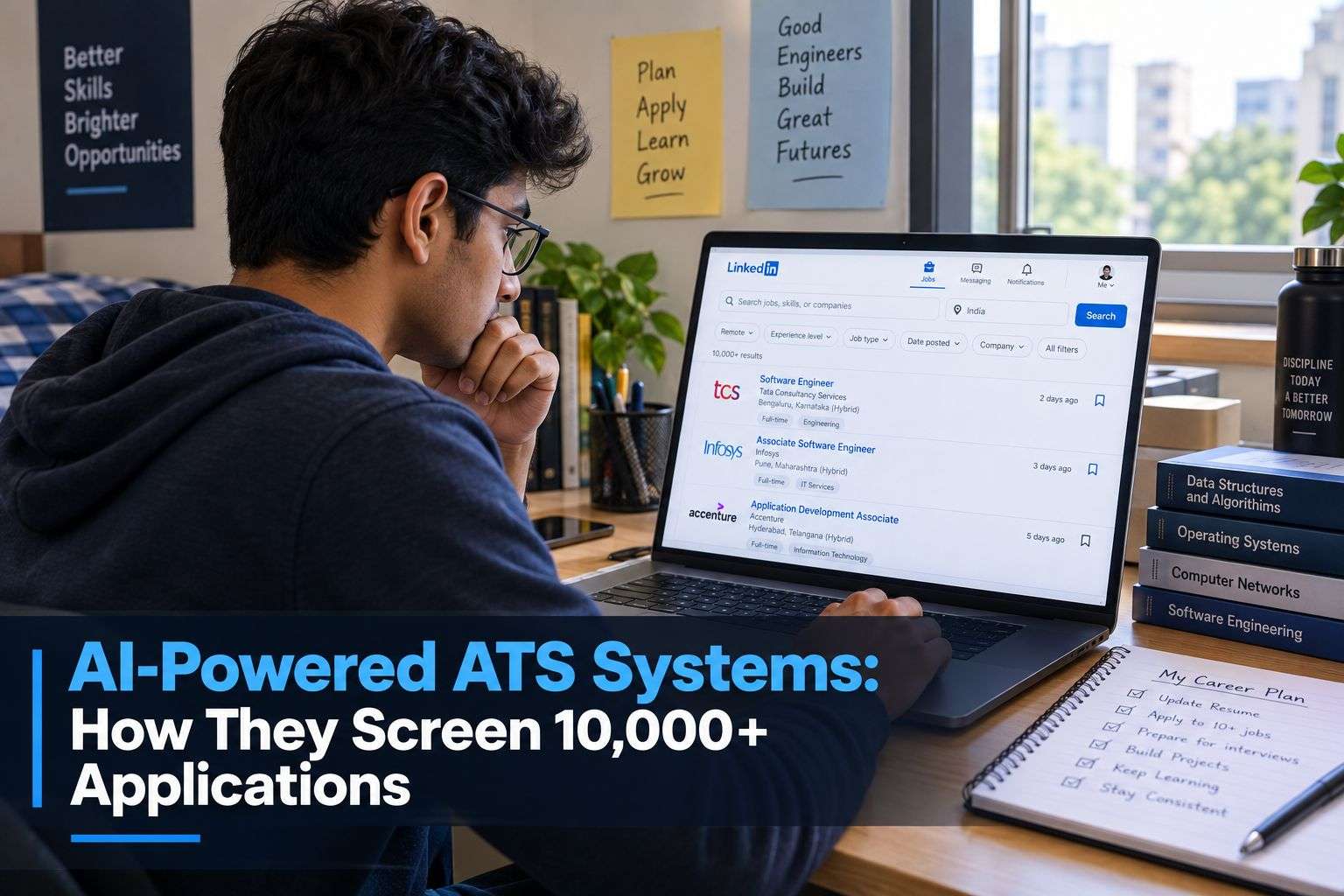
AI-powered ATS systems are the reason your resume disappears into silence after you hit submit. I have counselled engineering students in Bhubaneswar, Cuttack, Rourkela, and Berhampur for 27 years, and this is the question I get asked more than almost any other right now — why did I not even get a rejection email? Here is the number that should make you sit up. A single fresher opening at a large Indian IT company can now receive between 8,000 and 15,000 applications in a single week. No recruiter, no team of recruiters, reads that by hand. AI-powered ATS systems read it first.
This blog is not going to scare you with a fake statistic. It is going to tell you exactly how AI-powered ATS systems actually work in 2026, what Indian recruiters really do with them, which parts of the “beat the bots” advice online are outdated, and what you should genuinely do about it, by college year.
What AI-Powered ATS Systems Actually Are — In Plain Language
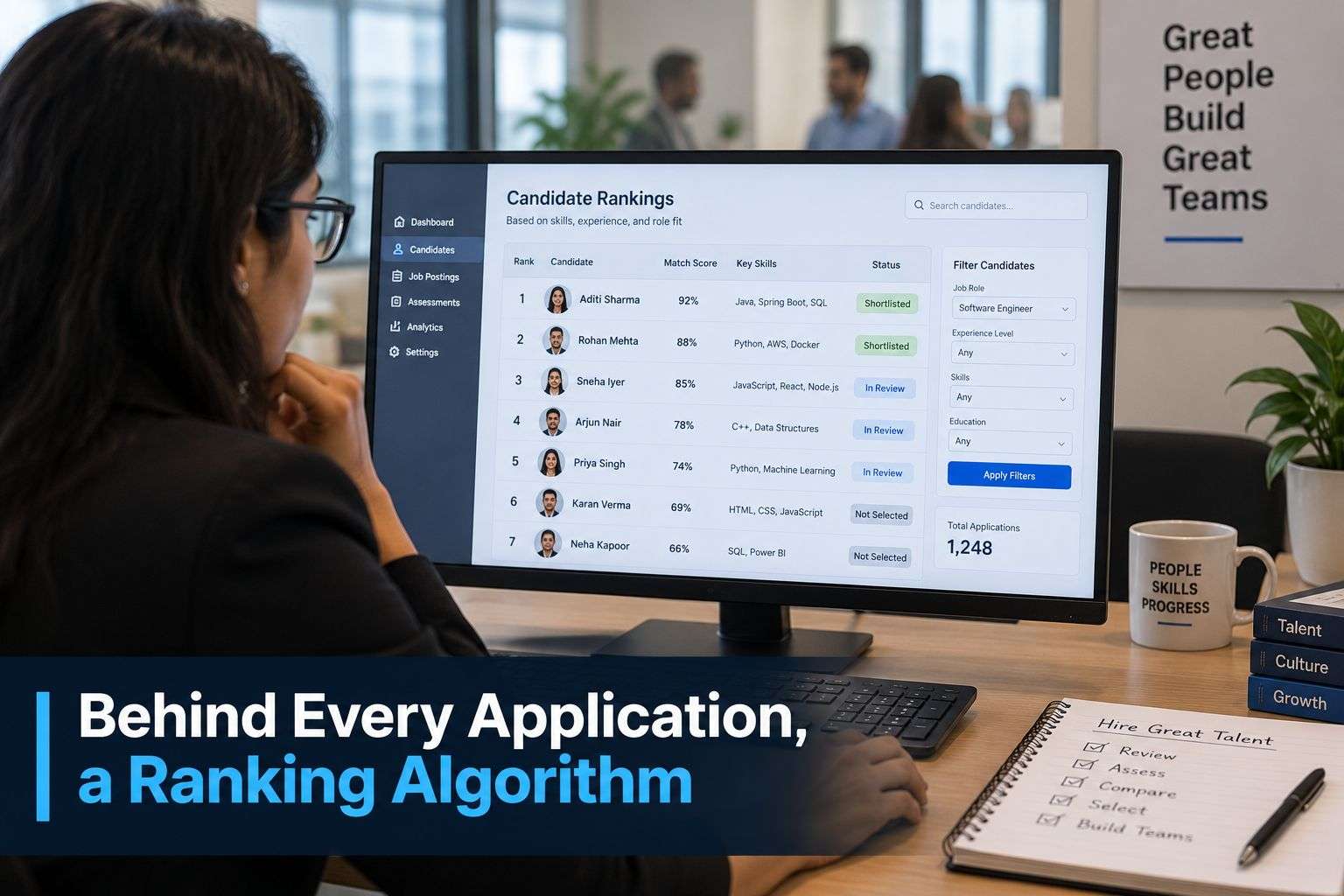
An Applicant Tracking System, or ATS, is software that a company uses to collect, sort, and manage every application that comes in for a job opening. Almost every large employer in India uses one — TCS, Infosys, Wipro, HCLTech, Cognizant, Accenture, and most GCCs setting up in Odisha under the state’s GCC policy all run on some version of this software. Jobscan’s research puts ATS adoption among Fortune 500 companies at close to 98 percent, and Indian mass recruiters are no exception.
What has changed in the last two years is the word “AI.” Older ATS platforms mostly did keyword matching — a simple search-and-count against your resume text. AI-powered ATS systems go a step further. They use natural language processing to understand context, not just exact words. If your resume says “built a web application” and the job description says “developed a web app,” an AI-powered ATS system is far more likely to recognise that as a match than a keyword-only system from five years ago was.
This matters because it changes the advice. Old-style keyword stuffing — pasting the entire job description in white text at the bottom of your resume — does not work against AI-powered ATS systems the way it once might have against basic keyword scanners. Modern systems are better at spotting that trick, and being caught gaming the system does more damage to your application than a slightly lower keyword match ever would.
How AI-Powered ATS Systems Actually Screen a Resume
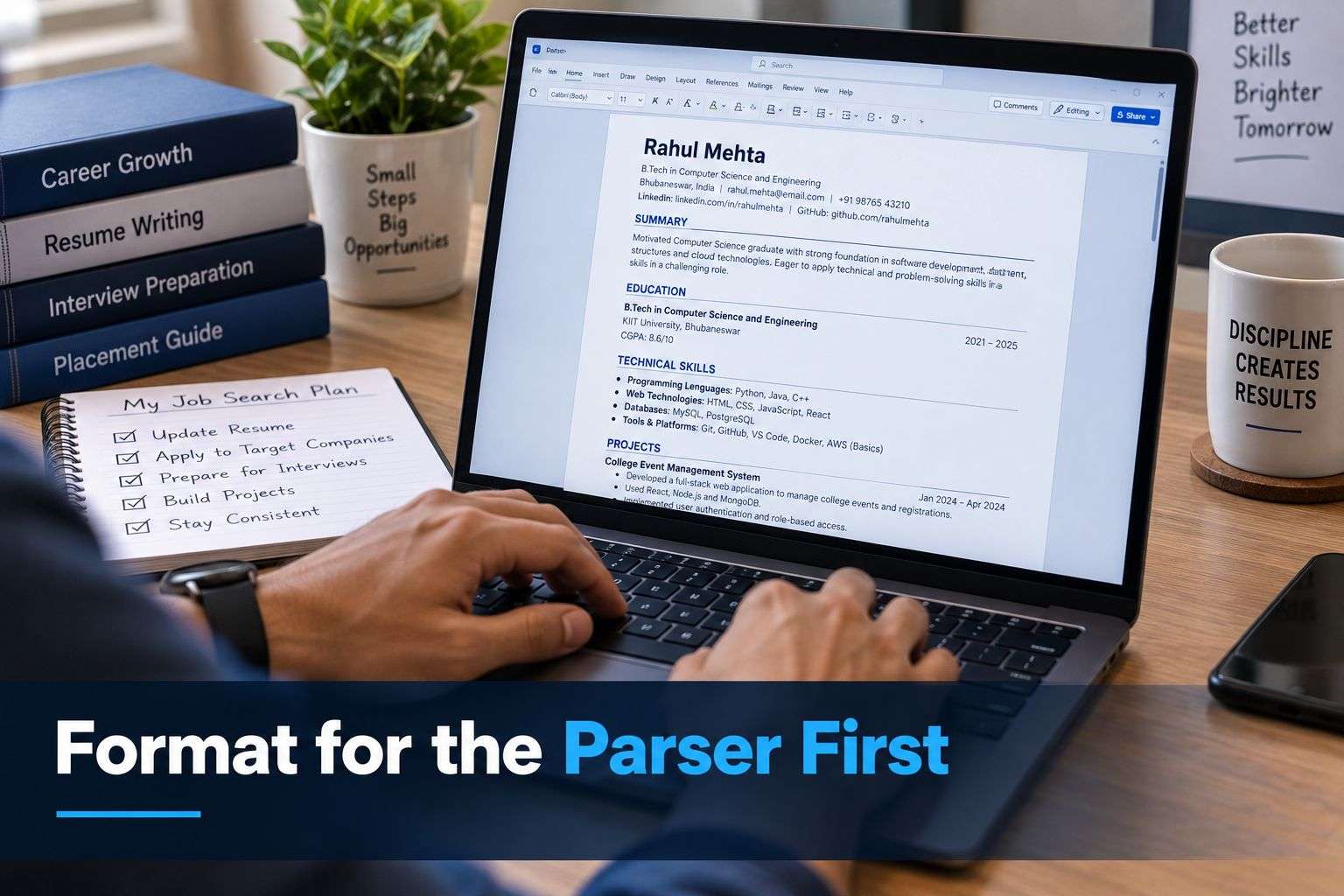
Every AI-powered ATS system, regardless of the vendor, runs your application through roughly the same four-stage process.
Parsing comes first. The system extracts the raw text from your file and tries to sort it into fields — your name, contact details, education, skills, and work history — based on your headings and layout. This is the stage where most fresher resumes quietly lose points, not because of anything you wrote, but because of how you formatted it. Multi-column layouts, tables, text boxes, and resumes saved as images all confuse the parser. Industry data shows multi-column resumes lose accuracy in parsing compared to a clean, single-column layout — some studies put the gap as high as 50 percent of content getting misread or dropped entirely.
Keyword and context matching comes next. The AI-powered ATS system compares your parsed resume against the job description and scores how closely your skills, tools, and experience align with what the role is asking for. This is where a fresher applying with a generic, one-size-fits-all resume falls behind a fresher who tailors each application, even slightly, to the specific posting.
Ranking follows. The system does not usually delete or hide low-scoring resumes outright. It ranks the entire applicant pool and surfaces the highest-scoring resumes to the recruiter first. When a posting gets 8,000 applications, the recruiter may only ever open the top 200 to 300 in the ranked list. Technically your resume is still “in the system.” Practically, if it is ranked at position 6,000, it may as well not exist.
Human review is the final stage, and this is the part most students get wrong in their heads. AI-powered ATS systems rarely make the final call on their own.
The Myth You Need to Stop Believing About AI-Powered ATS Systems
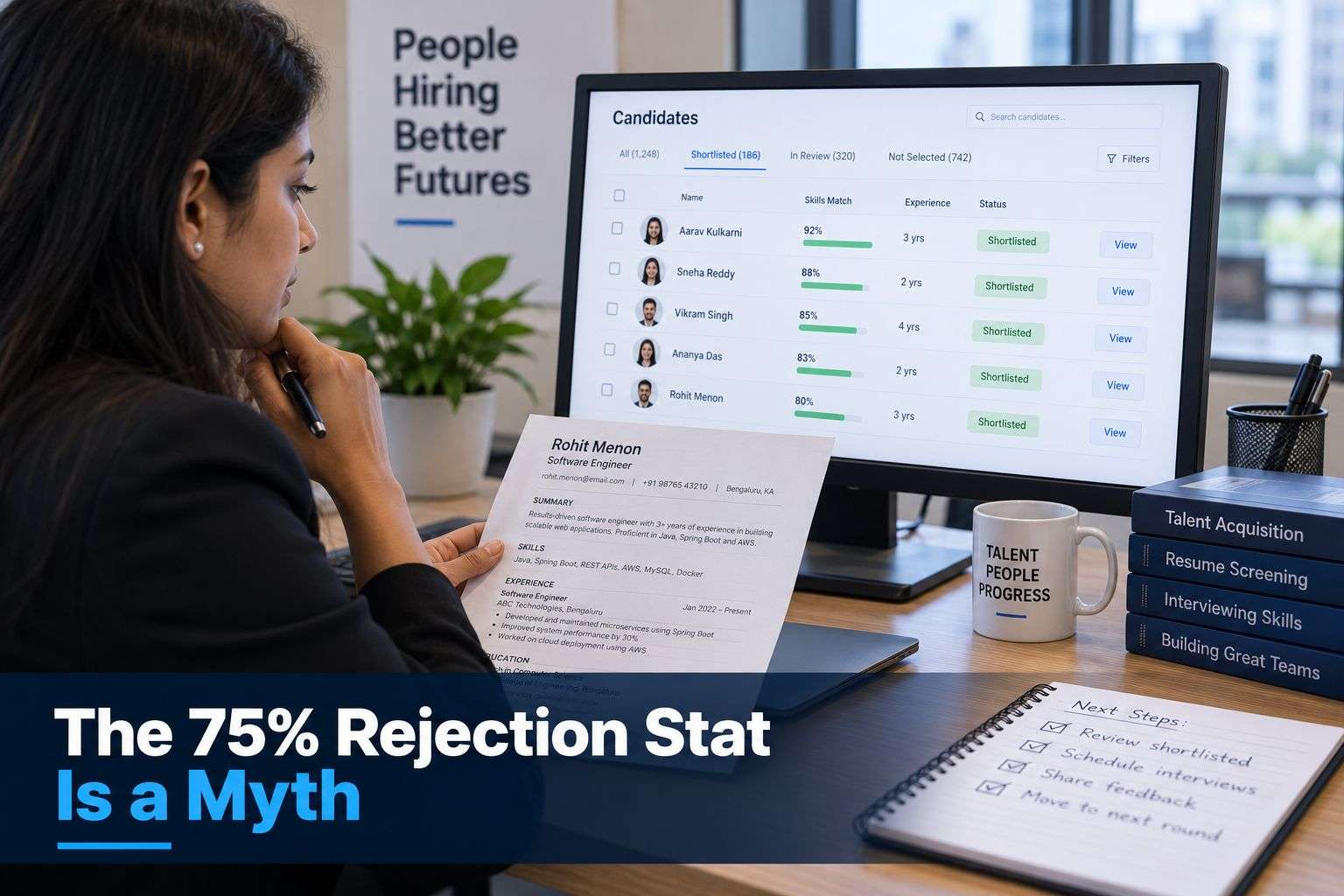
I am going to say something that goes against almost everything you have read on LinkedIn about this topic. The claim that “75 percent of resumes are auto-rejected by AI-powered ATS systems before a human sees them” has no solid research behind it. It traces back to marketing material from a small resume-optimisation company in 2012 that shut down the following year. No study, no dataset, nothing was ever published to support it. It has simply been repeated so often that it now sounds like established fact.
A more recent, transparent study interviewed 25 recruiters across ten different ATS platforms — including Workday, Greenhouse, and iCIMS — and found that 92 percent said their systems are not configured to automatically reject resumes based on content at all. Only two recruiters in the entire sample had auto-rejection rules switched on. What actually filters out candidates before human review is usually something much simpler — knockout questions. Hard requirements the employer sets, like minimum years of experience or eligibility criteria, not a hidden AI judgment about the quality of your writing.
I am not telling you this so you relax and stop tailoring your resume. I am telling you this because panic about “beating the algorithm” pushes students toward the wrong fixes — keyword stuffing, invisible text tricks, buying expensive “AI resume optimiser” subscriptions — when the real, boring fix is simpler and free. Fix your formatting. Match your language to the job description honestly. That is most of the battle.
What Genuinely Gets Freshers Rejected by AI-Powered ATS Systems
Since the dramatic version of the story is mostly myth, here is the honest version, based on what actually causes rejection.
Keyword mismatch is the single biggest cause. One large-scale analysis of resume scans found that 82 percent of rejected resumes had fewer than half the required keywords present, even when the candidate’s actual experience matched the role. The problem was not missing skills. It was missing the exact words recruiters and AI-powered ATS systems were searching for.
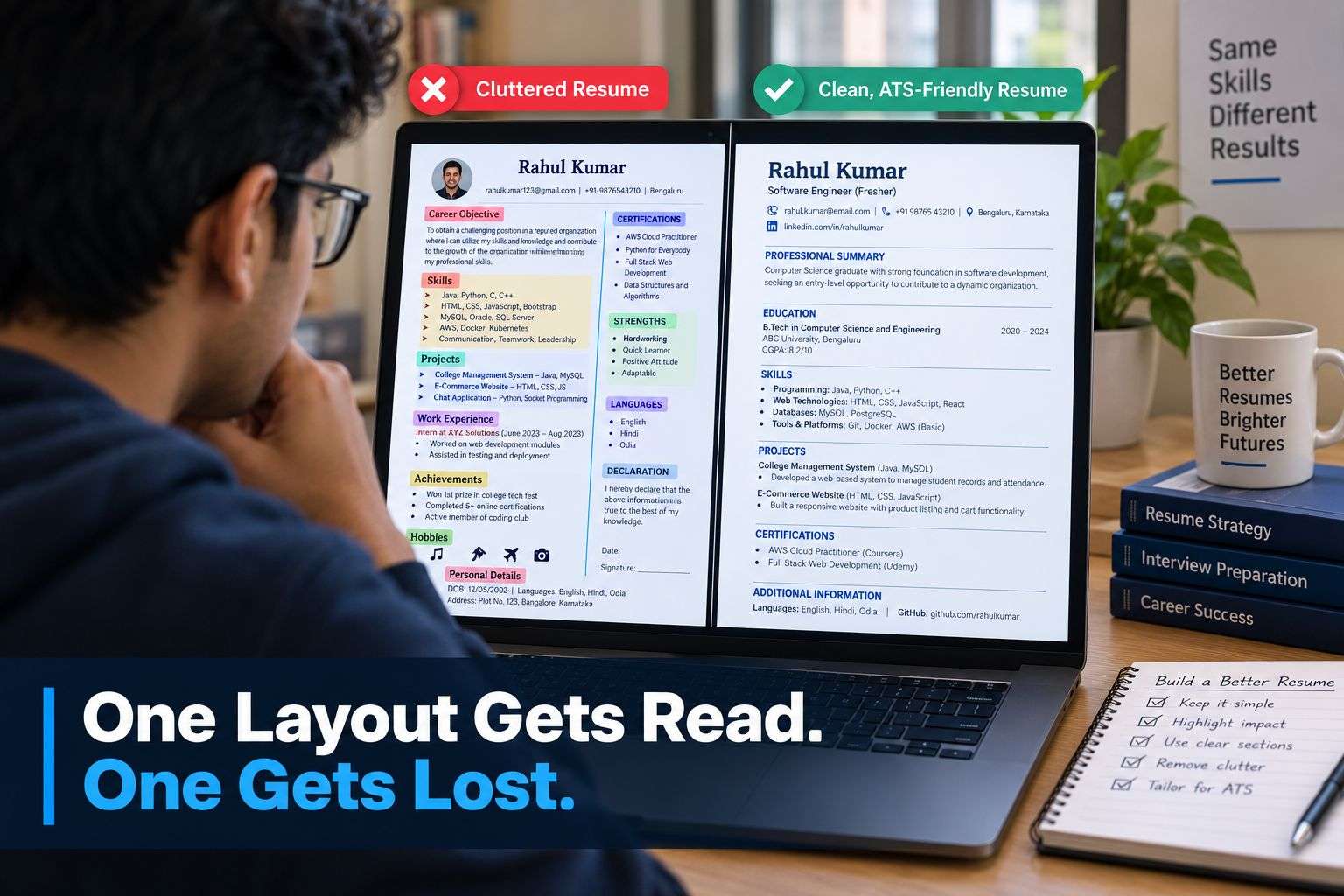
Formatting failures are the second biggest cause. Roughly a third of rejected resumes in the same dataset had at least one critical formatting problem, and multi-column layouts were the single biggest culprit. If you have ever downloaded a “creative” resume template with a sidebar, a photo, and icons, and wondered why you never hear back — this is very likely why.
Generic, one-version-for-everyone resumes underperform badly. Tailoring your resume, even with small changes per application, meaningfully improves how it scores against each specific job description. A fresher applying to fifty jobs with the identical resume is working harder than a fresher applying to fifteen jobs with a resume adjusted each time — and getting fewer calls for the extra effort.
How This Plays Out Specifically for Indian Freshers
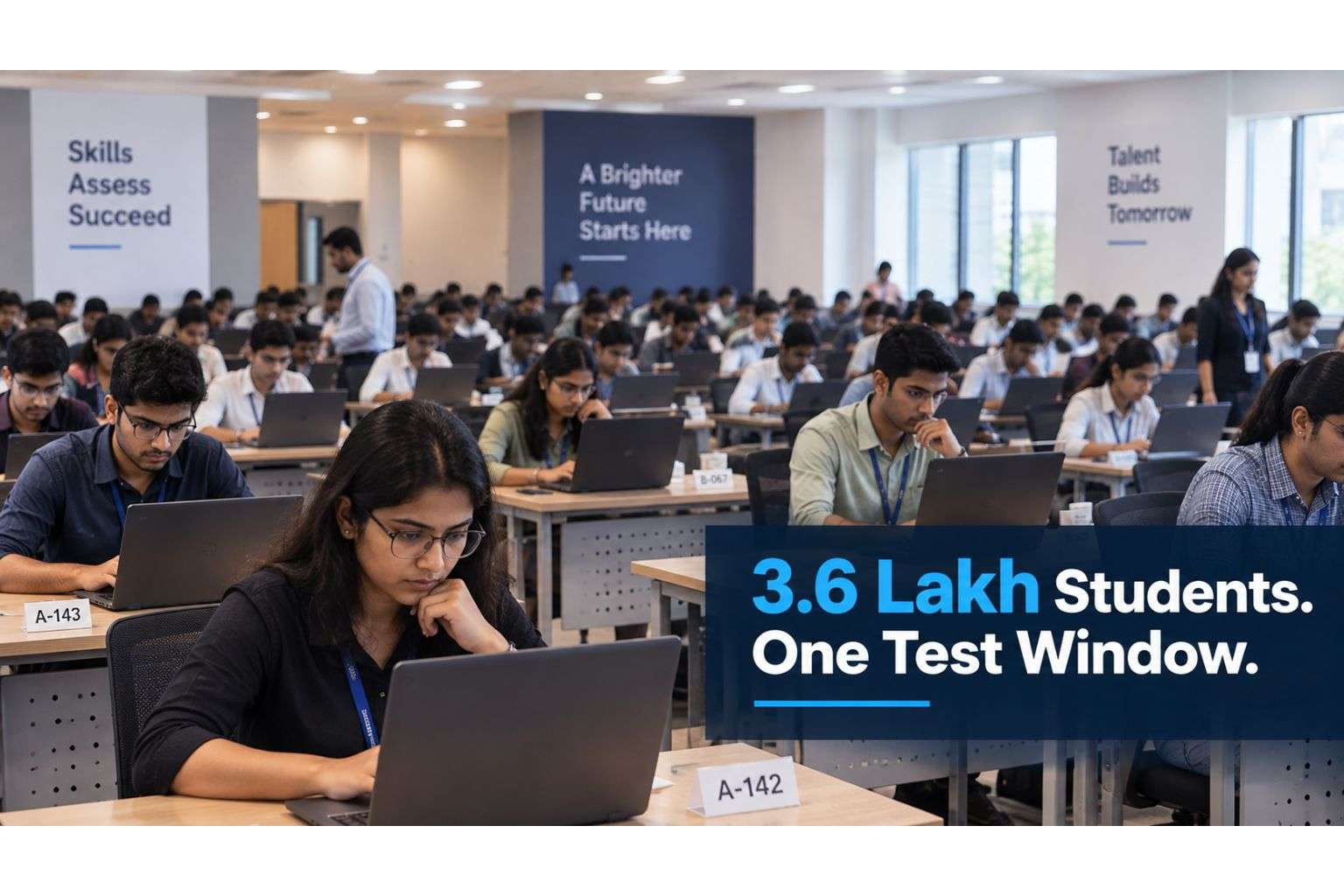
Fresher hiring in India runs at a scale that is hard to picture until you see the numbers. TCS’s National Qualifier Test alone has drawn more than 3.6 lakh students from over 2,600 colleges in a single recruitment cycle. When volume runs into the lakhs, an AI-powered ATS system is not an optional convenience for the employer. It is the only realistic way the process functions at all.
I have already written in detail about the tools recruiters expect freshers to be comfortable with in AI Tools for Freshers Placement 2026, and about building a resume that survives the first screen in AI Recruiter Resume for Indian Freshers in 2026. This blog is the missing middle piece — understanding the machine itself, not just the resume you send it.
One pattern I see constantly in my counselling sessions from students in Odisha is applying to the same five companies with the same PDF, month after month, and assuming the silence means they are simply not good enough. Very often, it means the AI-powered ATS system never ranked them highly enough for a human to even see the resume. That is a fixable, mechanical problem, not a judgment on your ability.
Three Mistakes Freshers Make With AI-Powered ATS Systems

Mistake 1 — Designing for humans first, machines never. A resume with a photo, a skills chart, and a two-column layout might look impressive to a friend. To an AI-powered ATS system, it often parses as a broken jumble of half-read text. Design for the parser first. A clean resume still looks perfectly professional to a human recruiter.
Mistake 2 — Copying the exact job description word for word. Some students, after hearing about keyword matching, paste large blocks of the job posting directly into their resume. AI-powered ATS systems are increasingly good at spotting this pattern, and it reads as dishonest rather than well-matched. Use the same terms the job description uses, but describe your own real projects and coursework with them.
Mistake 3 — Treating the ATS stage as the whole battle. Passing the AI-powered ATS system’s ranking gets you in front of a human. It does not get you the job. I have counselled too many students who spent weeks perfecting keyword density and then walked into the actual interview unprepared, because they treated the software as the finish line rather than the first gate. For the round after this one, my guide on How to Crack Campus Placement in 3 Months covers what comes next.
Your AI-Powered ATS Action Plan, By College Year
If you are in first or second year – Build your resume the right way from the start, using a clean, single-column format with standard section headings like Education, Skills, and Projects. Avoid resume templates with sidebars, tables, or graphics, no matter how attractive they look in Canva’s preview. This habit, formed early, saves you a painful rebuild later.
If you are in third year — Start keeping two or three versions of your resume, each tilted slightly toward a different type of role — one for core development roles, one for analyst or non-coding roles, one for your specific branch’s core engineering roles. Practise rewriting your project bullet points using the exact language different job postings use, without exaggerating what you actually did.
If you are in final year — Before your placement season starts, run your current resume against three or four real job postings you are targeting and note which keywords are missing. Rebuild your GitHub and LinkedIn profiles alongside your resume, since AI-powered screening increasingly checks these too — my guide on GitHub Profile Tips That Actually Get Indian Students Noticed walks through exactly what recruiters look for there. And once your resume clears the AI-powered ATS system stage, shift your remaining prep time toward the human round, using the fresher resume checklist in How to Write a Fresher Resume for IT Companies.
The Honest Bottom Line on AI-Powered ATS Systems
AI-powered ATS systems are not the villain that job-search folklore makes them out to be, and they are not going away either. They exist because Indian fresher hiring runs at a volume no human team could process manually. Understanding how they parse, match, and rank your resume turns a mysterious black box into a mechanical problem you can actually solve — cleanly formatted, honestly tailored, one application at a time.
Reference Read —
- 8,000–15,000 applications per India IT posting → ATS Verification — For Job Seekers in India — confirms a single top-tier IT services job posting in Bangalore can draw thousands of applications in a week.
- 92% of recruiters do not auto-reject by content → ClearanceJobs — Recruiters Reveal ATS Doesn’t Kill Your Resume — Enhancv’s interviews with 25 US recruiters across major ATS platforms.
- Keyword mismatch and formatting failure data → ApplyMate — ATS Statistics 2026 — resume screening data on rejection causes and Fortune 500 ATS adoption.
FAQs — AI-Powered ATS Systems for Indian Freshers
FAQ 1 — Do AI-powered ATS systems really reject my resume automatically if I miss one keyword?
No, and this fear stops far too many good candidates from applying at all. AI-powered ATS systems generally score your resume against the job description rather than issuing a flat rejection over a single missing word. A missing keyword lowers your rank in the pool; it rarely disqualifies you outright unless it happens to be a hard knockout requirement the employer set, like a specific degree or minimum CGPA.
What actually hurts you is a pattern of many missing keywords across your whole resume, combined with poor formatting that prevents the system from reading your content accurately in the first place. One missing word is not the crisis it is made out to be online. A resume with almost none of the role’s core terms anywhere in it, however, will rank very low no matter how strong your actual experience is.
Consultant’s Note — I tell every student the same thing before they panic over one keyword. Fix the big, structural things first — your formatting and your overall language match — before you obsess over a single term. The system is scoring the whole document, not scanning for one missing tick mark.
FAQ 2 — Should I use white text or hidden keywords to trick AI-powered ATS systems?
Please do not do this. It used to be common advice years ago, and it is actively risky with modern AI-powered ATS systems. Many current platforms specifically flag resumes with hidden text, invisible characters, or keyword lists that do not appear in the visible document, and being flagged this way can hurt you more than a lower keyword match ever would.
Beyond the technical risk, there is a simpler reason to avoid it. If your resume somehow does get through with hidden keywords, the interview round that follows will expose the gap immediately, because you cannot bluff your way through a technical or HR conversation the way you might with a keyword scan. The honest path — genuinely tailoring visible content to match the role — takes slightly longer but actually holds up.
Consultant’s Note — In 27 years I have never seen a student’s career improve because of a trick. I have seen several careers get delayed because a shortcut got flagged. Spend the extra fifteen minutes rewriting your bullet points honestly instead.
FAQ 3 — I am from a non-CS branch. Do AI-powered ATS systems treat my resume differently?
Not because of your branch itself, but because of the language your resume uses. AI-powered ATS systems
match against the specific skills and terms in a job posting, not your degree title. A Mechanical or Electrical student applying for an IT-adjacent role needs to translate their coursework and project experience into the vocabulary that posting uses, the same way a CS student would.
The practical difference for non-CS students is usually that your existing resume language is built around your core branch, not IT terms, so the gap between your resume and an IT job description tends to be wider at the start.
This is fixable with deliberate rewriting, not branch-switching. If you built a small project using sensors and a microcontroller, describing it with words like “data collection,” “automation,” or “embedded systems” — whichever genuinely applies — helps an AI-powered ATS system see the overlap with a tech role’s requirements.
Consultant’s Note — I have guided many ECE and Mechanical students into IT-adjacent roles using exactly this translation approach. Your experience does not need to change. The words describing it usually do.
FAQ 4 — How many keywords from the job description should I actually include?
There is no fixed magic number, and any tool promising you an exact count is guessing. The more useful goal is honest coverage — make sure the core skills, tools, and qualifications explicitly named in the job description appear somewhere in your resume, in your own words, attached to real experience you actually have.
A reasonable target most career counsellors, myself included, work toward is that your resume should reflect a clear majority of the job description’s core requirements, not all of them and not a bare minimum either. If a posting lists ten specific skills and your resume genuinely covers seven or eight of them with real evidence, an AI-powered ATS system will generally rank you well. Chasing all ten by inventing experience you don’t have causes more damage in the interview than it saves at the screening stage.
Consultant’s Note — I ask students to read the job description twice before touching their resume — once for the core five skills that matter most, once for everything else. Match the core five honestly, and the rest usually falls into place naturally from your actual background.
FAQ 5 — Can I use ChatGPT or another AI tool to tailor my resume for AI-powered ATS systems?
Yes, and this is one of the most sensible uses of AI tools available to you right now. Pasting your resume and a target job description into ChatGPT and asking it to highlight gaps or suggest better keyword phrasing is a legitimate, time-saving step — I cover this in more depth in my guide on AI Tools for Freshers Placement 2026.
The caution is the same one that applies to every AI tool use in your job search. Use it to refine and check your resume, not to invent achievements or projects you never actually did. An AI-powered ATS system might not catch an exaggeration, but a technical interviewer almost certainly will, and that damage is far harder to recover from than a slightly lower match score.
Consultant’s Note — I encourage students to use AI tools as an editor, not an author. Write the first honest draft yourself, then let AI help you sharpen the language against the job description.
FAQ 6 — Do PDF or Word format resumes work better with AI-powered ATS systems?
Both formats generally parse fine with modern AI-powered ATS systems, provided the underlying resume is built simply — single column, standard fonts, no text boxes or embedded images containing your actual content. The bigger risk than the file type itself is a PDF exported from a heavily designed template that traps your text inside graphic elements the parser cannot read.
If a job posting specifically asks for one format, follow that instruction exactly, since it usually reflects what that particular company’s ATS platform handles best. When no format is specified, a simple, cleanly structured PDF is a safe default that preserves your formatting across different devices and screens well for a human reader too.
Consultant’s Note — When in doubt, I tell students to open their exported resume file and try to select and copy the text with their mouse. If you can cleanly select every line, an ATS parser almost certainly can too.
FAQ 7 — Do large IT service companies and product companies use AI-powered ATS systems differently?
Yes, broadly. Large IT service companies hiring at very high volume, like the TCS NQT drive drawing lakhs of applicants, rely heavily on AI-powered ATS systems and a subsequent standardised test to manage a genuinely unmanageable applicant number. Their screening is less about a nuanced quality judgment and more about efficiently narrowing an enormous pool to a testable size.
Product-based companies and startups, hiring far fewer freshers per role, still use AI-powered ATS systems, but recruiters there often review a higher proportion of the ranked shortlist personally, since their applicant volumes per role are smaller. This means your resume’s ranking still matters at product companies, but a slightly imperfect keyword match is less likely to bury you completely the way it can in a lakh-scale service company drive.
Consultant’s Note — I remind students chasing product companies specifically that a strong keyword match gets you noticed there, but your actual project depth carries more weight in the human round than it does at high-volume service company drives.
FAQ 8 — Will AI-powered ATS systems eventually read my resume the way a human would?
They are moving in that direction, but they are not there yet, and treating them as fully human in 2026 will still cost you interview calls. Current AI-powered ATS systems are considerably better at understanding context and synonyms than older keyword-only scanners, but they still favour clear structure, explicit terms, and standard formatting over creative or implied phrasing.
The safest approach for now is to write for both audiences at once — clear enough and keyword-matched enough for the system, genuinely informative and honest enough for the human recruiter who reads it next. That combination works today and will very likely keep working as these systems continue to improve.
Consultant’s Note — I tell every batch I mentor the same thing about this shift. Write like a competent, honest professional explaining their own work clearly. That style has quietly always worked for both machines and humans — it just took AI-powered ATS systems this long to catch up to it.
FAQ 9 — I keep getting shortlisted by the AI-powered ATS system but rejected after the interview. What does that mean?
It means your resume is doing its job, and the gap has moved to a different stage of your preparation. Getting consistently shortlisted tells you your resume’s formatting and keyword match are working — that specific problem is solved. The rejection is now happening in the interview itself, which is a separate skill from resume writing entirely.
At this point, shift your preparation time away from resume tweaking and toward mock interviews, technical depth on your own projects, and HR round readiness. Continuing to polish an already-working resume while the actual bottleneck sits in your interview performance wastes the limited weeks you have before placement season closes.
Consultant’s Note — This is one of the most common patterns I see, and it is actually good news disguised as bad news. Getting shortlisted repeatedly means the hardest, most opaque stage is already behind you. The next stage is one you can rehearse and directly control.
FAQ 10 — Are AI-powered ATS systems in India using AI video or interview screening too, not just resumes?
Increasingly, yes, particularly at larger companies and during high-volume first rounds. Some Indian employers now use AI-driven video interview platforms for an initial screening step, which review structure and relevance in your recorded responses before a recruiter watches the footage themselves. This is a separate layer from the resume-screening AI-powered ATS system, but it works on a similar principle — structured, relevant answers rank better than rambling or generic ones.
The preparation for this overlaps heavily with normal interview prep. Practise answering common questions out loud in a clear, structured way, ideally recording yourself to review afterward, rather than assuming a video round is fundamentally different from a face-to-face one.
Consultant’s Note — I have started asking students to record a few practice answers on their phone before final year, specifically because of this shift. Watching your own recording is uncomfortable the first time and genuinely useful by the third.