Fake Job Offers for Freshers – A 27+ Years Career Mentor’s Honest Guide to Checking Any Offer Before You Pay or Join (2027)
(Numbers come from LinkedIn’s 2026 research and from government advisories. Rules and scams can change. Please check official pages before you act.)
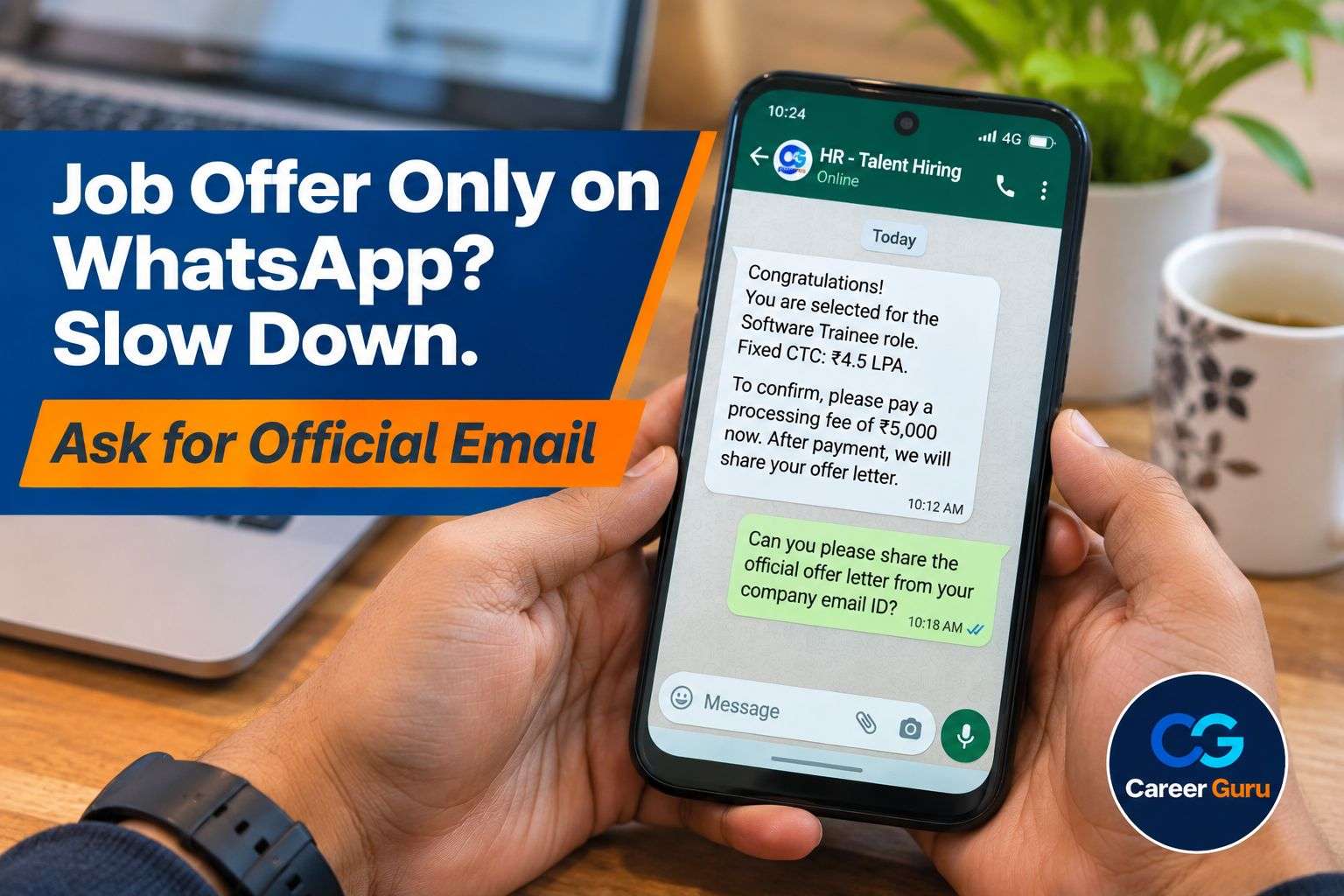
Fake job offers for freshers were the first line of a WhatsApp message I got last week. It came from a final-year Electrical student from Balasore. I will call him Manas. Under the message was a PDF. The first line said, “Congratulations! You are selected.” The company name was one every engineering student knows.
Manas had never written a test for that company. He had not even applied. The letter promised a December joining. The last line said, “Pay ₹4,500 today for ID card and medical check. After 6 pm, your seat goes to the next candidate.”
His message to me was short. “Sir, should I pay? My friends say do not lose this chance.”
I told him to wait ten minutes. Not ten days. We checked the offer together on a call. This guide gives you the same ten minutes, so you can check fake job offers for freshers on your own.
Quick answer: To check fake job offers for freshers, do five things. Never pay to get a job. Find the job on the company’s own website. Call the number from that website, not the number in the letter. Be careful when everything happens only on WhatsApp or Telegram. If something feels wrong, report it on 1930 or cybercrime.gov.in.
What Are Fake Job Offers for Freshers, Really?
A fake offer looks like a job but is built to take something from you. Mostly money. Sometimes your documents. Sometimes even your face scan.
Most fake job offers for freshers fall in three groups.
- Pay first. They ask for a registration fee, training fee, kit charge, ID card charge or “refundable” deposit.
- Data first. They ask for Aadhaar, PAN, bank details or an OTP before you have even met anyone.
- Task first. They give you small online tasks, pay you a little, and then ask for a bigger deposit.
You have no work history to check against, and you want a first job badly. Scammers know both things.
Why Fake Job Offers for Freshers Rise Between October and December
This is the season of campus drives and offer letters. Every student is checking phone and email. A scammer needs only one well-timed message.
LinkedIn’s Job Search Safety Pulse 2026 looked at this problem in India. People Matters reported that 82 percent of Indian professionals now stop to check whether a job is real before they apply. That is good news. But the young are still at risk. About 49 percent of Gen Z professionals in India said they had come close to falling for a job scam. Among Gen X, it was 36 percent. And Outlook Money’s report says 54 percent of Gen Z job seekers ignored warning signs when an offer felt too important to miss.
People do not fall because they are foolish. They fall because they are hopeful and in a hurry. That is why fake job offers for freshers work so often.
These are LinkedIn survey figures, not a count of all scams.
My placement season guide shows what real offers look like. Sadly, fake ones arrive in the same weeks.
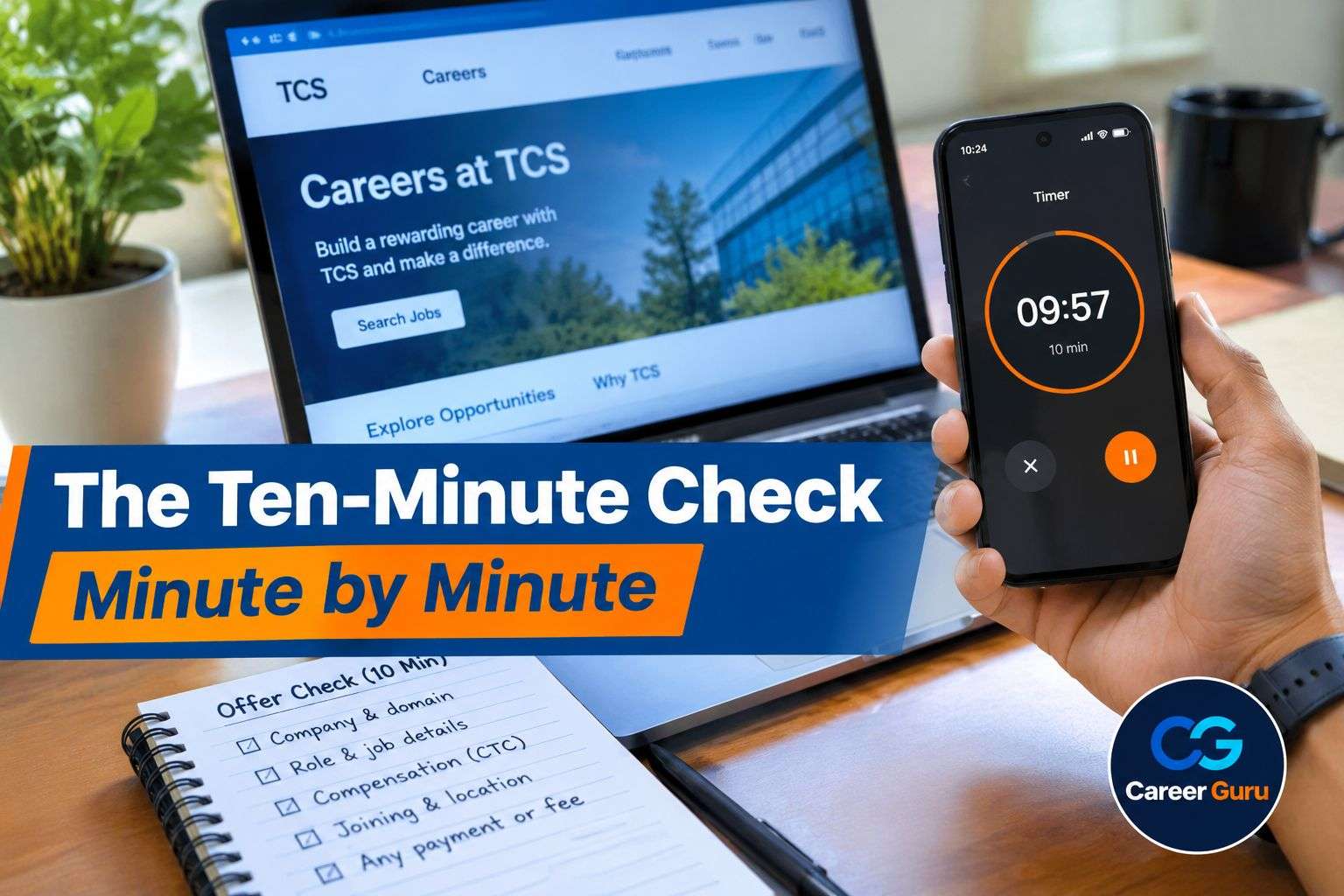
The Ten-Minute Check for Fake Job Offers for Freshers
Set a timer. Go step by step.
Minute 1: Look for the money ask in fake job offers for freshers. Real companies do not charge candidates. Infosys says it does not charge or accept any amount or security deposit from job seekers during recruitment. Wipro says it charges no fee at any stage and has not allowed any agency to collect one. So a “refundable deposit” is not a favour. It is the trap.
If money is asked to get a job, stop. The check is over.
Minutes 2 and 3: Look at who sent it. Wipro says fake offers come from public email IDs, or from unknown people on WhatsApp, Telegram or LinkedIn. A Gmail address for a big company is a red flag.
But do not stop there. Infosys warns that scammers can even make an email look like it came from the company’s own domain. A good-looking email is only a clue.
Minutes 4 to 6: Find the job yourself. Type the company’s website address yourself. Do not click the link in the message. Open the careers page. Is that role listed? Is your application there? No such opening, and no record of you? Then you have your answer.
Minutes 7 and 8: Call the official number. Take the number from the company’s own website. Never use the number printed on the letter. Ask: “Did your company send this offer to me?”
Minutes 9 and 10: Ask three questions about your own story. Did I apply? Did I sit any test or interview? Why is someone asking for my Aadhaar, bank details or a video scan now?
That last question matters more than ever. In May 2026, the Ministry of Home Affairs shared an alert from I4C, the Indian Cybercrime Coordination Centre. The CSR Journal reported it. It says some scams copy real hiring steps. A believable offer comes first. Then comes an online interview or video check, sometimes with a face or eye scan. The alert calls unusual requests for biometric data or identity documents a major red flag. It also warns about fake urgency.
If any one step fails, stop. One failure is enough.
Back to Manas. The email came from a free address. The careers page had no such opening. When we called the number from the official website, the person on the line had no record of him. Manas went quiet. Then he said, “Sir, I almost sent the money.” I said, “Almost is a good word. Keep it.”
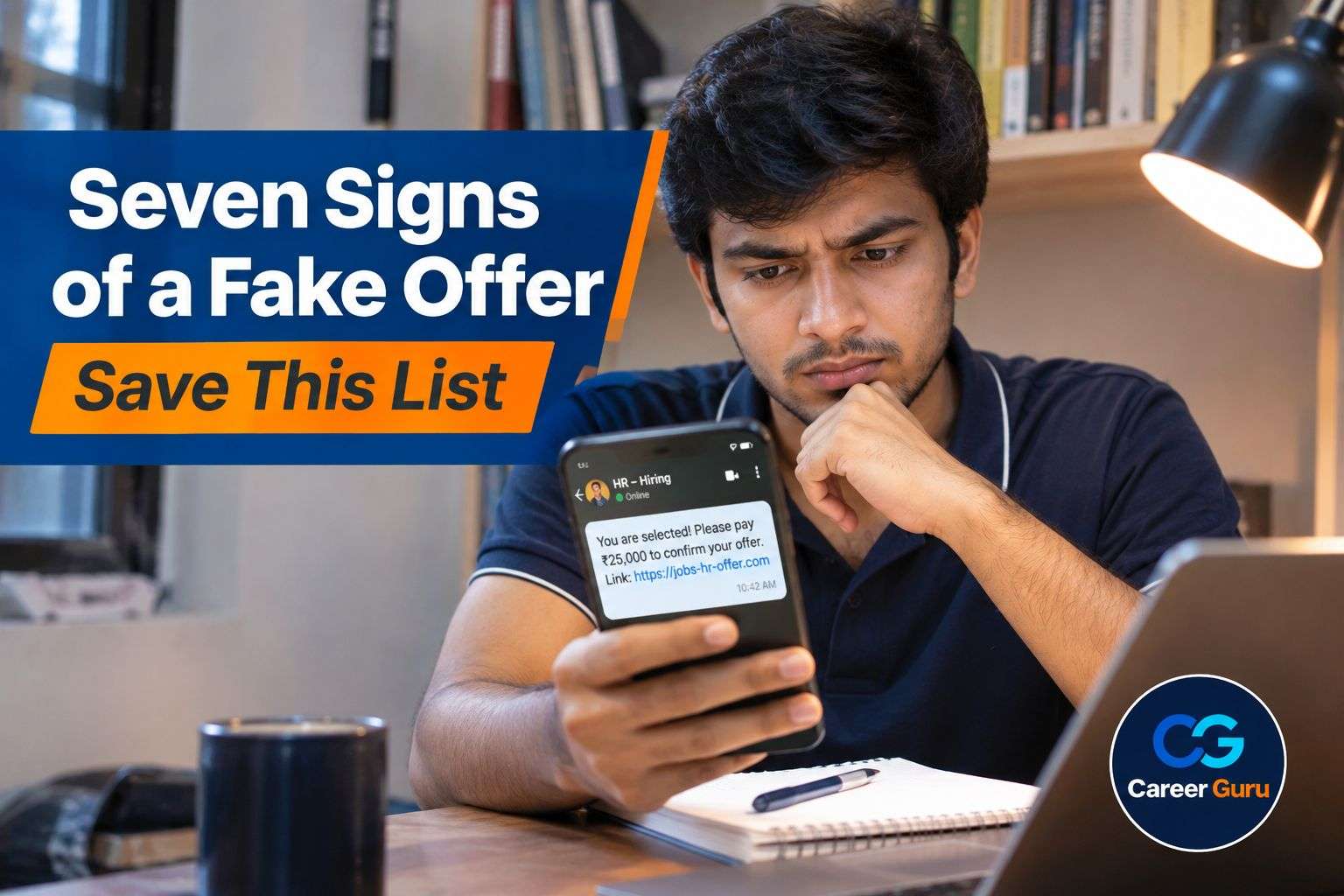
Seven Signs of Fake Job Offers for Freshers
These signs show up again and again in fake job offers for freshers. Keep this list in your phone.
- An offer with no application. You never applied, never wrote a test, never met anyone.
- A hurry. “Pay today” or “seat will go to someone else.”
- A free email ID. Or a look-alike address with one letter changed.
- A chat-only interview. No video call, no named interviewer, no office address.
- A salary that is too good. A very high package for a fresher with no test.
- A quick move to WhatsApp or Telegram. More on this below.
- Early requests for Aadhaar, bank details, OTP or face scan.
A message with two or three of these signs is not worth your trust.
WhatsApp and Telegram: Where Fake Job Offers for Freshers Like to Hide
Outlook Money’s report says scammers like chat apps because identities and chats are harder to track there. LinkedIn also found that more than half of the attempts to move a chat off the platform happen in the very first message, as Media Infoline noted.
So here is a simple rule for fake job offers for freshers. If a recruiter you just met online wants to shift to WhatsApp or Telegram in the first message, slow down. Ask for an official email and a video call with a named person. A real recruiter will not mind.
The task scam is a cousin of this trap. You like videos or finish small tasks and get a small payment. Then comes a bigger “deposit” to unlock more money. The Ministry of Home Affairs has shared a Cyber Dost video about it. The lesson is Minute 1 again. Never send money to earn money.
There is a harder warning too. The Gujarat Police Cyber Centre of Excellence has a public guide on cyber slavery. It says, never travel for a job you only heard about through WhatsApp, Telegram or Instagram DM. Please share this with your parents. A free air ticket from a stranger is not a gift.
Three Short Videos on Fake Job Offers for Freshers
These three videos by independent creators explain how to check an offer letter. Use them as help only.
- How to check if a job offer letter is fake or genuine (Hindi)
- How to identify a fake job offer letter (English)
- Job offer or job scam? Watch before you reply (short video)
How Real Offers Reach You
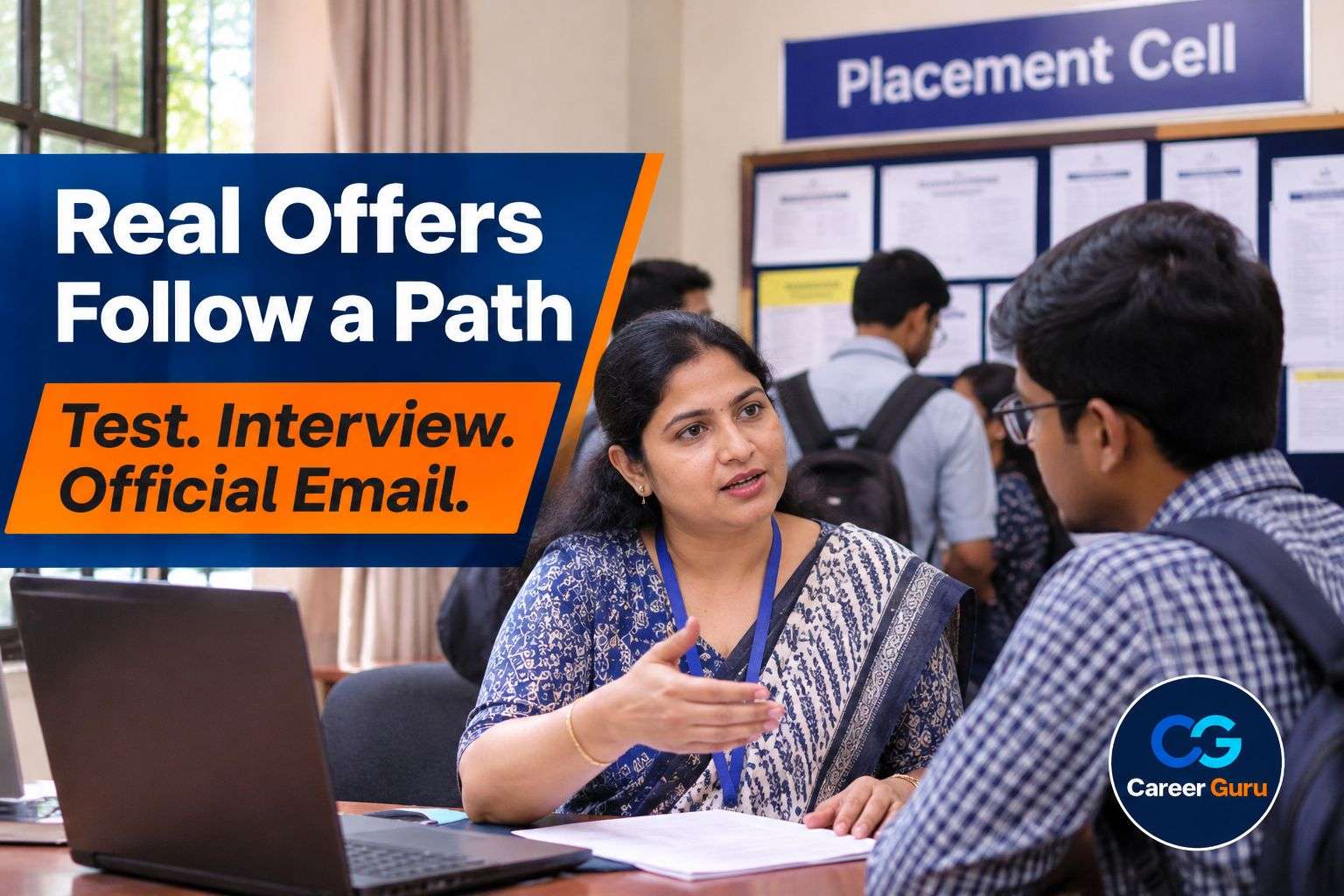
Real offers do exist, and they look different from fake job offers for freshers. A real campus offer comes through your placement cell, or after a test and interviews on the company’s own system. If someone says you got a job through TCS, ask one thing. Did I take the test? My guide on TCS NQT 2027 registration shows the real route. Another guide, on Infosys DSE, Cognizant GenC Next and Wipro Turbo, explains how big companies pick freshers.
In my note on IT hiring for the 2027 batch, I wrote that companies plan fresher hiring in measured numbers. A sudden big package for someone who never took a test does not fit.
If a letter asks you to reach a new city within a week, pause. My guide on the best city for freshers from Odisha shows why a hurried move is costly, even for a genuine offer.
The same ten-minute check works on training institutes too. If someone promises a job with “100 percent guarantee” and asks you to pay first, ask for the terms in writing. Short NSDC-aligned courses, such as those from Rooman Technologies, publish their terms openly. Still, check before you pay anyone.
What If You Have Already Paid or Shared Documents?
First, do not feel ashamed. Fake job offers for freshers can fool anyone. What matters now is speed.
- Stop all contact. Send no more money, even for a promised refund.
- Save proof. Keep chat screenshots, the letter, phone numbers and payment receipts.
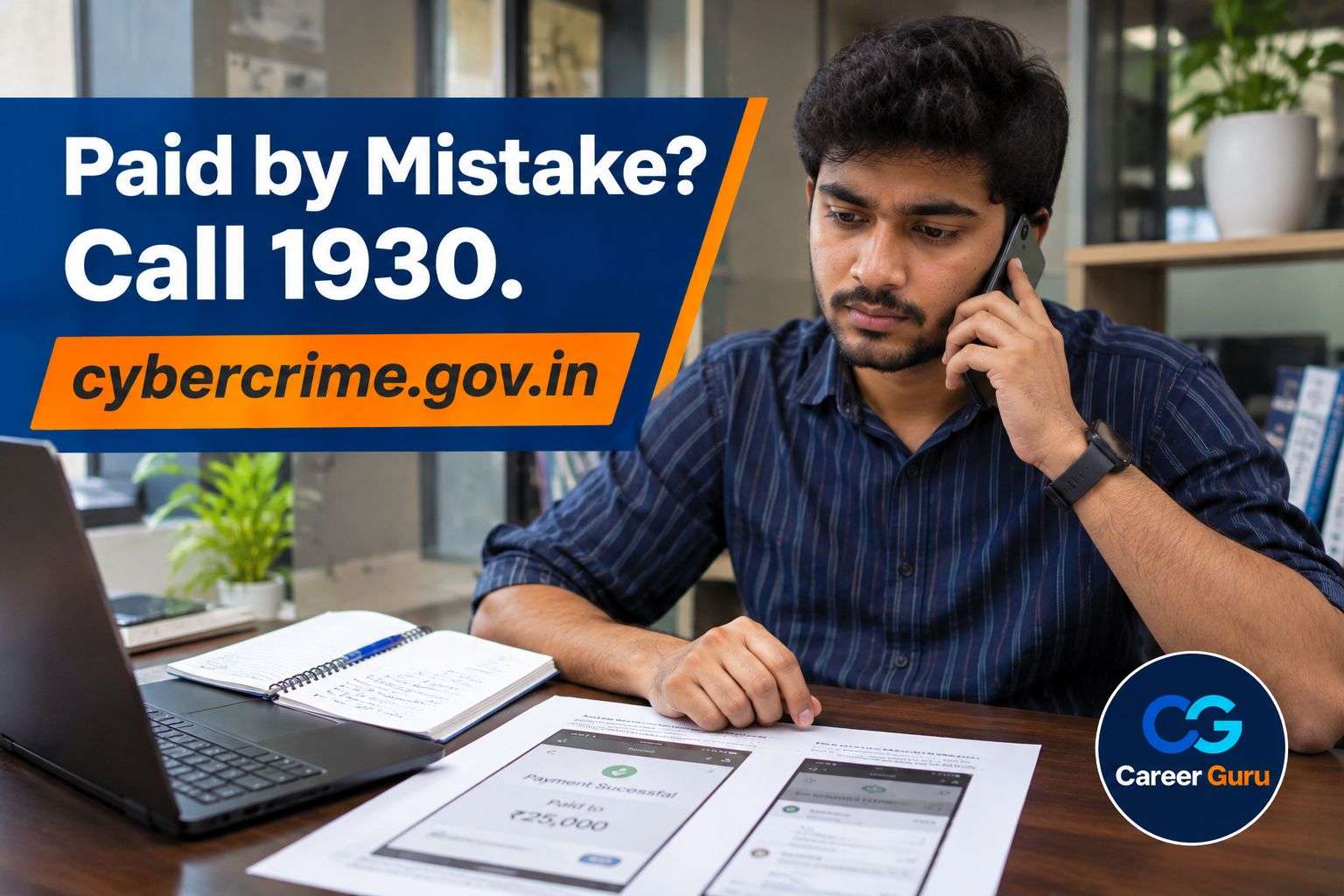
- Call 1930. The government’s Cyber Dost handle asks victims of online financial fraud to call it at once.
- File a complaint at cybercrime.gov.in. This is the official reporting portal.
- Tell your bank. Share the payment details with them.
- Watch your documents. If you shared Aadhaar, PAN or a face scan, watch your bank and mobile number for changes you did not make. Tell the police.
FAQs — Fake Job Offers for Freshers
FAQ 1 — Can a real company ask for money in fake job offers for freshers?
No. A genuine employer does not take a fee for giving you a job. Infosys and Wipro both say so on their official pages. Words like “registration”, “training kit” and “refundable deposit” are new names for the same trap.
Consultant’s note — In 27 years, I have never seen a genuine offer that needed a UPI payment from the candidate.
FAQ 2 — How can I tell if an offer letter PDF is real in fake job offers for freshers?
You cannot tell from the PDF alone. A fake letter can have a perfect logo and a neat signature. So check outside the letter. Find the job on the careers page. Call the official number.
Consultant’s note — A good-looking letter proves nothing. A call to the right number proves a lot.
FAQ 3 — A recruiter messaged me on LinkedIn. Could this be one of the fake job offers for freshers?
It could. LinkedIn advises you to check the company page, the recruiter’s profile and any verification badge. Then ask for an official email and a video call with a named person.
Consultant’s note — Be polite, but be slow. Real recruiters respect careful candidates.
FAQ 4 — Is it safe to share Aadhaar or PAN after an offer in fake job offers for freshers?
Only after a real offer, and only through the company’s official joining process. Never share them in the first chat. If someone asks for a face scan or eye scan, stop and verify first.
Consultant’s note — Do not hand your documents to a stranger on chat.
FAQ 5 — What if the recruiter says the deposit will be refunded in fake job offers for freshers?
That is the oldest line in these scams. The fee is real. The refund is only a promise. Wipro names this exact pattern on its fraud page.
Consultant’s note — A promise to return your money is not a reason to send it.
FAQ 6 — Are paid courses with a placement guarantee also part of fake job offers for freshers?
Not always, but the same care applies. Ask for the terms in writing.
Consultant’s note — A good institute explains itself calmly. It does not need your decision in one day.
FAQ 7 — Should I tell my placement cell about fake job offers for freshers?
Yes. If one student gets a fake offer, others may get the same message. A quick note in the class group can save money.
Consultant’s note — Students share protective posts in WhatsApp groups. Be the one who shares this one.
FAQ 8 — Can I get my money back after fake job offers for freshers take it?
I cannot promise that. Recovery depends on how fast you report. Call 1930 and file at cybercrime.gov.in as soon as you can.
Consultant’s note — Do not pay a “recovery agent” either. That is often a second scam.
FAQ 9 — Should I reply to fake job offers for freshers to scare the scammer away?
No. Replying tells them your number is active. Save the message, report the number and block it. Tell someone you trust.
Consultant’s note — Silence plus a report is the strongest reply
FAQ 10 — How can parents help with fake job offers for freshers?
Parents can sit with you during the check. Tell them real offers do not vanish in six hours.
Consultant’s note — Parents who understand the check will say “wait” before they say “pay”.
What to Do This Week: Your Action Plan Against Fake Job Offers for Freshers
If you are in first or second year — Learn how real hiring works. Save 1930 in your phone today.
If you are in third year — Build a clean LinkedIn profile and one email ID for jobs. Practise the ten-minute check on an old message.
If you are in final year — Write the five steps on a card. Before you reply to any offer, run the check. Share it with two batchmates.
If you have already graduated — Be extra careful with offers that arrive without an application. Keep one trusted person as your “second opinion” before you pay, travel or share any document.
Back to Manas one last time. He did not pay. He told his hostel group. Two friends had received the same letter. They stopped too.
A month later he got a real call after a real test. He checked that one as well. This time, the answers matched.
That is how you handle fake job offers for freshers. Not with fear. With ten calm minutes. Stay alert to fake job offers for freshers this season, and share this check with a friend.
I read all my emails and can write back [email protected] . You can also WhatsApp me on 9777278853.