
Infosys DSE vs Cognizant GenC Next vs Wipro Turbo – A honest guide by 27+years of experienced Career Expert on Freshers Hiring
Infosys DSE vs Cognizant GenC Next vs Wipro Turbo is the question a final-year student from Sambalpur sent me last week, with three screenshots pasted into one WhatsApp message.
I’ll call him Debasis. The first screenshot said ₹7 lakh. The second said ₹6.75 lakh. The third said ₹6.5 lakh. Under them he had typed one line. “Sir, all three look the same. Which one should I prepare for?”
He was right. They do look the same. That is the problem. When the pay is this close, most students pick by company name, or by whatever their friends are applying to. I think that is the wrong way to choose.
The better question is simple. Which program will actually open for you this year, and which one can you clear?
So let me answer it the way I did with Debasis, with a notebook open on my desk. By the end you will know what each program is. You will know what it pays once you read the fine print. You will know how many seats are really on offer. And you will know which one to put first on your list.
One note before we start. These companies change their programs often, and they rarely publish the details. Most numbers below come from news reports and from what candidates report. I have said so wherever it matters. Always check your own notice and your own offer letter.
Infosys DSE vs Cognizant GenC Next vs Wipro Turbo — The Short Answer First
If you can solve easy to medium coding problems, prepare once and apply to all three. The tests overlap a lot. Where you put your effort first should depend on hiring numbers, not on the brand.
Here is how I see it today.
Cognizant GenC Next has the biggest announced hiring plan of the three.
Infosys DSE has the best pay on paper. But it sits just above a ₹3.6 lakh base track and just below a very hard coding track.
Wipro Turbo is the hardest to plan around. Wipro said in April that it has no fresher hiring target for this financial year.
My order for a coding-comfortable student is this. Cognizant GenC Next first. Infosys DSE right beside it. Wipro Turbo as a bonus, if a drive opens. The rest of this post explains why.
What Each Program Actually Is
Names confuse people more than anything else. So let me clear them first.
Infosys DSE
DSE stands for Digital Specialist Engineer. It is a fresher role Infosys keeps for people with stronger coding and digital skills than the regular Systems Engineer. Earlier it was called Systems Engineer Specialist.
Think of Infosys fresher hiring as a ladder. Systems Engineer is the mass track, at about ₹3.6 lakh. DSE is the next step. Above it is the Specialist Programmer track. Infosys’s HR head has confirmed pay of up to ₹21 lakh there, for the best coders.
That ₹21 lakh makes headlines. Very few students get it. DSE is the realistic upper step for a good coder who is not a coding champion.
Infosys has had a development centre in Bhubaneswar since 1996. That matters if you want to stay in Odisha. Postings are never promised. But you can ask in your HR round.
Cognizant GenC Next
GenC stands for Generation Cognizant. It is the name for all of Cognizant’s fresher hiring. Standard GenC pays about ₹4 to 4.5 lakh. GenC Next is the higher developer track. Candidates and prep sites usually put it at ₹6.5 to 6.75 lakh.
Cognizant does not publish these bands. Track names have also changed between cycles. You will hear GenC Elevate and GenC Pro as well, and they sit in between.
You usually apply once. Your test and interview decide the track. So you cannot simply choose GenC Next. You earn it.
One more detail. A prep site reports a three-month internship with a stipend before the full GenC Next package starts. I could not confirm that from Cognizant. Check your offer letter.
Wipro Turbo
Wipro’s regular fresher track is Elite, at about ₹3.5 lakh. Turbo is the premium track above it. Wipro’s registration page lists CS, IT and circuital branches for Turbo. It also says it picks from select technical institutes.
Turbo adds a spoken English assessment and a business discussion, which mixes technical and HR questions. After that come a letter of intent and some pre-skilling training before the offer.
The Pay Numbers, and the Bonus Trap
On pay, Infosys DSE vs Cognizant GenC Next vs Wipro Turbo looks closer than it really is. Here is what is reported for each program.
| Program | Fixed pay reported | Bonus reported | Headline number |
|---|---|---|---|
| Infosys DSE | ₹6.25 lakh | ₹75,000 joining bonus | ₹7 lakh |
| Cognizant GenC Next | ₹6.5 to 6.75 lakh | Not published | ₹6.5 to 6.75 lakh |
| Wipro Turbo | ₹5.5 lakh | ₹1 lakh retention bonus | ₹6.5 lakh |
Two of the three headline numbers include a bonus.
Infosys DSE is ₹6.25 lakh plus a ₹75,000 joining bonus. News reports round that to ₹7 lakh. Wipro Turbo is ₹5.5 lakh plus a ₹1 lakh retention bonus. That is where the ₹6.5 lakh figure comes from.
A joining bonus is paid once. A retention bonus is paid after you stay for a set period. Neither arrives in your account every month. Some bonuses also come with a clause to return the money if you leave early. Read yours.
Compare only the fixed part, and the order changes. GenC Next comes first, then DSE, then Turbo. The gap between top and bottom is about ₹1 lakh a year. That is real money. But it is smaller than the jump from a base track.
The real prize is that jump. A base track pays ₹3.5 to 4 lakh. These programs pay ₹6 lakh and above. That is roughly ₹2.5 to 3 lakh more every year, for a few extra weeks of preparation.
One last warning on money. A ₹7 lakh package does not mean ₹58,000 a month in hand. I have explained the gap in my guide on in-hand salary vs CTC. Do that sum before you celebrate.
TCS plays in the same band too. Its Digital track is also reported at about ₹7 lakh. If TCS is on your list, my TCS NQT 2027 registration guide covers it.

Which Door Is Actually Open Right Now
Pay means little if there is no seat. So let me look at the hiring numbers.
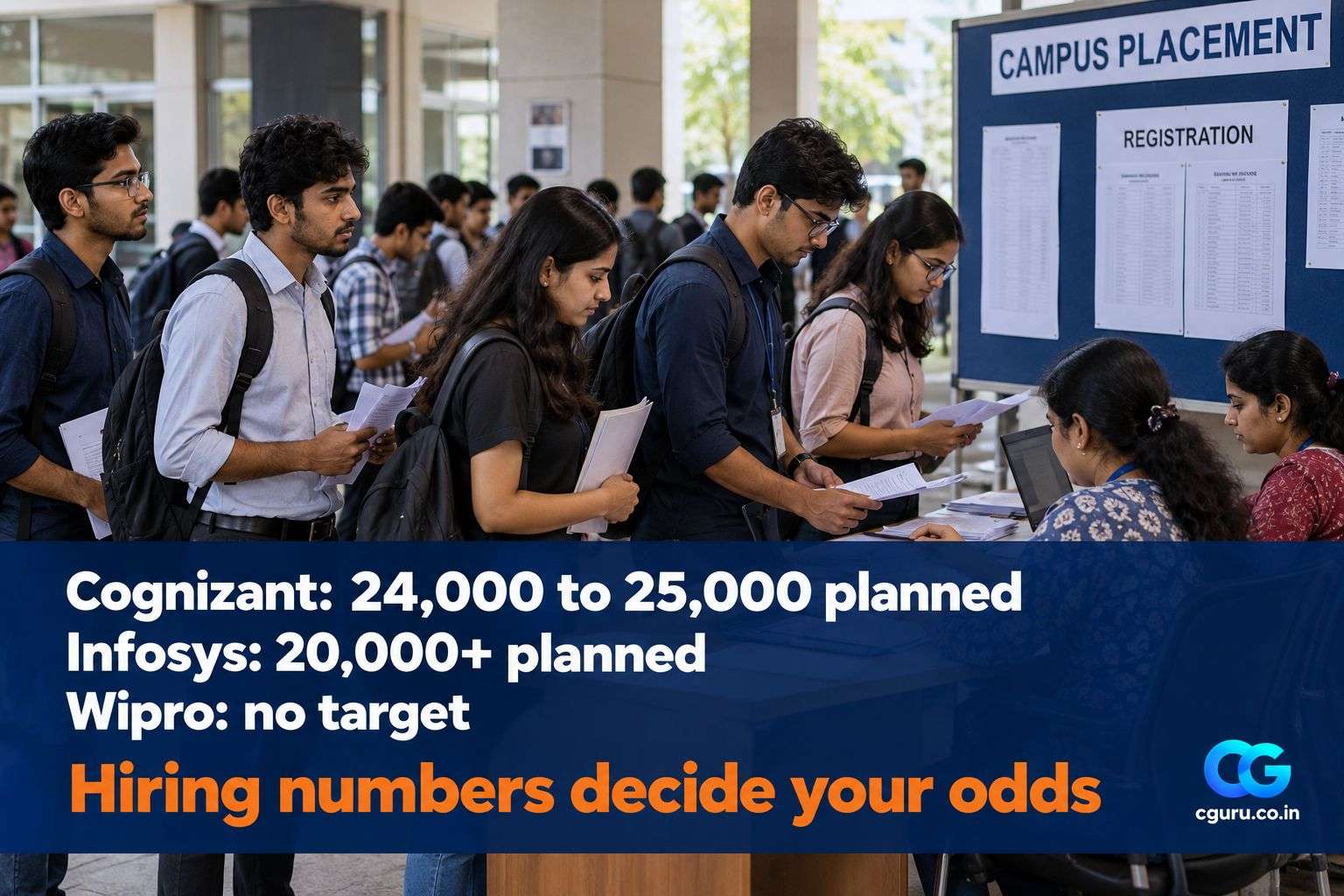
Cognizant. Its CFO said the company hired close to 20,000 graduates in 2025. For 2026 it expects 24,000 to 25,000. That is about 20% more. Cognizant’s own careers page describes the 25,000 as a global figure. India will not get all of it. But most of Cognizant’s people sit in India, so a large share lands here.
Infosys. Its CFO said after the April results that Infosys expects at least 20,000 freshers this year. That is the same as last year. That number covers all tracks, and most of it is the Systems Engineer track. DSE is a slice of it. Infosys headcount also fell by about 8,440 in the March quarter. Management called that seasonal.
Wipro. Wipro hired about 7,500 freshers last year, down from roughly 10,000 the year before. In April its HR head said Wipro has no fresher target for this year, and that hiring will follow demand. That does not mean Wipro will not hire. It means nobody outside Wipro can tell you when, or how many. A prep site that tracks Wipro’s pages said in September that no test dates had been announced for the 2027 batch.
On seats, Infosys DSE vs Cognizant GenC Next vs Wipro Turbo is not an even race. The order is clear. Cognizant is the widest door. Infosys is open, and DSE is a narrow part of it. Wipro is a door you cannot see yet.
How the Selection Works in Each Program
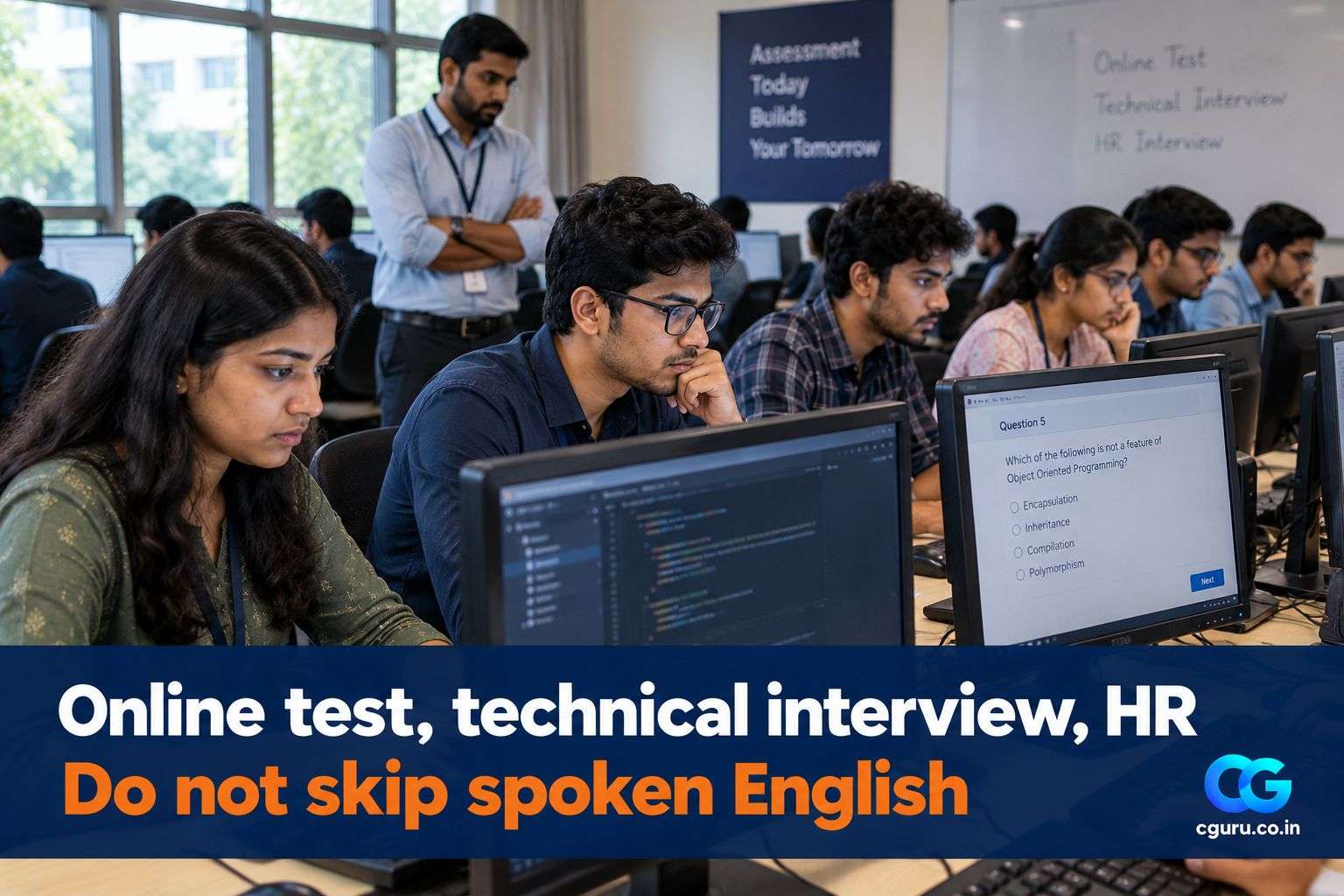
Infosys DSE vs Cognizant GenC Next vs Wipro Turbo all follow the same basic shape. An online test, a technical interview and an HR round. The differences are in the extra pieces.
Infosys DSE. The online test usually covers aptitude, verbal ability and programming questions. Candidates for higher levels get hands-on coding problems. Then come a technical interview and an HR round. Reports say your combined performance decides whether you land DSE, Specialist Programmer or the base track.
Cognizant GenC Next. Reported rounds are a communication assessment, an aptitude test, a technical test and a panel interview. The technical test includes fixing broken programs, which Cognizant’s test calls Automata Fix. GenC Next candidates also face live coding in the interview. Every round can eliminate you.
Wipro Turbo. The online test is the same as Elite’s, but the cut-off is higher. Then come the spoken English assessment and the business discussion. Candidates say the coding in Turbo drives is noticeably harder.
Notice what two of the three share. Cognizant and Wipro both test your spoken English. Many engineering students skip this part of preparation. They clear every technical round and lose the seat in a five-minute voice round.
The First Year Looks Different Too
All three train you before you reach a client project. Infosys freshers are commonly trained at its Mysuru campus, according to prep sites. Cognizant runs structured training and an AI upskilling track called Synapse. Wipro adds pre-skilling for Turbo before the offer.
Cognizant’s CEO said that about 16,000 of the roughly 20,000 graduates hired in 2025 were on client projects. The other 4,000 were still training. So expect a few months of learning first.
After that, candidates report a pattern. Higher tracks lean toward development and digital work. Base tracks lean toward support and testing. That is a general pattern and not a promise. Your project allocation depends on client demand when you finish training.
Infosys DSE vs Cognizant GenC Next vs Wipro Turbo—Which One Fits Your Profile
Let me give you the same sorting I give in my office.
You solve easy to medium problems comfortably. Prepare once and apply to all three. Lead with Cognizant GenC Next and Infosys DSE.
Your coding is average, but your aptitude and English are strong. Aim for the standard Cognizant GenC track first. Treat GenC Next as a bonus. Your communication marks will help you. Do not force Turbo, where the coding bar is higher.
You are from a non-CS branch. Wipro’s Turbo page lists CS, IT and circuital streams. Mechanical and Civil students should confirm before they register. The Infosys and Cognizant notices I checked list BE or BTech without a CS-only rule. Still, read the notice for your batch. I have written a full guide on jobs for non-CSE freshers in Odisha if this is you.
You want to stay in Odisha. Ask each company where freshers from your campus are posted. Infosys has had a Bhubaneswar centre since 1996. For the other two, ask your placement cell and your HR round. Do not assume.
You want the fastest pay jump. Infosys DSE has the best reported total, at ₹7 lakh. If your data structures are strong, look at Specialist Programmer too. But get your DSE-level preparation right first.
A Four-Week Plan That Covers All Three
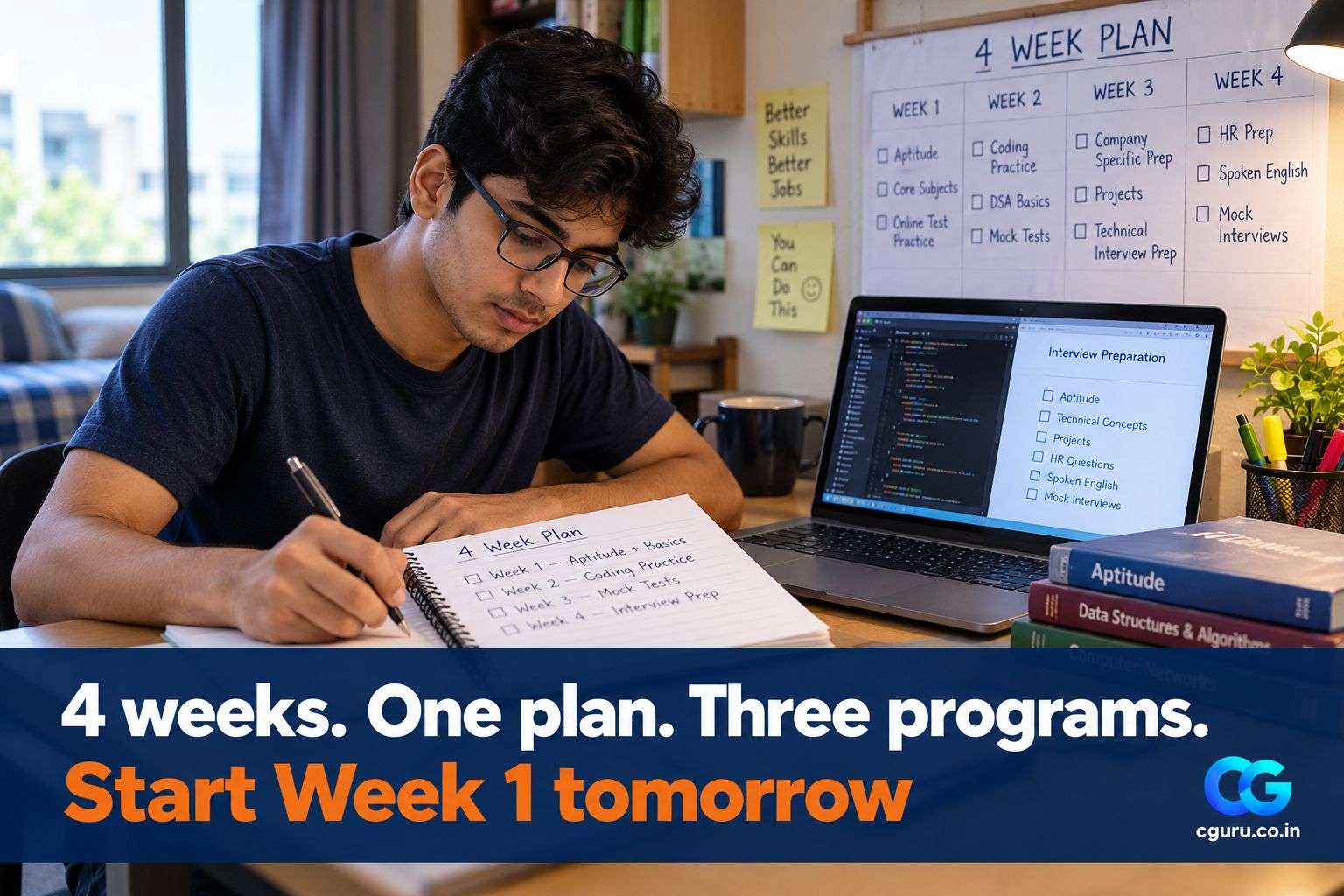
Do not buy three courses for three companies. One plan covers Infosys DSE vs Cognizant GenC Next vs Wipro Turbo.
Week 1: Aptitude and English. Percentages, ratios, time and work, averages. Thirty questions a day with a timer. Read one English article every day.
Week 2: Coding basics. Arrays, strings, hashing, sorting and searching. Pick one language and stay with it. Solve two problems a day and write down every mistake.
Week 3: Debugging, SQL and one project. Practise fixing broken programs, because Cognizant tests it. Learn basic SQL queries. Be ready to explain one project in simple words.
Week 4: Speaking and mocks. Record yourself speaking for two minutes daily on any topic. Listen to it. Take three full mock tests in real time limits. Then fix your resume.
If you have eight weeks, repeat the cycle and go deeper on coding. If you want structured help with aptitude, coding and interviews, Rooman Technologies runs job-oriented IT training programs in Odisha. It is worth a conversation if self-study is not working for you.
To fit all this into your college calendar, follow my placement season guide for October to December.
Mistakes I See Every Year
Choosing by brand. A friend’s company is not automatically your best fit.
Reading only the headline package. Ask what is fixed, what is bonus and when the bonus is paid.
Waiting for Wipro. If Turbo opens, apply. Until then, do not build your whole plan around it.
Skipping spoken English. It costs more offers than weak coding does.
Signing without reading the service agreement. Companies use these agreements, and the terms vary by role and cycle. Know the notice period and any money you must return.
Applying to one company only. Offers can fall through. One application is not a plan, and Infosys DSE vs Cognizant GenC Next vs Wipro Turbo gives you three doors to try.
If You Don’t Get Any of the Three
It happens. Even strong students miss. You are not out.
A base track at ₹3.5 to 4 lakh is still a job at a large company. Many people move up from there through certifications and strong project work. Others find their next offer off campus. My guide on how to find off campus placement for freshers shows the routes that work when job portals go quiet.
Keep the skills you built. The same aptitude and coding preparation helps you in every other test.
Your Action Steps, Year by Year
First and second year: Pick one language. Solve one problem a day. Speak English with friends for ten minutes daily.
Pre-final year: Run the four-week plan once as a trial. Build one real project. Find out which programs your college is eligible for.
Final year, now: Check your placement cell’s list this week. Register wherever a window is open. Keep your marksheets and documents ready. Then run the four-week plan.
Already graduated: Check batch eligibility on every notice. Some off-campus drives accept earlier batches. Apply early and keep practising with timed tests.
FAQs — Infosys DSE vs Cognizant GenC Next vs Wipro Turbo
FAQ 1 — Infosys DSE vs Cognizant GenC Next vs Wipro Turbo: which is best for a fresher in 2026?
There is no single winner in Infosys DSE vs Cognizant GenC Next vs Wipro Turbo. Infosys DSE has the best reported total pay, at about ₹7 lakh including a joining bonus. Cognizant GenC Next has the best fixed pay and the largest hiring plan.
Wipro Turbo has the lowest fixed pay and no announced hiring target. So for a student who can code, I rank Cognizant first and Infosys right beside it. Wipro comes third until it announces a drive. A student who is weak at coding should aim for the standard tracks at all three. Your own test score will decide the rest.
Consultant’s Note — Do not argue about the best company in your WhatsApp group. Argue with your mock test scores instead.
FAQ 2 — Can I apply to Infosys DSE vs Cognizant GenC Next vs Wipro Turbo at the same time?
Yes. I know of no rule that stops you from applying to Infosys DSE vs Cognizant GenC Next vs Wipro Turbo together. Each company runs its own process. Dates may clash, so keep a simple calendar. Write down each test date and each result date.
The harder part is the offer stage. If you hold an offer, read the terms before you accept it, because service agreements can limit your next move. If your college is a priority campus for one company, use that route first. Then apply off campus for the others.
Consultant’s Note — Make a one-page sheet with dates and links. It saves more offers than any prep book.
FAQ 3 — Is Cognizant GenC Next harder than Infosys DSE?
For a student who can code, the two are close. Reports describe GenC Next as the higher coding band in Cognizant’s test, with live coding in the interview. Infosys DSE sits between the base Systems Engineer track and the very hard Specialist Programmer track. Both reward easy to medium problem solving.
Cognizant also tests debugging and communication in separate rounds. Infosys leans more on programming questions and fundamentals. Neither company publishes cut-offs, so any score you read online is a candidate’s guess. Prepare for the harder coding and let the track follow your score.
Consultant’s Note — If you can clear medium array and string problems in 30 minutes, you are in range for both.
FAQ 4 — Is Wipro Turbo open for the 2027 batch?
I could not find an announced date. Wipro’s HR head said in April that there is no fresher hiring target for this year. A prep site that tracks Wipro’s registration pages said in September that no 2027-batch test dates had been published.
That is not the same as saying Wipro is closed. It means hiring will follow demand. Watch the Wipro careers page and the Superset portal your college uses. Ask your placement cell whether Wipro has visited your campus. If a Turbo drive opens, your base preparation will carry over.
Consultant’s Note — I tell students to keep a Wipro tab open, not a Wipro hope open.
FAQ 5 — Can non-CS students apply for Infosys DSE vs Cognizant GenC Next vs Wipro Turbo?
It depends on the program and the batch. Wipro’s Turbo page lists CS, IT and circuital streams. Circuital usually means branches like ECE and EEE, but confirm it in your notice. The Infosys and Cognizant notices I checked list BE or BTech without a CS-only rule. One prep site says Cognizant’s GenC Next looks at coding performance more than your degree stream.
Mechanical and Civil students should read each notice line by line. If the notice is silent, email the placement team and ask. Many non-CS students clear these tests with steady aptitude practice and one coding language.
Consultant’s Note — Your branch gets you into the test. Your practice gets you through it.
FAQ 6 — Will I really get ₹7 lakh a year in hand from Infosys DSE?
No. The ₹7 lakh figure includes a ₹75,000 joining bonus. The fixed pay reported is ₹6.25 lakh. Out of that, the company deducts provident fund and tax before your monthly salary arrives. A joining bonus is paid once, not every month.
A retention bonus, like the ₹1 lakh reported for Wipro Turbo, is paid after you complete a set period. Some bonuses must be returned if you leave early. So do your sums on the fixed pay and treat the bonus as extra. My in-hand salary guide has an example you can copy.
Consultant’s Note — Plan your rent and EMIs on the fixed pay. Treat the bonus as a gift, not a salary.
FAQ 7 — How much coding do I need for Infosys DSE vs Cognizant GenC Next vs Wipro Turbo?
For Infosys DSE vs Cognizant GenC Next vs Wipro Turbo, plan on easy to medium problems. That means arrays, strings, hashing, sorting, searching and basic recursion. Add SQL basics and some object-oriented ideas. Cognizant also tests debugging, where you fix errors in short programs. Pick one language and stay with it.
Practise reading input and printing output correctly, because small mistakes cost marks. Two problems a day for four weeks beats twelve problems in one weekend. If you are aiming at Infosys’s Specialist Programmer track, you will need much deeper data structures. That is a longer road.
Consultant’s Note — Small daily practice beats the weekend marathon every single time.
FAQ 8 — What if I clear the test but miss the higher track?
Reports say Cognizant decides your track by performance, so you may land the standard GenC offer. Infosys also assigns the role by combined performance, so a student aiming at DSE can get the base Systems Engineer offer. Wipro’s Elite and Turbo tracks run on the same online test with a higher Turbo cut-off. So a good attempt can still produce a job.
I cannot promise this for every drive, because companies change their rules each cycle. Read the notice for your drive. If you get a base offer, accepting it is your call. Check the service agreement first.
Consultant’s Note — A ₹4 lakh offer in hand is better than a ₹7 lakh hope on paper.
FAQ 9 — Is there a service agreement in Infosys DSE vs Cognizant GenC Next vs Wipro Turbo offers?
Companies commonly use one. Terms vary by role and cycle, so trust your own offer letter over any prep site. Wipro’s published terms for its Elite track mention a 12-month agreement with a ₹75,000 amount. One report puts Wipro fresher agreements at 12 to 24 months. Infosys uses a service agreement for freshers, with terms that vary. Cognizant’s terms are reported differently from cycle to cycle.
Read the amount, the period and the exit conditions before you sign. If a clause is unclear, ask HR in writing. I am not a lawyer, so for anything unclear, take legal advice.
Consultant’s Note — Read it twice. Sign it once.
FAQ 10 — Should I wait for TCS Digital or a product company instead?
Do both. Apply to the programs that are open now, and keep preparing for the others. TCS Digital is reported at about ₹7 lakh, in the same band, and an NQT score stays valid for two years. Product companies pay more, but they hire fewer freshers and test much harder.
Waiting for a perfect offer has a cost. Every month without an offer is a month of salary you do not earn. Before you turn down a real offer for a possible one, think about that cost. A first job also gives you a place to keep learning while you prepare for the next move.
Consultant’s Note — A real offer is a platform. You can still prepare for the next one while you work.
Final Word on Infosys DSE vs Cognizant GenC Next vs Wipro Turbo
Infosys DSE vs Cognizant GenC Next vs Wipro Turbo is not a contest with one winner. It is a sorting problem. Look at what is open, what you can clear, and what you will actually take home. Then prepare once and apply widely.
Debasis registered for two of the three the following week. He started speaking English for ten minutes every night. He also stopped asking which program was best. That was the right change.
Start Week 1 of the plan tomorrow. Check your placement cell’s list this week. That is all it takes to be ahead of most of your batch.

Watch next:
- Infosys Off Campus Drive 2026 | DSE & SP Role Preparation | How to Get Infosys Job
- Cognizant GenC 2027 Complete Hiring Round
- WIPRO Hiring 2026 Official Update — WILP, ELITE, TURBO and STAR Hiring Programs
Further reading:
- Infosys raises fresher pay, offers up to Rs 21 lakh for specialised roles — Storyboard18
- Cognizant Plans To Hire 25,000 Freshers In 2026: CFO Jatin Dalal Confirms — Free Press Journal
- ‘No target for fresher hiring’: Wipro CHRO as IT giant adapts to AI — Business Today
NOTE: I read all my emails. Write to [email protected], whatsapp 9777278853