
Off-Campus Placement for Freshers in 2026 — Step-by-Step Guide from Someone Who’s Seen It Work
Off-campus placement for freshers is the phrase I hear most in my counselling sessions right now. Final-year students walk into my office in Bhubaneswar, and the story is almost always the same. The campus placement season has ended. Two or three companies visited. They did not get picked. And now they are asking me one question. “Sir, what next?”
Here is what I tell them. Off-campus placement for freshers is not a backup plan. It is a real, working path to your first job. I have placed students from small BPUT-affiliated colleges into strong IT roles purely through off-campus hiring, while their batchmates from bigger-name colleges were still waiting for campus season to begin again.
This guide is the exact process I walk my students through. No vague motivation. No generic tips you have already read ten times. Just the steps that actually work for off-campus placement for freshers in 2026.
Why Off-Campus Placement for Freshers Matters More Than Ever in 2026
Let me be honest about the numbers first, because most students are working with the wrong assumptions.
Only a small share of Indian engineering colleges achieve full campus placement. Most colleges, especially BPUT-affiliated ones across Odisha, get visits from a handful of IT services companies and nothing more. If those companies do not pick you or do not visit your college at all, your placement cell has nothing else to offer.
This is exactly where off-campus placement for freshers becomes your main route, not your last resort. Product companies, growing startups, and mid-size firms rarely restrict their hiring to a fixed list of campuses. They post openings on their own career pages, on LinkedIn, and on dedicated fresher job platforms. If you are not looking there, you are simply invisible to them.
I have watched students from tier-2 city colleges land offers at companies that never once visited their campus. The difference was never talent. It was only then that they understood how off-campus placement for freshers actually works, while their classmates kept waiting for a placement cell email that never came.

What Off-Campus Placement for Freshers Actually Means
Let me clear up the confusion first. On-campus placement means a company visits your college and you compete only against your own batchmates. Off-campus placement for freshers means you apply directly, without your college acting as the middleman. You are now competing with students from every college in the country, not just your own.
That sounds intimidating, and I will not pretend otherwise. But it also means the door is far wider. You are no longer limited to the ten or fifteen companies that happened to visit your campus this year. You can apply to Cognizant, Wipro, a Bengaluru fintech startup, and a Bhubaneswar-based product company, all in the same week.
Off-campus placement for freshers works through four main channels. Company career pages. Job portals built for freshers. LinkedIn and direct networking. And referrals from people already working at your target company. Most students only use one of these. The ones who actually get hired use all four together.
Where to Actually Find Off-Campus Placement for Freshers Openings
This is the question I get asked constantly, so let me answer it properly.
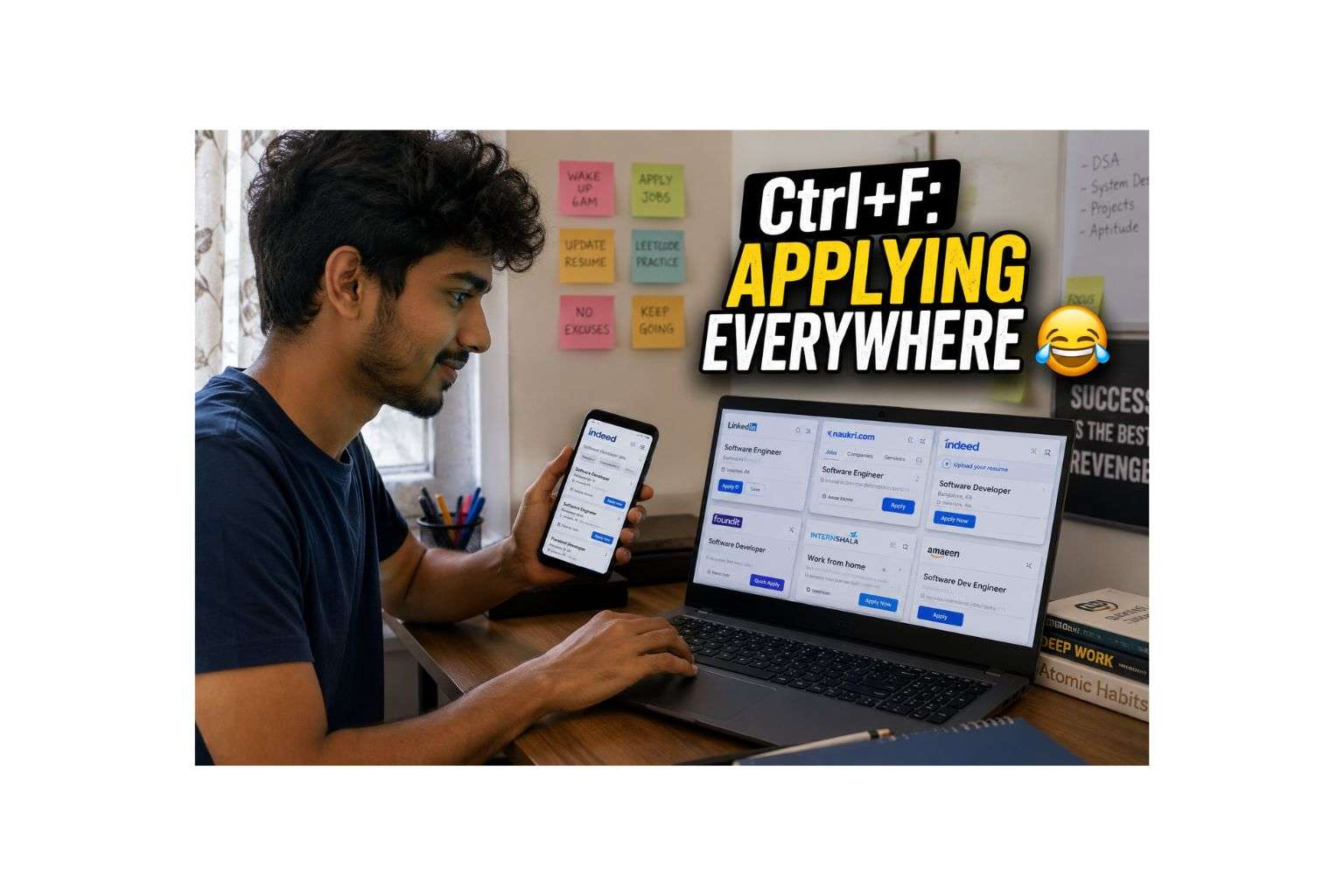
Company career pages. Every company with more than fifty employees has a “Careers” page. This channel is underused because students assume direct applications go nowhere. That assumption is wrong. Bookmark the career pages of your fifteen to twenty target companies and check them weekly. TCS NextStep, Infosys Springboard, and Wipro’s own careers portal are good starting points if you are eyeing the large IT services firms.
Dedicated fresher job portals. Naukri.com remains the largest fresher-focused job board in India, and its filters for graduation year, location, and skill set genuinely narrow things down if you use them properly. Set alerts instead of scrolling endlessly every day.
Government platforms. The National Career Service portal run by the Ministry of Labour and Employment lists verified openings, including public sector roles that many students overlook while chasing only private IT jobs.
LinkedIn. This is where a lot of off-campus placement for freshers activity now happens quietly. Companies post roles here before they even reach job boards. Follow your target companies’ official pages and their HR handles.
Referrals. A referral moves your resume past the pile and onto an actual desk. Reach out to seniors from your college who are already working. Do not open with “please give me a job.” Ask a specific question about their own journey first, and let the referral conversation follow naturally.
Building a Resume That Survives Off-Campus Placement for Freshers Screening
Your resume carries the entire weight of your application in off-campus placement for fresher hiring because there is no placement cell vouching for you and no familiar college name softening the first impression.
Most large companies now scan resumes with software before any human opens them. If the job description says “Java, Spring Boot, REST API,” those exact words need to sit somewhere in your resume, not paraphrased versions of them. Keep the format simple. No tables, no text boxes, no fancy graphics. These often break the automated scan and get your resume rejected before anyone sees it.
For the human reader who eventually does open it, lead with outcomes, not duties. “Built a hostel management system used by 200 students” says more than “worked on a Java project.” Numbers make a resume believable, even small ones.
I have written a full, dedicated breakdown of this exact process in my guide on the AI recruiter resume for Indian freshers. Read it before you send your next off-campus application. This short video on resume formatting for freshers also shows the layout in action if you prefer watching over reading.
Proof of Work Beats a Perfect CGPA in Off-Campus Placement for Freshers
Anyone can write “good at coding” or “strong communication skills” on a resume. Almost nobody can prove it, and that gap is exactly where you can stand out in off-campus placement for freshers hiring.
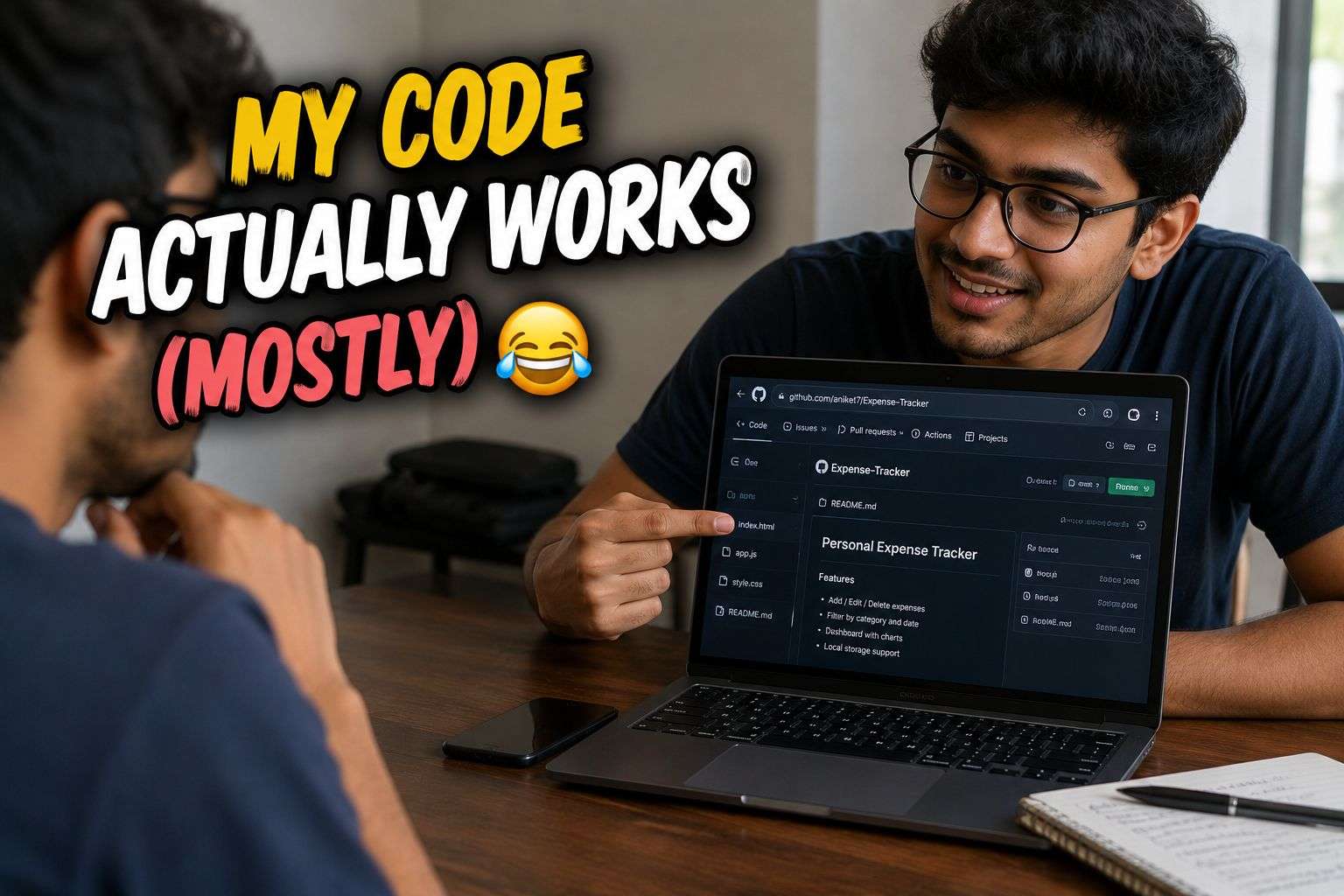
If you are from a technical branch, your GitHub profile becomes your proof. Three real, working projects with clear descriptions outperform ten half-finished ones with no explanation. I go into exactly what recruiters look for in my GitHub profile tips for Indian students guide.
If you are from a non-technical stream, your proof looks different but the principle is the same. A small Excel dashboard, a mock marketing campaign, a sample financial model. Anything that shows you can actually apply what you claim to know, rather than just naming it on paper.
This single habit, building visible proof instead of only listing skills, is often the exact thing that separates a shortlisted candidate from a silently rejected one in off-campus placement for freshers’ applications.
Your LinkedIn Profile Is Working (or Failing) While You Sleep
Off-campus placement for freshers hiring happens quietly on LinkedIn far more than most students realise. Recruiters actively search LinkedIn for candidates, especially for roles that are never publicly posted anywhere else.
Your headline should describe what you do, not just your college status. Instead of “Student at XYZ College,” write something like “Aspiring Java Developer | DSA, Spring Boot, MySQL | Open to Fresher Roles.” That single change makes you searchable by the exact keywords a recruiter is typing.
Your About section should read like a short, honest pitch. What are you learning. What have you built. What role are you targeting. Keep it short. Recruiters skim profiles in seconds, they do not read essays.
I walk through the entire process, photo, headline, About section, and skills, in my dedicated LinkedIn profile for freshers in India guide. This video on building a LinkedIn profile as a beginner in 2026 walks through the same steps visually if that helps you more.
Referrals, Cold Messages, and Networking for Off-Campus Placement for Freshers
Cold applications land you in a pile of hundreds. A referral gets you into an actual conversation, and this is the single biggest lever in off-campus placement for freshers hiring that students underuse.
Search LinkedIn for people working at your target company, ideally alumni from your own college or region. They respond faster because there is already a shared connection. Message them with a specific, genuine question about their own path, not a blunt request for a job. Once there is some rapport, it becomes natural to ask if they know of any open roles or would be willing to refer you.
Cold emailing recruiters directly also works, if it is done properly. A generic “please consider me” email gets ignored. A short, specific message that names the exact role, explains your fit in two lines, and attaches a tailored resume gets read. This video on cold emailing recruiters as a fresher breaks down exactly how to write one that gets a reply.
If your city has a Rooman Technologies centre or a similar NSDC-backed skilling partner nearby, use it. I work closely with Rooman Technologies as their state business partner here in Odisha, and their placement network regularly opens doors for students who could not get a single interview call through cold applications alone.
Aptitude Tests and Interview Rounds in Off-Campus Placement for Freshers
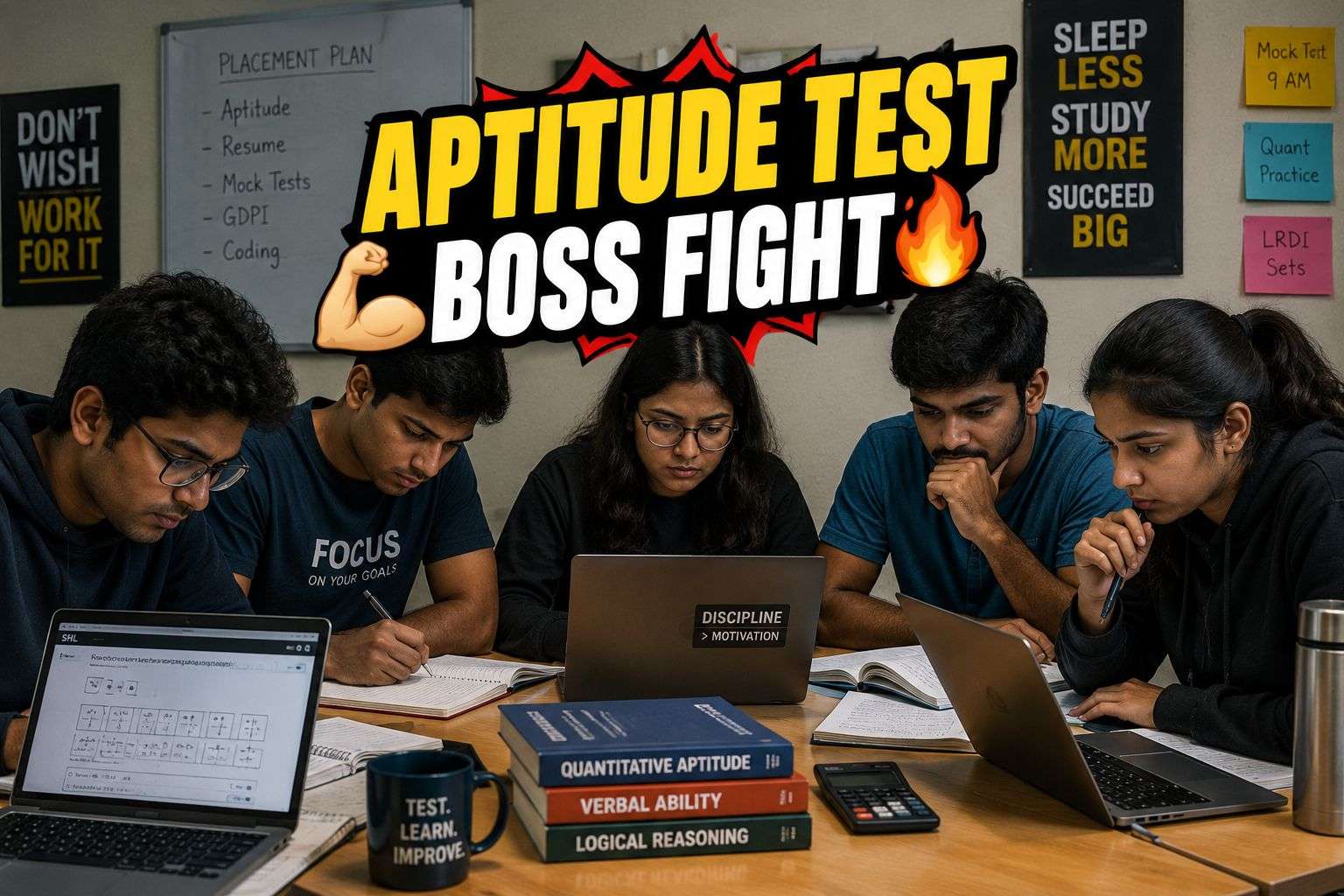
Off-campus placement for freshers hiring almost always begins with an online aptitude test, especially for the large IT services firms. Quantitative reasoning, logical reasoning, verbal ability, and basic coding are the usual sections. Treat this stage seriously. A weak aptitude score ends the process before you even reach a human interviewer.
For technical roles, brush up on data structures and algorithms, along with the basics of DBMS, operating systems, and networking. You do not need to be an expert. You need to be confident enough to explain your reasoning out loud.
For the interview itself, know your own resume cold. If you listed a project, be ready to explain every decision behind it. Practice your “Tell me about yourself” answer until it takes under ninety seconds and covers your background, one key skill, one project, and why you want this specific role. This single question trips up more freshers in off-campus placement for freshers interviews than any technical round does.
Common Mistakes That Quietly Sabotage Off-Campus Placement for Freshers
I see the same three mistakes repeat every single season.
Applying with one generic resume everywhere. A resume that is not tailored to the specific job description gets filtered out by the screening software before a human ever opens it. Adjust your top skills section for every serious application.
Waiting for the “right” opportunity before starting. Off-campus placement for freshers rewards students who start early and apply consistently, not students who wait for a perfect-looking listing. Momentum matters more than perfection here.
Never following up. A short, polite follow-up email a week after applying shows initiative and keeps your name visible. Almost nobody does this, which makes it a genuinely easy way to stand out.

Off-Campus Placement for Freshers Action Plan — By Year
If you are in your first or second year, start building visibility now, even in a small way. Open a LinkedIn profile if you have not already. Start one basic project and put it on GitHub. This early habit makes your off-campus placement for freshers push in final year far less stressful.
If you are in your third year, this is your preparation window. Pick one or two target roles and start building the specific skills they need. Fix your resume now, not in the last month of final year. Apply for internships actively, since they often convert directly into full-time offers.
If you are in your final year, treat off-campus placement for freshers hunting like a daily task. Apply to five or ten well-matched roles every day across multiple channels. Practice interview answers out loud. Track every application in a simple spreadsheet, and review it weekly to see what is actually working.
If you have already graduated and are still searching, you are not behind. Use this time to add one visible skill or certification. Keep your LinkedIn active with small posts about what you are learning, and keep applying with the steps in this guide, since off-campus placement for freshers has no fixed deadline, the way campus season does.
Read These Next
- 📌 AI Recruiter Resume for Indian Freshers in 2026
- 📌 GitHub Profile Tips That Actually Get Indian Students Noticed
- 📌 LinkedIn Profile for Freshers in India 2026
- 📌 Job Hunting Guide 2026 for Indian Graduates
- 📌 IT Companies in Bhubaneswar Hiring Freshers in 2026
FAQs — Off-Campus Placement for Freshers
FAQ 1 — What exactly is off-campus placement for freshers, and how is it different from campus placement?
Off-campus placement for freshers refers to any hiring process where you apply for a job directly, outside of your college’s official placement cell. In on-campus placement, a company visits your college, sets up interviews on-site, and you only compete against your own batchmates for those specific openings. In off-campus placement for freshers, there is no such filter. You are applying independently, often against candidates from colleges across the entire country, sometimes even against people with a little work experience.
This might sound like a disadvantage at first, but I want you to see the other side of it too. On-campus placement restricts you to whichever ten or fifteen companies chose to visit your specific college that year. Off-campus placement for freshers removes that ceiling entirely. You can apply to a startup in Bengaluru, a product company in Pune, and an IT services firm in Bhubaneswar, all in the same week, none of which had any obligation to visit your campus.
The trade-off is effort. Off-campus placement for freshers requires you to do everything your placement cell would normally handle for you, finding openings, applying, following up, and preparing, without the built-in structure of a scheduled drive. That is exactly why most students who succeed at it treat it like a disciplined, ongoing project rather than a one-time event.
Consultant’s Note — I tell every student the same thing when they first ask me this. Off-campus placement for freshers is not the backup plan for people who failed campus placement. For most students in tier-2 cities, it is actually the primary plan, and campus placement is the bonus round.
FAQ 2 — Is off-campus placement for freshers harder to crack than campus placement?
In some ways, yes, and I will not sugarcoat that. The applicant pool is larger, since you are competing with students from colleges across India rather than just your own batch. Companies also expect a slightly higher degree of self-direction from off-campus placement for freshers candidates, because there is no placement cell pre-screening or vouching for you before the interview stage.
That said, “harder” does not mean “worse.” Off-campus placement for freshers openings often come with fewer artificial restrictions. You are not boxed into whatever roles a visiting company happened to offer your college that particular year. Product companies and well-funded startups that never visit smaller campuses at all are entirely reachable through the off-campus route, and these often pay significantly better than the mass recruiters who do visit campuses.
The honest way to think about this is that campus placement trades convenience for a narrower set of options, while off-campus placement for freshers trades a bit more effort for a much wider set of options. Students who prepare properly, resume, proof of work, and interview practice, generally do not find the off-campus route significantly harder in outcome, just different in process.
Consultant’s Note — Difficulty is relative to preparation, not to the format. A well-prepared student finds off-campus placement for freshers very manageable. An unprepared student struggles at both on-campus and off-campus interviews equally.
FAQ 3 — How many companies should I apply to for off-campus placement for freshers to actually work?
There is no single magic number, but I generally guide students toward thirty to fifty well-targeted applications a month rather than hundreds of generic ones sent without any real thought. In off-campus placement for freshers hiring, the quality of targeting matters more than sheer volume, because a poorly matched application wastes both your time and the recruiter’s attention.
A more useful approach is to divide your effort. Spend real, focused time tailoring your resume and cover message for your top ten to fifteen target companies each month. Use a faster, slightly more general approach for the rest of your applications. If you are in your final semester and closer to needing an offer urgently, it is reasonable to push toward five to ten applications a day during peak hiring windows.
What actually predicts success in off-campus placement for freshers is consistency across weeks, not a single burst of applications followed by silence for a month. Track your numbers so you can see honestly whether you are maintaining the pace you think you are, and which channel is actually converting into responses.
Consultant’s Note — Ten well-targeted applications every week for two months will usually outperform a hundred applications sent in one panicked weekend. Off-campus placement for freshers rewards steady effort, not sudden bursts of anxiety.
FAQ 4 — Do I need a referral to succeed at off-campus placement for freshers, or can I get hired through direct applications alone?
You do not strictly need a referral, but I would be doing you a disservice if I did not tell you how much it helps. A referral moves your application past the automated screening pile and onto an actual person’s desk, which is often the single biggest barrier in off-campus placement for freshers hiring. Direct applications through career pages and job portals absolutely do result in offers too, especially when your resume is properly tailored and keyword-matched to the role.
The most effective approach combines both. Keep applying directly through career pages and platforms as your steady baseline, while simultaneously reaching out to alumni, seniors, and any contacts you can build on LinkedIn for referral opportunities at your specific target companies. Referrals convert at a noticeably higher rate, but they take longer to build and cannot be your only strategy, since not every company you are interested in will have someone you know working there.
Students who rely purely on direct applications without any networking effort in off-campus placement for freshers usually take longer to get their first response. Students who network aggressively but never actually apply directly also miss opportunities, since some companies fill roles quickly through their career page alone.
Consultant’s Note — Think of referrals as your accelerator, not your only engine. Keep applying directly every single week regardless of how your networking efforts are going.
FAQ 5 — What should my resume include for off-campus placement for freshers applications specifically?
Your resume needs to work twice as hard in off-campus placement for freshers, because there is no placement cell context softening the first impression the way there is in a campus drive. Keep the format genuinely simple. A single column, no tables, no graphics, no text boxes. These often break automated resume-scanning software and get you rejected before a human even opens the file.
Use the exact keywords from the job description wherever they honestly apply to you. If the posting mentions “Python, SQL, Power BI,” those specific words need to appear somewhere in your resume, not just a general mention of “data skills. ” Lead every project and experience line with an outcome rather than a duty. “Built a dashboard used by 50 students weekly” reads far stronger than “worked on a dashboard project”.
Keep your resume to one page unless you genuinely have enough substantial experience to justify more. Off-campus placement recruiters for freshers are scanning hundreds of resumes for the same role, and a cluttered two-page resume rarely gets read in full.
Consultant’s Note — I have watched students go from zero responses to multiple interview calls within two weeks simply by rewriting their resume properly for off-campus placement for freshers applications. Fix this before you increase how many places you apply to.
FAQ 6 — How long does off-campus placement for freshers usually take to result in an offer?
This is the question that causes the most anxiety, so let me answer it honestly. Most students I counsel take between two and six months to land their first offer through off-campus placement for freshers, assuming they are applying consistently and refining their approach along the way rather than repeating the same mistakes.
Students who apply randomly without any real strategy often take considerably longer, sometimes close to a year, not because they lack ability but because they keep repeating the same errors without realising it. The off-campus placement for freshers approach outlined in this guide, fixing your resume, building visible proof of skill, networking properly, and applying with real targeting, typically shortens this window because it removes the silent rejections that happen before a human ever reviews your application.
If you are three months into searching with zero interview calls, treat that as a clear signal to revisit your resume and LinkedIn profile rather than simply applying to even more companies with the same broken approach. Speed in off-campus placement for freshers comes from the quality of your process, not the raw volume of applications you send out.
Consultant’s Note — If you have sent fifty applications with no response at all, the problem is rarely bad luck. It is almost always the resume or the targeting. Fix the input before you increase the volume.
FAQ 7 — Can non-CS branch students or non-engineering graduates use off-campus placement for freshers too?
Absolutely, and this is genuinely good news for students outside computer science. Off-campus placement for freshers is not restricted to CS or IT branches. Mechanical, civil, electrical, and even commerce or arts graduates regularly land strong roles through this exact route, especially in fields like data analytics, IT support, business development, and operations, where demonstrated skill often matters more than the degree title on your marksheet.
The key difference is what your “proof of work” looks like. A CS student builds GitHub projects. A commerce student might build a small Excel financial model or a sample marketing campaign for a fictional brand. A mechanical engineering student pursuing a data role might complete a couple of guided data analysis projects and showcase them clearly. The principle stays identical across every branch, off-campus placement for freshers recruiters want to see applied skill, not just a listed interest.
I have personally guided several non-CS students through exactly this transition, moving from a core branch into IT-adjacent or analytics roles using off-campus placement for freshers strategies, and the honest truth is that recruiters outside the top-tier product companies increasingly care less about your original degree than about what you can actually demonstrate.
Consultant’s Note — Pick one realistic adjacent skill and build visible proof in it. Off-campus placement for freshers is far kinder to a focused non-CS candidate than to a CS student with no proof at all.
FAQ 8 — Are off-campus placement for freshers job portals safe, or is there a risk of fraud?
This is a fair concern, and I raise it with every student myself before they start applying widely. Genuine off-campus placement for freshers opportunities never ask you to pay money for an interview, an offer letter, or a “registration fee” to be considered for a role. Any listing asking for payment before an interview should be treated as a red flag immediately, regardless of how convincing the branding looks.
Stick primarily to well-known, established platforms and verify company details independently before sharing sensitive documents. If a “recruiter” reaches out unsolicited over WhatsApp with an unusually easy interview process and an oddly generous salary offer, slow down and verify the company’s actual careers page before proceeding. Genuine off-campus placement for freshers hiring, even when it moves quickly, always has a verifiable company presence behind it.
I always tell students to cross-check any unfamiliar company name through its official website, LinkedIn company page, and basic online reviews before submitting personal documents. This single habit filters out the overwhelming majority of fraudulent listings that circulate during every placement season.
Consultant’s Note — If a job offer through off-campus placement for freshers ever asks you for money at any stage, walk away immediately. No genuine employer in India charges freshers to be hired.
FAQ 9 — What if I have a backlog or academic gap? Does that hurt off-campus placement for freshers chances badly?
Backlogs and gaps feel much larger to students than they actually do to most recruiters, especially now that skill-based hiring has become far more common in off-campus placement for freshers. The honest approach works best here. Do not try to hide a backlog or gap, since it usually surfaces during conversation anyway, and dishonesty damages trust in a way that is very hard to recover from mid-interview.
Instead, be ready to explain it briefly, in one or two sentences, and then pivot quickly to what you did afterward to demonstrate readiness. A recruiter evaluating you through off-campus placement for freshers channels is generally far less interested in why the gap happened than in what you have done since to show forward movement.
If your gap is recent, use the time before your next interview to add one visible piece of proof, a completed course, a small project, or any concrete evidence of progress. I have personally placed multiple students with backlogs and academic gaps through off-campus placement for freshers routes once their resumes showed clear improvement afterward.
Consultant’s Note — Own the gap in one sentence, then spend the rest of the conversation on what you built afterward. Dwelling on the explanation only makes it feel bigger to the interviewer than it actually is.
FAQ 10 — Should I accept the first offer I get through off-campus placement for freshers, even if it is not my dream role?
In most cases, yes, particularly if this is your very first offer and you have already been searching for more than two or three months. A first job through off-campus placement for freshers gives you income, real work experience, and a current employment status that itself makes you noticeably more attractive to other recruiters later. It is genuinely far easier to move from one job into a better one than to move directly from zero offers into your dream role.
That said, run a basic sanity check before accepting anything. Confirm the company is genuine, the offer letter has clear terms, and the role does not involve unreasonable bonds or unclear payment structures of any kind. If you already have multiple offers through your off-campus placement for freshers effort, then it becomes entirely reasonable to compare and choose more selectively between them.
Waiting indefinitely for a perfect first role, while turning down genuine offers along the way, is a pattern I have seen backfire on students far more often than it has paid off. Your first job is a stepping stone, not a permanent verdict on your career.
Consultant’s Note — Get into the system, build real experience for twelve to eighteen months through whatever genuine offer off-campus placement for freshers brings you first, then make your next career move from a position of strength, not desperation.
Building your off-campus placement for freshers toolkit? Read AI Recruiter Resume for Indian Freshers in 2026 and Job Hunting Guide 2026 for Indian Graduates next to put this guide into action.






2 Comments