
IT Offer Letter Revoked? A 27-Year IT Career Consultant Explains Your Legal Rights, Real Reasons, and Exact Recovery Steps in India
IT offer letter revoked and you’re staring at your phone in shock? A 27-year IT career consultant breaks down your legal rights under the Indian Contract Act, why companies really do this, and a clear step-by-step plan to recover fast.
You worked for months. You cleared aptitude tests, technical rounds, HR interviews. You sent the acceptance email. You told your parents. You probably stopped applying elsewhere.
And then — silence. Or worse, a cold email saying the offer stands cancelled.
This happens more often than most people talk about. In 2022 alone, companies like Infosys, Wipro, and Tech Mahindra were reported to have revoked offer letters given to hundreds of freshers across India. It happened again quietly during the 2023–24 slowdown.
I have been in IT hiring and mentoring for 27 years. I have seen this pattern more times than I care to count. Students come to me devastated, confused, and unsure if they even have any rights.
The truth? You may have more rights than you think. And even if the legal path is not practical for you, there is a clear action plan that can get you back on track faster than you expect.
This blog covers everything — the real reasons companies revoke offers, what Indian law says, and a practical step-by-step plan to move forward with your head held high.

Why Do IT Companies Revoke Offer Letters? The Real Reasons
Before we talk about law and strategy, let’s talk about why this happens. Understanding the reason matters — because your next step depends on it.
Business slowdown or budget freeze. This is the most common reason. A company hires optimistically in Q1. By Q3, revenue targets are missed. HR gets a list of offers to cancel. Your name may be on it for no reason related to you personally.
Hiring freeze after a merger or acquisition. When two companies merge or when a new leadership team comes in, headcount plans often get redrawn overnight.
Poor performance in the background verification process. This catches many students off guard. If your academic records, project details, or any information you submitted during the process is found to be inaccurate — even a small discrepancy — companies can and do revoke it.
You failed an internal assessment or clearance test. Some large IT companies — especially TCS, Infosys, and Wipro — require freshers to clear an internal benchmark assessment before their joining date. A poor score can trigger a revocation.
You took too long to respond or complete the joining formalities. Offer letters have validity periods. If you delayed accepting or completing document submissions, the company may legally consider the offer lapsed.
The role itself was discontinued. Sometimes projects get cancelled. The team you were hired for simply no longer exists by the time your joining date arrives.
Knowing which of these applies to you is step one of your action plan.

What Does Indian Law Say? (Plain Language Version)
This is the part most students and parents want to know — and most blogs get wrong.
An accepted offer letter is a contract under the Indian Contract Act, 1872.
Under Section 2(a) of this Act, when a company issues you an offer letter and you formally accept it, a basic contract is formed between you and the company. This is not a matter of debate. It is settled law.
Once you accept, the company cannot simply “withdraw” the offer as though it never happened. If they revoke it after your acceptance, that is legally a breach of contract.
What are your remedies?
You can claim damages. You can file a civil suit claiming compensation for the losses you suffered. That could include salary you would have earned, relocation costs you incurred, or loss of another offer you turned down. Indian courts have upheld such claims.
Promissory Estoppel. This is a legal principle that protects you if you relied on the company’s promise and suffered harm as a result. If you rejected another job offer, moved cities, or paid for accommodation because you trusted this offer, the law steps in to protect you. The Supreme Court applied this principle in Bangalore Development Authority v. Syndicate Bank.
The Industrial Disputes Act may apply if your designation falls under the definition of a “workman”. Under this Act, companies cannot terminate or revoke an employment relationship without following a proper process that includes notice and compensation.
However — and this is important — I need to be honest with you about the practical reality.
Filing a court case as a fresher in India is expensive, time-consuming, and emotionally exhausting. Most cases take years. The compensation you may recover at an entry-level salary is often not worth the fight when measured against your time and mental health.
That said, knowing your rights changes your leverage. A sharply worded legal notice — even without a full court case — often triggers a quick settlement from companies that want to avoid publicity.
More on that in the action steps below.

Watch This Before You Panic
Before you take any drastic step, watch these two videos. They will calm you down and give you context from people who have seen this happen before.
📺 Offer letter of freshers revoked by IT companies | Infosys, Tech Mahindra, Wipro — What Really Happened This video covers the wave of offer revocations that swept through Indian IT in 2022 and explains the pattern behind it. Worth watching so you understand you are not alone — and this has happened before.
📺 Offer Letter Traps: How Companies Are Fooling You! — Fresher Coach Ishita This one is more recent and covers the sneaky clauses inside offer letters that most freshers never read. Eye-opening.
The Practical Recovery Plan — Step by Step
Knowing your rights is one thing. Knowing what to do on Monday morning is another. Here is exactly what I advise students who come to me with a revoked offer.
Step 1 — Do Not Delete Anything
Save every email, every WhatsApp message, every document connected to this offer. Download the offer letter PDF. Screenshot any communication from HR. This is your evidence. Even if you decide not to pursue legal action today, having this documentation keeps your options open.
Step 2 — Ask for the Reason in Writing
Send a calm, professional email to HR asking for the reason for the revocation in writing. Do not send an angry message. Just say: “Could you please share the specific reason for this decision in writing, so I can understand and plan my next steps?”
Most companies will respond. The reason they give — or their silence — tells you a lot.
Step 3 — Find Out if There Was a Condition You Missed
Read your offer letter carefully. Look for clauses like “subject to background verification,” “subject to medical clearance,” or “subject to qualifying the internal assessment.” If the revocation is tied to a genuine condition you did not fulfil — that is a different situation from a company simply pulling back for business reasons.
Step 4 — Consider a Legal Notice (Optional But Often Effective)
If you accepted the offer, turned down other options, and suffered real financial or opportunity loss — and the revocation has no legitimate reason tied to your conduct — consider asking a lawyer to send a formal legal notice.
You do not need to go to court. A legal notice alone often brings companies to the table. Many settle quickly because the reputational risk of the news spreading on LinkedIn or Blind is more painful for them than offering a small settlement.
This option makes most sense if you declined another written offer because of this one.
Step 5 — Restart Your Job Search Immediately
I know it feels wrong to do this before the dust settles. But do it anyway. Every day of delay costs you momentum. The market does not wait for your situation to resolve.
Update your Naukri and LinkedIn profiles today. Use the experience of this process — the rounds you cleared, the offer you got — as a signal to apply to similar companies at the same level. You cleared their bar once. You can do it again.
Step 6 — Be Strategic About What You Say in Interviews
When interviewers ask why you are back in the market, be brief and factual. “The company rescinded the offer due to a business hiring freeze before my joining date.” That is it. No drama. No bitterness. Most interviewers in India understand this — it has happened enough times that good companies factor it in.

If Background Verification Caused the Revocation — Read This
This is a separate scenario and needs its own section.
If the revocation happened because something came up in your background check — here is what you need to know.
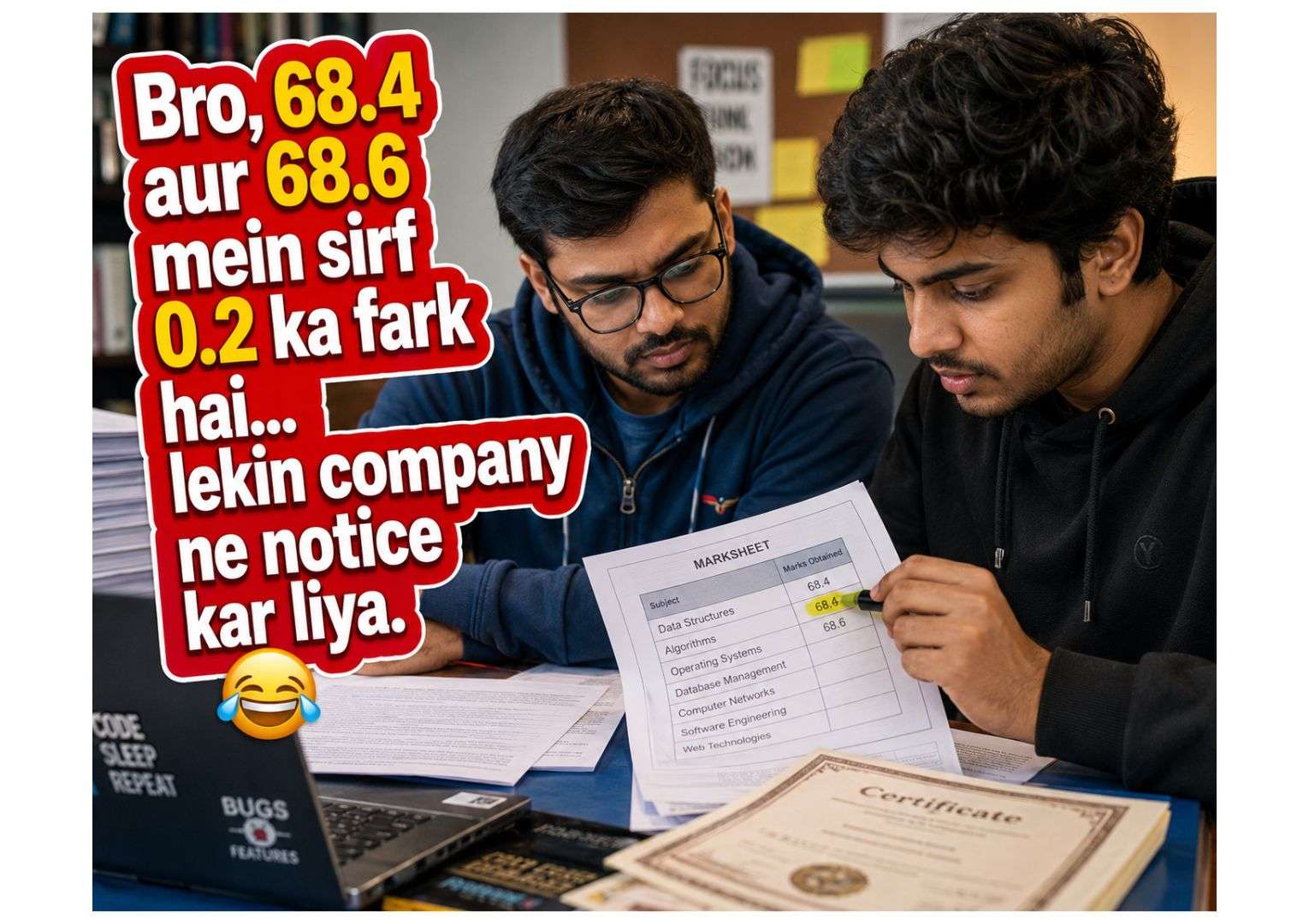
Discrepancies in academic records are the most common trigger. A percentage difference between your marksheet and what you filled in on the application form — even half a percentage point — can trigger a flag.
If this happened to you, do the following. First, get clarity on exactly what the discrepancy was. Contact the background verification agency if the company tells you that was the reason. Second, gather your original documents — all marksheets, certificates, and ID proofs — and ensure they are consistent before applying anywhere else. Third, be upfront in future applications. Falsification of records is taken seriously. A proactive correction in future forms is far better than another revocation.
Companies That Have Done This — Know the Pattern
This has happened across India’s IT sector at different points in the last five years. TCS revoked offers tied to NQT score thresholds in multiple batches. Infosys, Wipro, and Tech Mahindra were reported to have cancelled offers during the 2022 post-COVID slowdown. Several mid-sized IT companies and startups did the same during the 2023–24 funding crunch.
None of this means these are bad companies to work for in general. It means IT hiring in India is deeply tied to macro business conditions — and freshers sit at the most vulnerable end of that chain.
The lesson is not to distrust companies. The lesson is to never stop your job search until your first payslip arrives. Keep multiple applications active. Accept an offer when you genuinely have a joining date confirmed, not just an offer letter.
This is advice I give every student I mentor: keep interviewing until you have sat in the office and logged in on Day 1.
For more on building backup options and navigating placement season with strategy, read my blog on how to crack IT interviews in 30 days and the full guide on building a strong LinkedIn profile for freshers in India that keeps inbound opportunities coming even when you are not actively applying.
Also check my detailed guide on TCS NQT preparation and Infosys InfyTQ — because the assessment scores that trigger revocations are the same ones you can clear with the right preparation.

10 Frequently Asked Questions About IT Offer Letter Revocked in India
1. Is an IT offer letter legally binding in India?
Yes — once you formally accept an offer letter, it becomes a basic contract under the Indian Contract Act, 1872. The company cannot simply pull it back without legal consequences. That said, most offer letters include conditions — such as successful background verification, medical clearance, or passing an internal test — and if those conditions are not met, the company has a legitimate basis for revocation.
Read your offer letter carefully before assuming the revocation was wrongful. If there were no unfulfilled conditions on your side, and the company revoked after your acceptance, you have grounds for claiming damages under a breach of contract argument.
Consultant’s Note: In 27 years of IT hiring, I have seen very few freshers actually pursue legal action — but the threat of a legal notice alone has resolved situations for students I have guided. Know your rights even if you choose not to use them.
2. Can I sue the company if my offer letter was revoked?
Legally, yes. You can file a civil suit under the Indian Contract Act claiming damages — salary loss, relocation costs, loss of another offer you turned down. Courts have upheld such claims. However, the practical reality is that litigation is slow and expensive. For most freshers at an entry-level salary, the better approach is a sharply worded legal notice first. That alone resolves many situations. A lawyer can send a notice for a relatively small fee. If the company responds positively, you may negotiate a settlement or at least a proper rejection letter that helps your reputation with other employers.
Consultant’s Note: I always tell students to document everything, understand their rights, and then decide calmly. Anger is energy. Direct it at your next opportunity, not at a legal battle that takes years.
3. What if the company says “we reserve the right to revoke the offer at any time” in the letter itself?
Some companies include such clauses. This is a grey area legally — courts in India have held that even with such clauses, once there is an accepted contract, revocation without cause can still amount to breach if the candidate suffered real harm by relying on the promise. However, such a clause does weaken your legal position.
The stronger your evidence of reliance — turning down another offer, relocating, or incurring costs — the stronger your argument, regardless of the clause.
Consultant’s Note: Always read the full offer letter before accepting. I know this sounds obvious but most students sign within minutes of receiving it. Read every clause. Ask me to explain anything you don’t understand.
4. Does background verification revocation mean I did something wrong?
Not always. Background verification agencies sometimes flag minor discrepancies — a small difference in percentage, a name spelling mismatch between certificates, or a delay in getting verification from a college. Some of these can be corrected if you act quickly. If you receive a revocation notice citing background verification, contact HR immediately and ask what specific discrepancy was flagged. In some cases, providing clarifying documents in time can reverse the decision. In others, it cannot, but knowing the specific reason helps you fix the issue before the next application.
Consultant’s Note: I have seen students lose offers over a 0.2% difference in CGPA between their marksheet and application form. Fill every form with your original documents. Never rely on memory for academic percentages.
5. Will a revoked offer letter affect my future job applications?
In most cases, no — not directly. Future employers typically ask about your current employment status, not about offer letters you received and lost. What matters is how you talk about the gap and the experience in interviews. Be factual and brief: “The company revoked the offer due to a business hiring freeze before my joining date.” That is a complete and honest answer.
Do not bring it up unless asked. And do not let it affect your confidence. You cleared their selection process — that proves your capability regardless of what happened after.
Consultant’s Note: The market has seen enough revocations in the last three years that most Indian recruiters understand the situation. It is not the career-ending event it feels like on the day it happens.
6. What is the difference between a revoked offer and a deferred joining date?
A deferred joining date means the company still wants to hire you but has pushed back the start date — often by 3 to 6 months — due to business conditions. A revoked offer means the company is cancelling the hiring entirely. If a company tells you they are “deferring” your joining, get the new joining date in writing with a confirmation email.
If they cannot give a clear date or keep changing it, that deferral may quietly become a revocation. Stay active in the market until you have an actual joining date confirmed.
Consultant’s Note: I have seen “deferral” used as a softer way to say goodbye. If your joining has been deferred more than once with no clear date, start your search again in parallel.
7. Should I tell other companies that my offer was revoked?
You do not need to volunteer this information. If an interviewer asks why you are still looking for a job, a simple factual answer — “the company rescinded the offer before my joining date due to business reasons” — is enough. Do not go into extensive detail. Do not name the company unless you feel comfortable. What you should focus on is what you have been doing productively since then — any courses completed, certifications earned, projects built. That shifts the conversation quickly.
Consultant’s Note: After a revocation, spend at least a week doing something skill-building — even completing a free online certification. It gives you something positive to say in interviews and genuinely adds value.
8. My offer was revoked because I failed an internal assessment. Is there any recourse?
If your offer letter clearly stated that the offer was “subject to clearing the internal joining assessment”, the company is on legally safe ground. The condition was explicit. Your recourse in this situation is not legal — it is practical. Ask HR if you can retake the assessment. Some companies allow it. If not, ask what the specific areas of weakness were and whether you can reapply after a defined period.
Use the time to genuinely strengthen those areas. Check my detailed guide on preparing for TCS NQT and similar assessments on cguru.co.in.
Consultant’s Note: An internal assessment revocation is the most recoverable scenario. Companies that revoke for this reason are often willing to rehire from the same batch in future cycles. Stay in contact with their HR.
9. My offer got revoked and I had already quit/rejected another offer. What should I do?
This is the most painful scenario. Here is what to do immediately. First, contact the other company — the one whose offer you rejected — and explain the situation honestly. Ask if the position is still open or if there are similar openings. Recruiters are human. They understand this happens.
Some will reopen the conversation. Second, reach out to every other company where you had reached advanced stages of the interview process. You were close to an offer once — they may fast-track you again. Third, restart your job search with full focus. Your resume now has one more data point: you cleared a selection process at an IT company. Use that.
Consultant’s Note: In this situation, speed is everything. Every day of delay is a day someone else is filling the roles you could be shortlisted for. Start today.
10. How do I protect myself from offer revocations in the future?
There is no foolproof protection. But there are things you can do to reduce your exposure. Keep interviewing actively until you have physically joined and completed your first week of work. Never reject a competing offer until your joining date is confirmed and close.
Read every clause of your offer letter — especially any conditions attached. Fill all application forms from original documents, not from memory. And build strong skills so that even if one door closes, you have the credibility and capability to open the next one quickly.
Consultant’s Note: The single biggest protection is strong, verified skills — because companies rarely revoke offers from candidates they truly need. Build yourself into someone companies cannot afford to lose. That starts long before placement season. Check the best certifications for freshers in India to know where to invest your time.
Your Action Plan by Situation
If your offer was revoked before you accepted: You have no legal claim — the contract was not formed. But you do have a lesson. Do not tell family or turn down other opportunities until you have formally accepted and received a written confirmation. Restart your search immediately. Use the experience of clearing this round as evidence of your capability.
If your offer was revoked after you accepted but before you joined: Document everything. Send a calm email asking for the reason in writing. If you suffered real loss — rejected another offer, relocated, incurred costs — consult a lawyer about sending a legal notice. Then restart your job search in parallel. Do not wait for the legal process to resolve before looking for your next opportunity.
If your offer was revoked during or after joining formalities: This is the strongest legal position. You completed the formalities in good faith. Get everything in writing. Speak to a labour lawyer — many offer free initial consultations. A formal legal notice is very likely to prompt a response here.
If background verification caused the revocation: Clarify the specific discrepancy with HR. Fix the underlying issue in your documents before applying anywhere else. If the discrepancy was genuinely minor and unintentional, explain it proactively in future applications.
For final-year students still in placement season: Never put all your hopes in one offer. Keep attending drives. Accept the best offer you can get. And keep building skills that make you genuinely hard to replace. Read my blog on full-stack development career roadmap and AI and ML jobs in India in 2026 — these are paths where the demand is strong enough that companies hesitate before revoking.
The Honest Closing Thought
I have sat across the table from hundreds of students over 27 years. The ones who recover fastest from a revoked offer are not the ones who fight the hardest — although knowing your rights matters.
They are the ones who spend the first 48 hours feeling the disappointment fully — and then pick up the phone on day three and start calling.
An IT offer letter revoked is not the end of your career. It is one painful chapter in what will be a long story. The companies that revoke offers are often not doing it because of you. They are doing it because of a boardroom decision you were never part of.
Your skills, your work ethic, your preparation — none of that went away with that email.
Start again. Smarter. Faster. And with better documentation this time.
If you want personalised guidance on your next steps after a revocation, reach out to us at cguru.co.in or book a career counselling session. I will help you put together a clear, honest action plan for your situation.
External References:
- Indian Contract Act, 1872 — Section 2(a) and Section 5
- Mondaq: Offer of Employment — Can It Be Revoked? (May 2025)
- Lead India Law: What Can I Do If the Company Cancels My Offer Letter?
Disclaimer: This blog is for general information only. It does not constitute legal advice. Please consult a qualified legal professional for advice specific to your situation.