

How to Get an Off Campus Job in India 2026 — For Students Who Missed Campus Placements
Missed campus placements? Learn how to get an off campus job in India 2026 with real strategies, platforms and honest advice from a 27-year IT career consultant.
How to Get an Off Campus Job in India 2026 — Because Missing Campus Placements Is Not the End of Your Story
Nearly 40 percent of engineering graduates in India every year do not get placed through campus placements. That is not a small number. That is hundreds of thousands of students — talented, qualified, hardworking students — who walk out of their final year without an offer letter in hand.
If you are one of them right now I want you to hear something clearly before we go any further.
Missing campus placements does not mean you are not good enough. It does not mean companies do not want you. And it absolutely does not mean your career is over before it has started.
I have been working as an IT career consultant for 27 years. I have seen students who were not placed during campus season go on to get better jobs than their placed batchmates — sometimes within weeks of the placement season ending. I have seen students from ordinary colleges with modest CGPAs land roles at companies their placed batchmates would have envied. The difference was not talent. It was knowing how to navigate the off campus job market in India — which operates completely differently from the campus placement process most students have spent all their time preparing for.
The campus placement process is one door. It is a useful door. But it is not the only door. And in many ways the off campus route — when pursued correctly — gives you access to a wider range of opportunities, more negotiating flexibility, and a more honest evaluation of your actual skills than a campus drive ever does.
This blog is going to show you exactly how to walk through that door. Step by step. With no vague encouragement and no false promises. Just the real strategies that work in India’s off campus job market in 2026.
Why Missing Campus Placements Happens — And Why It Does Not Define You
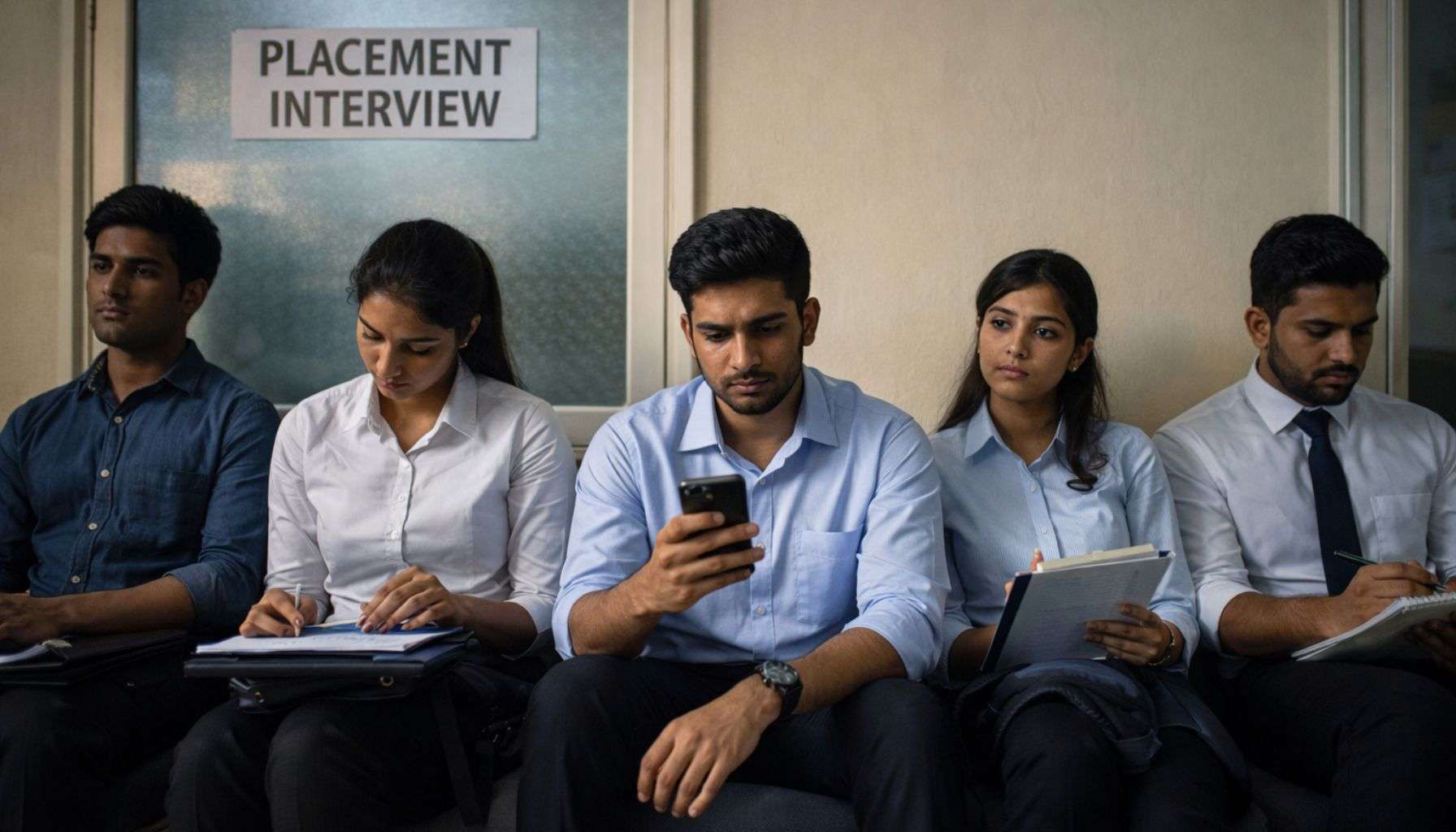
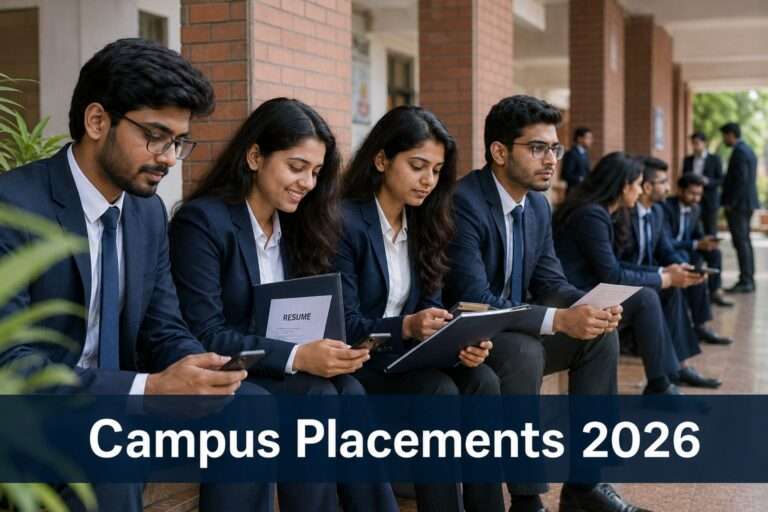
Campus placement season India 2026 — students waiting for interviews outside placement room
Before we talk about how to get an off campus job in India 2026 let me address something that most students carry with them after a difficult placement season — a quiet sense of failure that is almost never justified.
Campus placements in India are an imperfect system. The companies that visit your college are determined by your college’s relationships and reputation — not by your individual ability. The timing of placement season — typically October through February of your final year — catches many students before they have had time to properly build their skills. The written tests filter on aptitude speed rather than on the skills the actual job requires. And on any given day in an interview room a hundred small factors that have nothing to do with your potential can determine the outcome.
I have seen students fail campus placements because they were nervous in their first few interviews and had not built enough interview experience yet. I have seen students miss the cutoff on aptitude tests by one or two marks. I have seen students from genuinely talented batches at colleges with poor placement cell connections simply not get the right companies walking through their door.
None of these situations reflect on the student’s ability to do the job. They reflect on the limitations of a single high-pressure recruitment process conducted over a few weeks.
The off campus job market does not have these limitations. It is open year round. It evaluates you on what you can actually do rather than how fast you solve a time-pressured aptitude test. And it gives you the opportunity to present yourself directly to companies rather than being filtered through a college placement cell system that may or may not be working in your favour.
How to Get an Off Campus Job in India 2026 — The Platforms That Actually Work
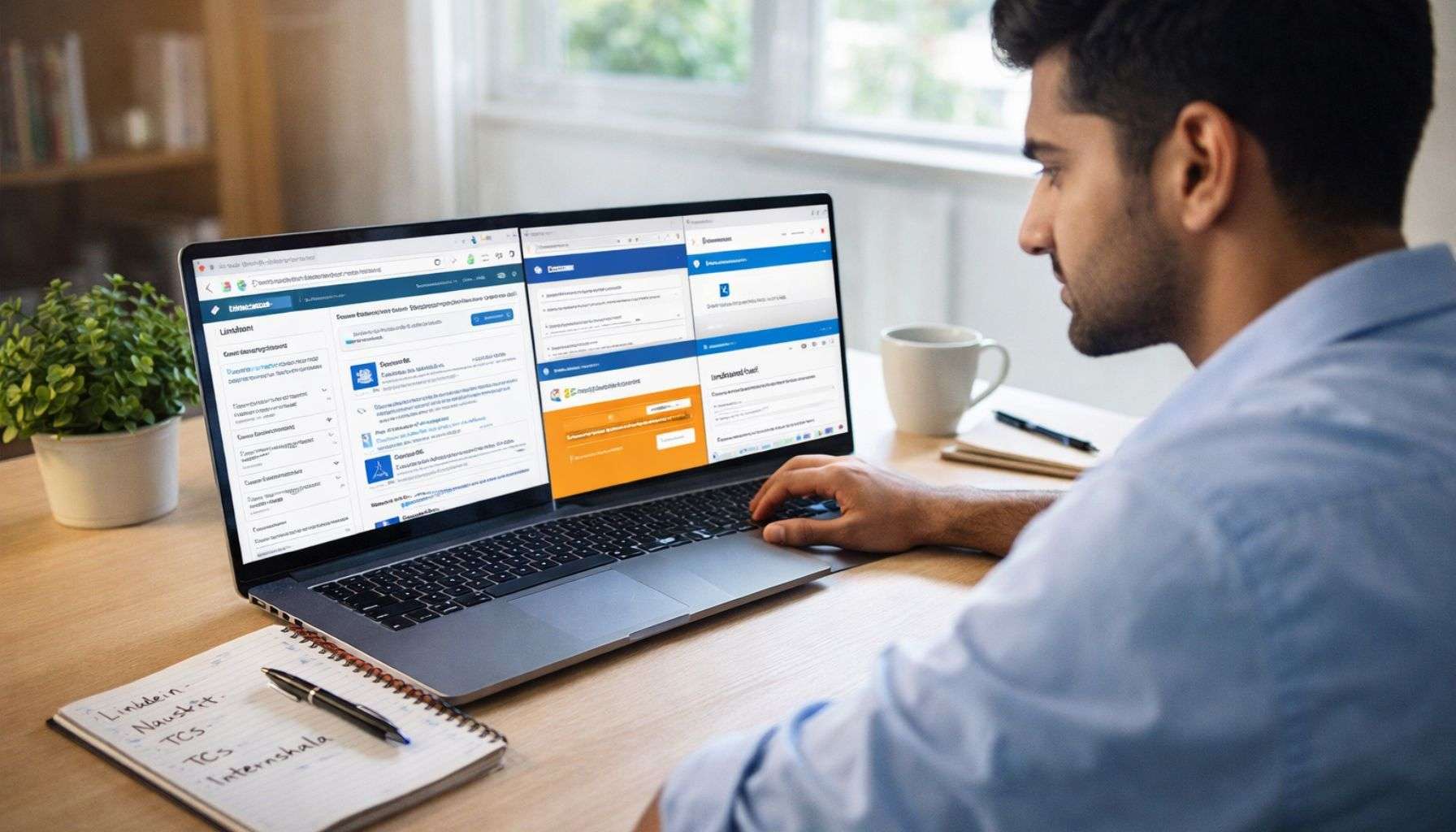
Off campus job search platforms India 2026 — student using multiple job portals systematically
The first thing most students do after missing campus placements is go to one job portal, spend twenty minutes browsing, feel overwhelmed, and close the laptop. That approach produces exactly the results you would expect.
Off campus job searching in India in 2026 requires a systematic, platform-specific strategy. Here is exactly which platforms to use and how to use each one effectively.
TCS NextStep — Register Here Before Anything Else
TCS NextStep is TCS’s dedicated off campus hiring portal and it is the first place every student who missed campus placements should register. TCS is the largest private sector employer in India and they run multiple off campus hiring drives throughout the year specifically for students who did not get placed through campus recruitment.
The registration is straightforward. Create a profile on NextStep, fill in your academic details completely and accurately, upload your resume, and register for the TCS NQT if you have not already appeared for it.
Here is something most students do not know. TCS NextStep is not just a one-time application. Once you are registered your profile stays active and TCS periodically reaches out to registered candidates when off campus drives are announced. Students who register and then forget about it sometimes receive direct interview invitations weeks or months later.
🔗 Visit: nextstep.tcs.com 🔗 Related Read: TCS NQT 2026 — Complete Guide for Freshers
InfyTQ — Infosys’s Own Off Campus Hiring Platform
Infosys runs their fresher hiring almost entirely through InfyTQ for off campus candidates. Register, complete their preparatory courses, and appear for their assessment. Strong performance on InfyTQ can get you directly into Infosys’s interview process without needing your college’s involvement at all.
InfyTQ also offers genuinely useful learning content across programming and problem-solving that strengthens your overall interview readiness beyond just Infosys. The time you spend preparing for the InfyTQ assessment is preparation time that transfers across multiple companies’ selection processes.
🔗 Visit: infytq.com
LinkedIn — Your Most Powerful Off Campus Job Tool in 2026
If I had to pick one single platform for how to get an off campus job in India 2026, it would be LinkedIn. Not because it has the most job listings — although it has plenty. Because it gives you something no other platform does — direct access to the people making hiring decisions.
Here is how to use LinkedIn specifically for off campus job hunting rather than just browsing listings.
Optimise your profile completely first. A professional photo. A headline that says something specific — “Final Year B.Tech CSE Student | Python | SQL | Seeking Data Analyst Roles” is better than “Student at XYZ College.” A summary section that tells your story in three to four sentences. All your projects listed under experience. All certifications added. Your GitHub link in the featured section.
Use the Jobs filter properly. Search for roles using the job type filter set to “full-time” and “entry level.” Add your location or set it to remote. Sort by “Most Recent” to find freshly posted listings before they get flooded with applications. Apply within the first 24 hours of a listing going live — applications submitted early consistently receive more attention than those submitted days later.
Reach out directly to recruiters and HR managers. This is the step most students skip because it feels uncomfortable. It should not. A well-written connection request to a recruiter at a company you want to join — explaining briefly who you are and what you are looking for — costs you nothing and occasionally leads directly to an interview opportunity that bypasses the standard application queue entirely.
Here is what a good LinkedIn outreach message looks like.
“Hi [Name], I am a recent B.Tech Computer Science graduate with strong SQL and Python skills and three data projects on GitHub. I noticed [Company] is growing their analytics team and I would love to be considered for any entry-level data analyst opportunities. I have attached my profile for reference. Would you be open to a brief conversation?“
Short. Specific. Professional. Not desperate. That tone gets responses. The alternative — sending fifty identical copy-pasted messages to every recruiter on the platform — gets you nowhere.
🔗 Visit: linkedin.com/jobs
Naukri.com — The Most Comprehensive Indian Job Database
Naukri.com has the largest database of job listings in India and is actively used by recruiters across every industry. Create a complete profile, upload a well-formatted resume, and set up job alerts for your target roles and locations.
Here is something specific about Naukri that most students do not use. Recruiters on Naukri actively search candidate profiles — they do not just wait for applications to come in. This means a complete, keyword-rich Naukri profile can result in recruiters reaching out to you directly even when you have not applied for a specific role. Make sure your profile includes all relevant skills, your project descriptions, and your certifications so it appears in recruiter searches.
🔗 Visit: naukri.com
AMCAT and CoCubes — Off Campus Assessments That Open Multiple Doors
AMCAT — Aspiring Minds Computer Adaptive Test — and CoCubes are third-party assessment platforms that are accepted by hundreds of Indian companies as a substitute for their own written tests. Appearing for AMCAT or CoCubes and scoring well gives you a score certificate that you can submit to multiple companies simultaneously — essentially applying to many companies with one test.
AMCAT specifically has partnerships with over 2,000 companies in India including mid-size IT firms, startups, and even some large companies. A strong AMCAT score can result in direct interview invitations from companies you have never applied to.
If you missed campus placements and have not appeared for AMCAT yet — this should be high on your list.
🔗 Visit: myamcat.com | cocubes.com
Unstop and Internshala — Beyond Internships for Off Campus Hiring
Most students associate Internshala with internships and Unstop with competitions. Both platforms now have significant full-time fresher job listings too. Companies posting here are often startups and mid-size firms that do not conduct formal campus drives but actively hire off campus.
The advantage of these platforms specifically for off-campus hiring is lower competition — fewer students are applying here for full-time roles compared to Naukri or LinkedIn. That lower competition means your application gets more attention.
🔗 Visit: unstop.com | internshala.com/jobs
How to Get an Off Campus Job in India 2026 — The Strategy Beyond the Platforms
Finding the platforms is step one. Using them strategically is step two. Here is what actually separates students who get off campus offers from those who apply for months without results.
Fix Your Resume Before You Apply to Anything
I cannot say this strongly enough. The most common reason off campus applications fail in India is not that students are unqualified. It is that their resume is not doing its job.
An off campus application lives or dies on the resume alone — there is no placement officer vouching for you, no college brand opening doors, no familiar face to advocate for your profile. Your resume is the only thing standing between you and a callback.
Before you apply anywhere spend one full day fixing your resume. A specific objective tailored to your target role. Projects described with what you built, what technologies you used, and what the result was. Skills that are honest and relevant. Contact information that is current and professional. One clean page. Saved as a PDF.
A strong resume submitted to fifty companies will get more callbacks than a weak resume submitted to five hundred.
🔗 Related Read: Why Your Resume Is Getting Rejected in India 2026
🔗 Related Read: How to Write a Resume for Internship With No Experience in India 2026
Apply Consistently Every Single Day

Off campus job application tracker India 2026 — student tracking applications systematically
The off campus job search in India rewards consistency above everything else. Students who apply to five to ten targeted roles every single day consistently outperform those who apply to fifty roles once a week. Daily consistency keeps you visible on platforms where recent activity influences how often your profile appears in recruiter searches.
Maintain a simple spreadsheet — or a physical notebook if that works better for you — tracking every application. Company name. Platform. Date applied. Date to follow up. Current status. This system keeps you from losing track, helps you follow up at the right time, and gives you a clear picture of what is working and what is not.
Follow up on every application that does not get a response within ten days. A short, polite email or LinkedIn message — “I applied for the [role] position on [date] and wanted to check if there are any updates on the application” — is professional, shows persistence, and occasionally turns a silent application into an interview opportunity.
Build Something While You Search
Here is advice that most job search guides never give you. The time you spend searching for a job off campus is also time you can use to make yourself more hireable.
Every week you spend without a job is a week you can use to add a project to your GitHub, complete a free certification, improve a skill that your resume currently lacks. Students who spend their off campus search period purely sending applications and doing nothing else arrive at interviews with the same profile they had when the campus season ended. Students who spend it building — even one small thing per week — arrive at interviews with a stronger, more current profile than they had before.
That continuous improvement is both genuinely useful and psychologically important. It keeps you moving forward rather than feeling stuck. And it gives you something new to talk about in every interview rather than repeating the same answers you gave in campus season.
🔗 Related Read: Best Free Online Courses for IT Students in India 2026
Use Your Network More Honestly Than You Think You Should
Most students in India are uncomfortable asking their network for help with job searching. There is a cultural awkwardness around it — a feeling that asking feels like admitting failure or imposing on someone.
Get over that feeling. Quickly.
Your network — seniors from college who are already working, relatives in IT, professors with industry connections, family friends in companies you are targeting — is one of the most powerful assets you have for off campus job hunting. Internal referrals at Indian IT companies dramatically increase the chance of your resume being seen by a human rather than filtered by an automated system.
You do not need to ask anyone for a job. That is the wrong request and it puts the other person in an uncomfortable position. Ask for something much smaller and much easier to say yes to. Ask if they know of any openings at their company. Ask if they would be willing to refer your profile on the company’s internal referral portal. Ask for fifteen minutes of their time to understand what their company looks for in freshers.
Small asks. Genuine interest. Respectful persistence. That is how networks actually work in India’s job market.
Prepare for Interviews Simultaneously — Not After You Get a Call
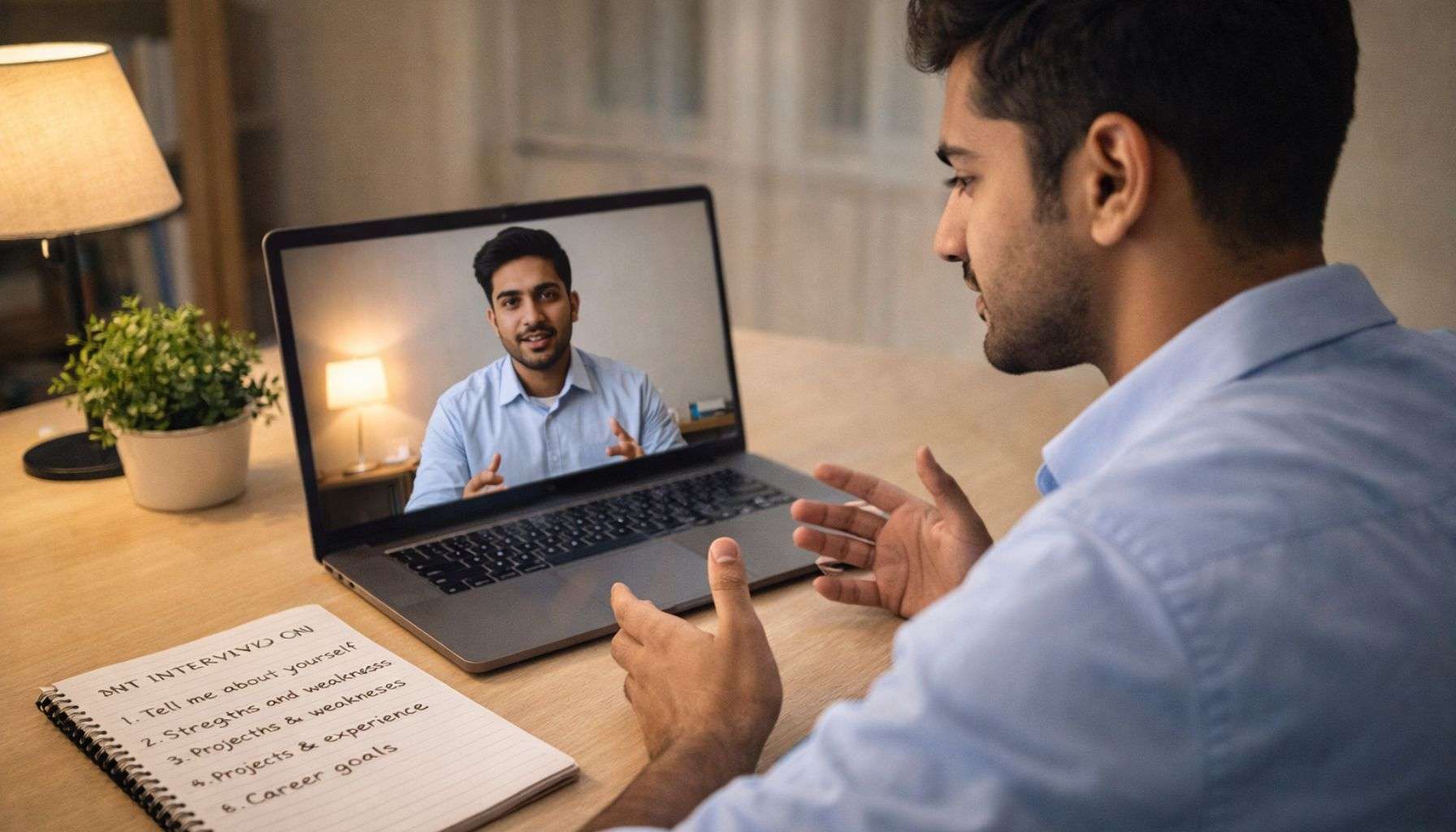
Interview preparation for off campus jobs India 2026 — fresher practicing mock interview at home
One of the most common mistakes students make during off campus job searching is treating interview preparation as something they will do when they get an interview call. By the time the call comes they have one to three days to prepare — which is rarely enough.
Spend thirty to forty-five minutes every day on interview preparation alongside your application activity. Go through common technical questions for your target role. Practice explaining your projects out loud. Work through aptitude problems. Do mock interviews with a friend or record yourself answering questions.
By the time an interview call comes you should already be ninety percent ready — not starting from scratch.
🔗 Related Read: How to Prepare for TCS Infosys Wipro Interview in 2026 🔗 Related Read: How to Prepare for an Internship Interview in India 2026
The Honest Timeline — How Long Does Off Campus Job Hunting Take in India 2026
I want to be straight with you about this because unrealistic expectations are one of the biggest reasons students give up too early.
For a well-prepared fresher applying consistently and strategically through the platforms and methods above — the realistic timeline to a first off campus offer in India in 2026 is two to four months. Some students get there faster. Some take longer. The variables are your skill level, how well your resume represents those skills, how consistently you are applying, and factors outside your control like hiring freezes and economic cycles.
What I can tell you from 27 years of watching this process is that the students who get off campus jobs almost always share three characteristics. They applied every single day without waiting for a perfect opportunity. They kept improving their skills and portfolio while they searched. And they treated every rejection as information rather than as a verdict.
The students who struggled for six months or more almost always share the opposite characteristics. Sporadic applications. No improvement between rejections. A growing belief that the market does not want them rather than a clear-eyed assessment of what they needed to change.
What to Do If Nothing Is Working After Three Months
If you have been applying consistently for three months using multiple platforms and strategies and you are still not getting callbacks — something specific needs to change. Here is how to diagnose what.
If you are applying but not getting responses — your resume is likely the problem. Have it reviewed by someone with genuine hiring experience. Fix it based on their feedback before applying further.
If you are getting responses but not clearing written tests — your aptitude and technical preparation needs work. Spend two weeks intensively on aptitude practice and technical fundamentals before applying for the next batch.
If you are clearing tests but not clearing interviews — your interview preparation is the gap. Do mock interviews with people who can give honest feedback. Record yourself. Identify specifically where you lose confidence or clarity and work on those moments specifically.
If you are clearing interviews but not getting offers — this is the rarest scenario but it happens. It usually means you are interviewing well but something in your profile — salary expectations, location flexibility, or a specific skill gap — is creating friction at the offer stage. Have an honest conversation with yourself about whether you are being realistic about the current market.
Every stage of this process has a specific fix. The mistake is treating “not getting a job” as one undifferentiated problem. Break it down. Find the specific stage where you are losing momentum. Fix that stage. Then move forward.

Getting off campus job offer India 2026 — fresher receiving good news phone call
Internal Links — Read These Next
- 📌 Summer Internship for Students in India 2026 — Complete Guide
- 📌 TCS NQT 2026 — Complete Guide for Freshers
- 📌 Top 10 IT Companies in India Hiring Freshers in 2026
- 📌 Fresher Salary in India 2026
- 📌 How to Prepare for TCS Infosys Wipro Interview in 2026
- 📌 Why Your Resume Is Getting Rejected in India 2026
- 📌 How to Write a Resume for Internship With No Experience in India 2026
- 📌 How to Crack Campus Placements in India 2026
- 📌 Best Free Online Courses for IT Students in India 2026
- 📌 How to Prepare for an Internship Interview in India 2026
FAQs — How to Get an Off Campus Job in India 2026
Q 1:-Is it harder to get a job off campus than through campus placements in India?
It is different — not necessarily harder. Campus placements give you structure, a captive audience of recruiters, and the credibility of your college’s placement cell behind you. Off campus hiring requires more self-direction, more consistent daily effort, and more comfort with outreach and follow-up. But it also gives you access to a much wider range of companies, more flexibility in the roles you can target, and a more honest assessment of your skills rather than a time-pressured aptitude test score. Many students find that the off campus process actually suits them better than the campus one once they understand how it works.
Q 2:-Do companies in India treat off campus and on campus candidates differently?
At the interview stage — almost never. Once your resume reaches a recruiter and you are invited for an interview, how you got there is irrelevant. What matters is your performance. The perception that off campus candidates are seen as lesser is a myth that holds students back from pursuing these opportunities aggressively. Companies that are actively hiring are interested in finding good candidates — they do not particularly care whether those candidates came through a college placement cell or through their own portal.
Q 3:-Should I mention in my application that I missed campus placements?
No. Your application and resume should focus entirely on what you bring — your skills, your projects, your certifications, your experience. Whether you participated in campus placements and what happened there is completely irrelevant to an off campus recruiter and mentioning it unprompted draws attention to something negative where there was no reason to. If asked directly in an interview — answer honestly and briefly. If not asked — do not raise it.
Q 4:- How many companies should I apply to per day during an off campus search?
Five to ten targeted, well-matched applications per day is a healthy and sustainable pace. Quality of targeting matters more than raw volume. An application that takes ten minutes to tailor slightly for a specific role will consistently outperform a copy-pasted application that takes thirty seconds. That said, applying to fewer than two to three companies per day significantly extends your timeline. Consistency and reasonable volume together are what produce results.
Q 5:- Is there a time of year when off campus hiring is most active in India?
Off campus hiring in India is most active between January and June — the period immediately after campus placement season peaks and when companies that did not fill all their positions through campus drives start looking off campus. A second wave of hiring typically happens between August and October before the next campus season begins. That said, off campus opportunities exist year round — the companies using portals like Naukri and LinkedIn are hiring continuously. The key is to stay consistently active rather than waiting for a specific season.
Q :- Is it actually possible to get a good IT job in India through off campus hiring in 2026 or is campus placement the only real route?
This is the question I hear most often from students who have just come out of a difficult campus placement season — and my answer after 27 years is always the same. Not only is it possible, some of the best career starts I have personally witnessed came through the off campus route rather than through campus placements.
Here is the reality that most students do not see from inside a college campus. Companies in India — especially growing startups, mid-size IT firms, and even large service companies — hire off campus continuously throughout the year.
They are not waiting for college placement seasons. They have positions to fill and timelines to meet. If a strong candidate lands in their inbox through a portal application, a LinkedIn outreach, or an AMCAT score — they will interview that candidate regardless of which college they came from or whether their placement cell was involved.
The students I have seen struggle with off campus hiring are almost never the ones who lacked ability. They are the ones who waited too long to start, applied inconsistently, or kept using the same broken resume they used in campus season without fixing what was wrong with it.
Change those three things and the off campus job market in India in 2026 is genuinely accessible.
Consultant’s note — I have personally guided students from tier three colleges in Odisha who missed campus placements entirely and went on to join companies like Cognizant, Wipro, and several Bengaluru-based startups through off campus routes within three to five months of the campus season ending. The route is real. The outcomes are real. The effort required is real too.
Q :- How long does off campus job hunting realistically take in India and what should I do if nothing is working after two months?
The honest timeline for a well-prepared fresher applying consistently through the right platforms is two to four months from the day they start applying seriously. I want to emphasise the word seriously — because applying seriously means five to ten targeted, tailored applications every single day. Not fifty applications once a week. Not ten applications whenever motivation strikes. Every. Single. Day.
That said, two months of consistent effort with no callbacks is not a reason to panic. It is a diagnostic signal. In my experience the absence of callbacks after consistent applications almost always means one of two specific things.
Either the resume is not doing its job — and the student needs experienced eyes on it to identify what is filtering them out before a human ever reads it. Or the platforms being used are not the right fit for the student’s profile and target role.
If you are two months in and struggling, stop adding more applications to the pile and spend one week doing this instead. Have your resume reviewed by someone with genuine hiring experience — not just a friend.
Research which specific companies in your target domain use which hiring platforms. Appear for AMCAT if you have not already. And check whether your LinkedIn profile is complete and searchable enough to appear in recruiter searches without you actively applying.
Two months of no results followed by one week of honest diagnosis and targeted fixing almost always produces a different result in the following month than the previous two months did.
Consultant’s note — The students who take the longest to get off campus offers in India are almost never the least talented. They are the ones who keep doing the same things that are not working rather than stopping to diagnose why. Treat your job search like a data problem. Find where the process is breaking down. Fix that specific stage. Then move forward.
Q :- What is the single most important thing to fix before starting an off campus job search in India in 2026?
Your resume. Without any question or qualification — your resume.
I know that sounds like obvious advice. But I say it as someone who has reviewed thousands of off campus applications from Indian freshers and watched the same problem derail the same promising candidates over and over again. An off campus application has nothing going for it except the resume itself. There is no placement officer vouching for the student. There is no college brand opening a door. There is no familiar face in the room. The resume is the only thing standing between that student and a callback — and most fresher resumes in India in 2026 are still making fundamental mistakes that filter them out before a recruiter has spent ten seconds on the page.
The three mistakes I see most consistently on fresher resumes that directly cause off campus rejections are these. A generic objective statement that could have been written by any student applying for any role at any company. Project descriptions so vague that a recruiter cannot tell what the student actually built or what skills they demonstrated. And a skills section full of either outdated irrelevancies or exaggerated claims that fall apart the moment someone asks about them in an interview.
Fix these three things before you send your resume anywhere. Write an objective specific to the role and company. Describe each project with what you built, what technologies you used, what the challenge was, and what the result was. List only skills you can genuinely speak to in a five-minute conversation.
That level of resume quality separates students who get callbacks from students who wonder why nobody is responding.
Consultant’s note — I have seen students go from zero callbacks in six weeks to three interview invitations in two weeks simply by fixing their resume. Not by applying to more companies. Not by changing their target. By fixing the document that represents them before anyone meets them.
Q:- Should I reach out directly to recruiters on LinkedIn for off campus jobs in India and how do I do it without seeming desperate?
Yes — and this is one of the most underused strategies in India’s off campus job market. Most students either do not know this is acceptable or feel too uncomfortable to try it. Both are problems worth overcoming because direct recruiter outreach on LinkedIn — done correctly — can get your profile in front of a decision maker faster than any job portal application ever will.
The key word in that last sentence is correctly. There is a right way and a wrong way to reach out to a recruiter on LinkedIn and the difference between them is significant.
The wrong way is a generic message that reads like a template — “Dear Sir or Madam I am a fresher looking for job opportunities kindly consider my profile.” That message arrives in a recruiter’s inbox alongside dozens of identical ones every day. It gets ignored or declined within seconds.
The right way is a short, specific, personalised message that does three things. It tells the recruiter who you are in one sentence. It shows that you know something about their company or their open role. And it makes a small, easy-to-say-yes-to request rather than asking for a job outright.
Here is a concrete example of what that looks like. “Hi Priya, I am a recent B.Tech Computer Science graduate with strong SQL and Python skills and three data projects on GitHub.
I noticed your company recently expanded its analytics team and I would love to be considered for any entry-level data analyst openings. Would you be open to taking a quick look at my profile?” That message is respectful, specific, and makes a request that costs the recruiter almost nothing to say yes to. That combination gets responses.
Consultant’s note — In my experience coaching students through off campus job searches in India, direct LinkedIn outreach to recruiters has a response rate of roughly one in eight to one in ten messages when done correctly. That sounds low but it is actually higher than the callback rate on most portal applications. Ten well-crafted LinkedIn messages per week is a strategy worth taking seriously alongside your regular applications.
Q :- Do companies in India actually treat off campus candidates differently from campus placement candidates during the interview process?
At the interview stage — almost never. And I want to say this clearly because the belief that off campus candidates are viewed as second-tier is one of the most damaging and most unfounded pieces of received wisdom circulating in Indian student communities right now.
Once your application has cleared the written test and your profile has been reviewed by a recruiter, how you got to that interview room is completely irrelevant to the interviewer sitting across from you. They are evaluating your technical knowledge, your communication skills, your project experience, and your attitude. Not your application route. The interview itself is a level playing field regardless of whether you came through a campus drive or through a direct portal application.
Where the difference does exist is earlier in the process — in the initial filtering stage. Campus candidates benefit from their college’s brand and the placement cell’s relationship with the company. Off campus candidates must clear that initial filter entirely on the strength of their resume and assessment performance alone. That is why fixing your resume and preparing thoroughly for written tests matters so much more in the off campus context.
But once you are in the room — you are in the room. On exactly the same footing as anyone else who cleared the same filter to get there.
Consultant’s note — I have sat in on hiring panels at several Indian IT companies over the years. Not once have I heard an interviewer refer to how a candidate reached them as a factor in their evaluation.
What I have heard interviewers say repeatedly is that off campus candidates who have made it to the interview stage are sometimes more motivated and better prepared than campus candidates — precisely because they had to work harder to get there.
Q :- What should I do if I have a gap between college and my first job because of a missed campus placement season?
Handle it honestly, proactively, and without apology. A gap of three to six months between graduation and your first job in India in 2026 is not the career-ending red flag that some students fear it is. Recruiters see it regularly and most of them understand the realities of India’s campus placement system well enough to know that missing campus season does not mean a student is unemployable.
What matters far more than the gap itself is what you did during it. A student who spent three months after graduation building projects, completing certifications, appearing for assessments, and applying consistently has a completely different story to tell about that gap than one who spent those three months doing nothing and waiting for opportunities to arrive.
When asked about a gap in an interview — and you may well be asked — have a specific, honest, forward-looking answer ready. Something like — “I did not get placed through campus placements and I spent the following three months using that time productively.
I completed a Power BI certification, built two additional data projects that are on my GitHub, and appeared for the TCS NQT and AMCAT assessments. I wanted to use the time to strengthen my profile rather than rush into a role that was not the right fit.” That answer is honest. It shows self-direction. And it reframes the gap as a period of deliberate skill-building rather than passive waiting.
The gap is not your liability. How you explain it and what you did during it is what actually matters.
Consultant’s note — In 27 years I have never seen a recruiter reject a candidate purely because of a three to six month post-graduation gap when the candidate could speak confidently about what they did during that time. What I have seen is recruiters probe the gap specifically to understand the candidate’s self-awareness and initiative. A well-prepared answer to this question can actually become one of the stronger moments of an interview rather than a weak one.
Q :- Is AMCAT worth paying for during an off campus job search in India in 2026?
Yes — with one important condition. It is worth it if you prepare for it seriously rather than treating it as something you can walk into without preparation.
AMCAT — Aspiring Minds Computer Adaptive Test — is accepted by over two thousand companies in India as a substitute for their own written assessments.
A strong AMCAT score can result in direct interview invitations from companies you have never contacted and may never have thought to approach. The test covers English, quantitative ability, logical reasoning, and technical knowledge in your domain. The cost is a few hundred rupees — a small investment relative to the access it provides.
The condition is this.
Students who appear for AMCAT without preparation often score below the level that generates interview invitations and then conclude that AMCAT does not work. The test is adaptive — it adjusts in difficulty based on your performance — which means weak preparation produces a score that undersells your actual ability. Spend at least two weeks on targeted aptitude preparation before you appear. Know what the technical module for your domain covers and prepare specifically for that section.
A strong AMCAT score combined with a well-optimised Naukri profile and active LinkedIn outreach is one of the most effective three-part strategies for off campus job hunting in India that I have seen work consistently across different student profiles and different cities.
Consultant’s note — I recommend AMCAT to almost every student I work with who is pursuing off campus jobs in India. The ones who prepare properly for it consistently tell me that interview invitations started arriving within two to three weeks of their score being published — from companies they had never heard of before that turned out to be genuinely interesting places to start a career.
Key Takeaways
- Nearly 40 percent of engineering graduates in India do not get placed through campus placements every year — missing campus placements is common, normal, and absolutely not a career-ending situation.
- The off campus job market in India operates completely differently from campus placements — it rewards consistent daily effort, direct outreach, and a strong independent profile rather than relying on college connections and placement cell systems.
- Register on TCS NextStep and InfyTQ immediately — both platforms run dedicated off campus hiring drives specifically for students who were not placed through campus recruitment.
- LinkedIn is the most powerful single tool for off campus job hunting in India in 2026 — optimise your profile completely and use it for both job applications and direct recruiter outreach.
- Fix your resume before applying anywhere — an off campus application has no college brand or placement officer to support it, so your resume is the only thing standing between you and a callback.
- Maintain a daily application tracker, follow up consistently, and keep building skills and projects while you search — continuous improvement during the search period directly improves both your hirability and your interview performance.
- Every stage of the off campus process has a specific diagnostic and a specific fix — break down where you are losing momentum and address that stage specifically rather than treating the whole search as one undifferentiated problem.
While you search off campus make sure your interview preparation is keeping pace. Read our complete guide on How to Prepare for TCS Infosys Wipro Interview in 2026 and walk into every interview ready to make the most of the opportunity you worked hard to create.





5 Comments