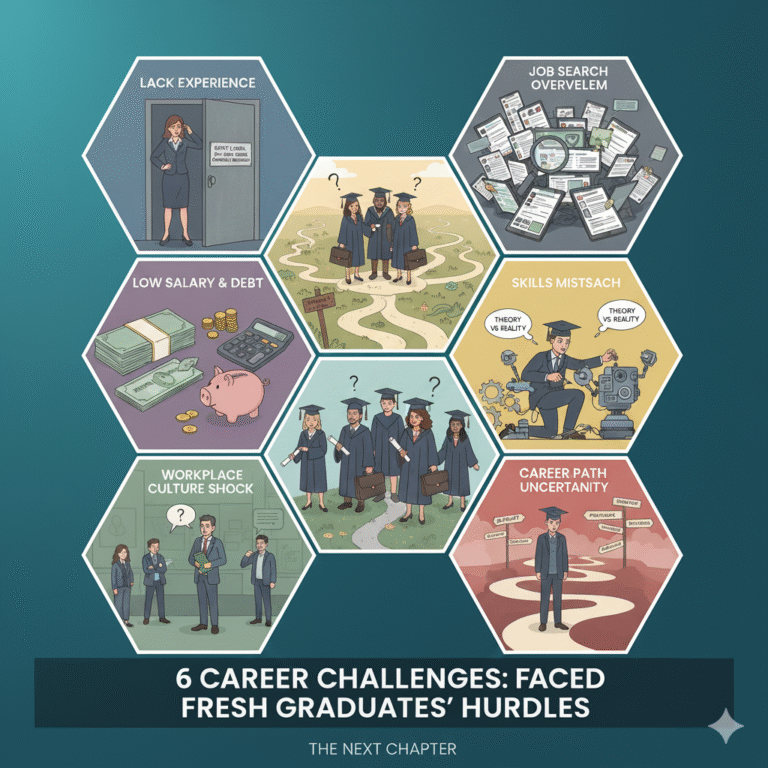

How to Write a Resume for Internship With No Experience in India 2026
How to Write a Resume for Internship With No Experience in India 2026 — A Career Consultant’s Honest Advice
How to write a resume for an internship with no experience in India 2026 is the single most searched career question I get from students every single year. And after 27 years of working as an IT career consultant — reviewing thousands of resumes, sitting across hiring managers, and watching students make the same avoidable mistakes over and over — I can tell you this with full confidence: the problem is never that you have no experience. The problem is that you don’t know how to show what you already have.
Every student has something. You just haven’t been taught how to present it yet. That changes today.
Why Most Student Resumes Get Rejected in the First 10 Seconds
Let me be straight with you. A recruiter spends about 6 to 10 seconds on a resume before deciding to read further or move on. That’s not a lot of time. And in those 10 seconds, most student resumes fail — not because the student is unqualified, but because the resume is either too cluttered, too empty, or just poorly structured.
I’ve seen resumes with fancy borders, multiple fonts, and three different colours. I’ve seen resumes that list every school subject as a “skill.” I’ve seen resumes that are two pages long with nothing relevant on either page.
Here’s the truth — a clean, simple, one-page resume that clearly tells your story will always beat a complicated one. Always.
What Goes Into a Resume for an Internship With No Experience in India 2026
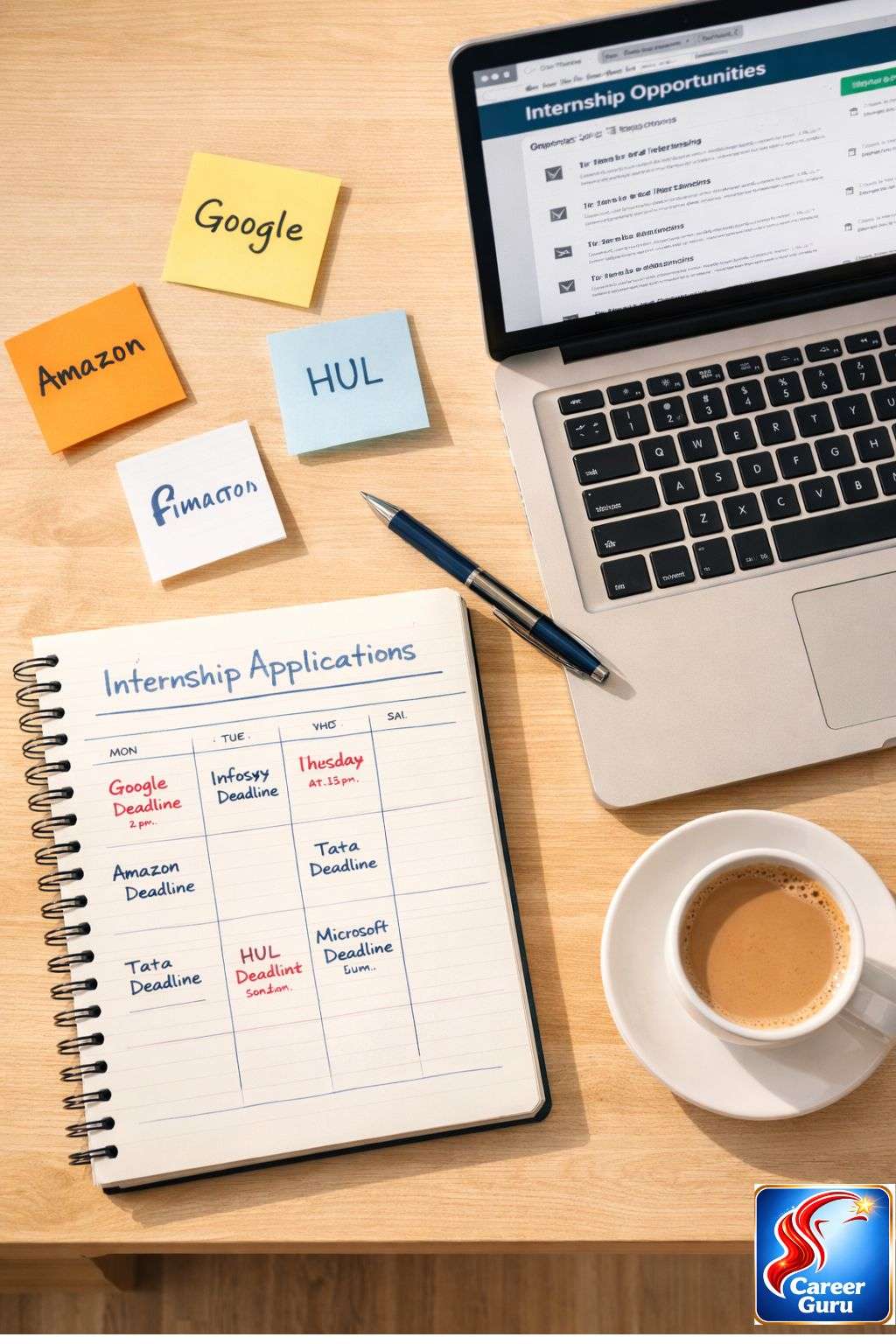
Before I walk you through each section, understand one thing. When you have no work experience, your resume needs to work harder in other areas. Think of your resume as a puzzle. Experience is just one piece. You have other pieces — your education, your projects, your skills, your certifications, your college activities. When those pieces are arranged well, the picture still looks complete.
Here’s exactly what your resume should include.
1. Contact Information — Keep It Clean and Current
This sounds obvious, but you’d be surprised how many students mess this up. Your name should be at the top in a slightly larger font. Below that, add your phone number, a professional email address, your city, and your LinkedIn profile link if you have one.
What a professional email looks like: [email protected]
What it should not look like: [email protected]
One more thing — make sure your phone number is active. I’ve called students for interviews only to find the number was switched off or incorrect. Don’t let that be you.
2. Career Objective — Your 2-Line Pitch to the Recruiter
This is the first thing a recruiter reads after your name. Two to three lines. That’s all you get. Use them well.
Your objective should tell the recruiter three things — who you are, what you’re looking for, and what value you bring.
A weak objective sounds like this: “Seeking a challenging internship opportunity to grow my skills and contribute to the organisation.”
That line says nothing. Every student writes it. Skip it.
A strong objective sounds like this: “Final year B.Tech student specialising in Computer Science, looking for a summer internship in software development. Comfortable with Python and MySQL, with two academic projects in web development to my credit.”
See the difference? The second one is specific. It tells me your field, your goal, and gives me a reason to keep reading.

3. Education — Your Strongest Asset Right Now
When you have no work experience, your education section carries more weight. List your most recent qualification first and work backwards. Include your college name, degree, stream, year of passing or expected year, and your CGPA or percentage.
If your CGPA is above 7.5 or your percentage is above 70, mention it. If it’s lower, you can skip it and let your projects and skills speak for themselves.
Also, if you’ve received any academic awards, scholarships, or topped in a subject relevant to the internship, mention it here. Don’t be shy. These small details matter more than you think.
4. Skills — The Section That Can Change Everything

A close-up of a student’s hand writing a skills list on a notepad beside a laptop showing code on screen.
This is where most students either oversell or undersell themselves. Both are bad.
Don’t list “MS Word” and “internet browsing” as skills in 2026. That’s not a skill anymore — that’s a basic expectation. On the other hand, don’t list “Machine Learning” and “AI development” if you’ve only watched two YouTube videos on the topic.
Be honest. Be specific. And group your skills smartly.
Technical Skills — programming languages, software tools, platforms you’ve genuinely used. (Example: Python, HTML, CSS, Canva, Figma, Excel, Tally, AutoCAD — depending on your field)
Soft Skills — keep this short. Pick three or four that are actually true for you. (Example: Team collaboration, written communication, quick learner, problem-solving)
Languages — list languages you speak and your proficiency level. This matters more than people realise, especially for client-facing roles.
5. Projects — Your Real Replacement for Work Experience
This is the most important section for a student with no job experience. And this is where I see the biggest gap. Students either skip this section entirely or describe their projects so vaguely that it means nothing to the reader.
Let me show you what I mean.
Weak project description: “Made a website for a college project.”
Strong project description: “Built a responsive student attendance management system using HTML, CSS, and PHP with a MySQL backend. The project handled data for 200+ student records and was presented at the college tech fest.”
Same project. Completely different impact. The second one tells me what you built, what technologies you used, and the scale of the work. That’s what I need to see.
List two to three projects maximum. For each one, write two to three lines covering what the project was, what tools or technologies you used, and what the output or result was.
If you don’t have any projects yet, build one before you start applying. Even a basic one. A simple to-do app, a personal portfolio website, and a data analysis on a public dataset. It doesn’t have to be complex. It just has to be real.
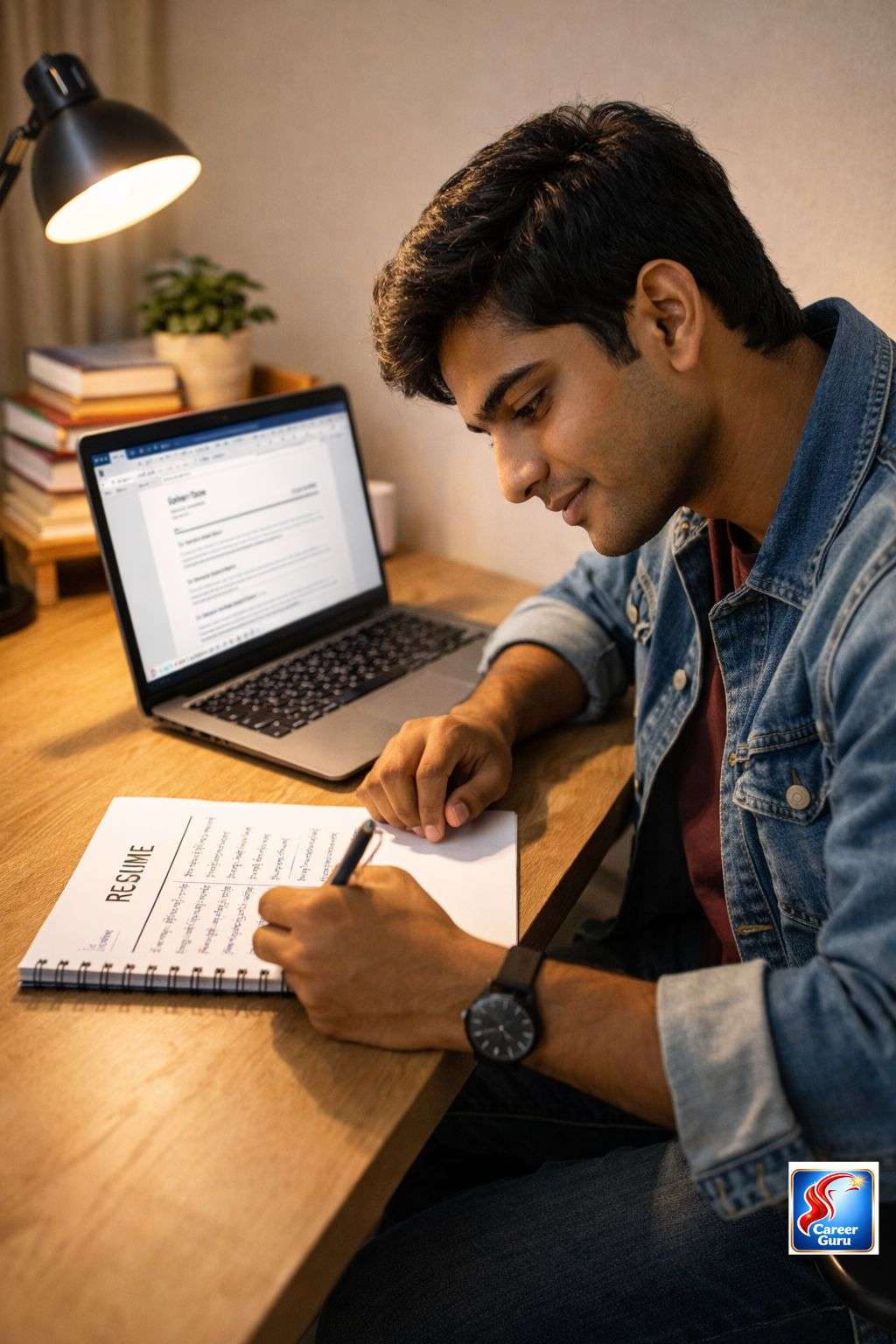
6. Certifications — Small But Mighty
Online certifications from platforms like Coursera, Google, NPTEL, LinkedIn Learning, or Internshala Training go a long way when your resume has no work experience. They show that you’ve taken the initiative to learn beyond your college syllabus.
List the certification name, the platform, and the year. Keep it to three or four that are directly relevant to the internship you’re applying for.
Example:
- Google Digital Marketing Certificate — Coursera, 2025
- Python for Everybody — NPTEL, 2024
- Social Media Marketing — Internshala, 2025
🔗 Get free certifications: Google Digital Garage | NPTEL | Coursera
7. Extracurricular Activities and College Involvement
Did you organise a college event? Were you part of the student council, NSS, NCC, or a technical club? Did you win any inter-college competition? Did you contribute to the college magazine or newsletter?
All of this belongs on your resume. These activities show that you’re more than just your grades. They show initiative, teamwork, leadership, and communication — qualities that every company looks for in an intern.
Keep this section short. Three to four bullet points. Focus on what you did and what role you played, not just the name of the activity.
Example:
- Coordinated the annual tech fest for 500+ participants as Events Head, managing a team of 12 volunteers.
- Contributed 6 articles to the college e-newsletter on emerging technology trends.
8. Volunteer Work or Freelance Projects
Even if you’ve never had a paid job, have you ever helped a local shop set up its Instagram page? Designed a poster for a friend’s event? Helped a relative with their small business accounts?
That counts. List it. Frame it professionally.
Example:
- Designed social media creatives for a local bakery startup (Instagram, 2024) — helped grow their follower count from 200 to 1,100 in 3 months.
That one line tells a recruiter you have real-world application of your skills. It doesn’t matter that it was unpaid or informal. The result speaks for itself.
Resume Formatting Tips — What 27 Years Have Taught Me

Two resumes side by side on a clean white desk — one cluttered and messy with multiple fonts, one clean and minimal with clear sections.
Format matters as much as content. Here’s what I always tell my students.
One page only. You’re a student with no experience. You don’t need two pages. If it’s going beyond one page, you’re either repeating yourself or including irrelevant information. Cut it down.
Use one clean font. Calibri, Arial, or Georgia. Size 10 to 12 for body text. Size 14 to 16 for your name. Nothing fancy.
Use clear section headings. Bold them. Keep consistent spacing. A recruiter should be able to find any section within two seconds of looking at your resume.
Save as PDF. Always. A Word document can look different on different computers. A PDF looks the same everywhere.
Name your file properly. FirstName_LastName_Resume_2026.pdf — not “resume final final v3 USE THIS.pdf.” I have actually received resumes named that. Don’t be that person.
No photo unless specifically asked. In most IT and corporate internship applications in India, a photo on the resume is not required and sometimes not preferred. Skip it unless the company asks for it.
One Mistake I See Even Smart Students Make
They write one resume and send it to every company. The same resume for a software developer internship and a digital marketing internship. That never works.
You don’t need to rewrite the whole thing. But tweak your career objective, rearrange your skills, and bring forward the most relevant project for each application. Ten minutes of customisation per application can double your callback rate. I’ve seen it happen repeatedly.
Internal Links to Help You Go Further
- 📌 Summer Internship for Students in India 2026 — Complete Guide
- 📌 Best Platforms to Find Summer Internships in India 2026
- 📌 Common Summer Internship Mistakes to Avoid (Link Mistakes Blog)
- 📌 How to Convert Your Summer Internship Into a Full-Time Job (Coming Soon)
FAQs — How to Write a Resume for an Internship With No Experience in India 2026
Q 1:- Should I mention my CGPA on my internship resume if it’s low?
If your CGPA is below 6.5 or your percentage is below 60, I’d suggest leaving it off your resume and letting your projects, skills, and certifications do the talking. Focus on what you’re good at rather than drawing attention to what you’re not.
Q 2:- How long should a student’s resume be in India?
One page. Always one page for a student or fresher. Keep it tight, relevant, and easy to scan. A two-page resume with no experience tells me you haven’t edited it — not that you have more to offer.
Q 3:- 3. Should I include a photo in my internship resume?
For most IT and corporate internships in India, no. Skip the photo unless the company or job listing specifically asks for it. Use that space for something more useful.
Q 4:- What if I have absolutely no projects or certifications?
Then build them before you apply. Spend two to three weeks on a small project in your field and complete one free certification on Google or NPTEL. Applying with even one real project and one certification is far better than applying with an empty resume and hoping for the best.
5. Can I mention school-level achievements on my internship resume?
If you’re in your first or second year of college and your school achievements are recent and significant — yes, you can. But if you’re in your final year, focus on college-level accomplishments. School achievements from five or six years ago don’t add much weight at that stage.
Key Takeaways
- The biggest mistake students make is thinking they have nothing to show. You do — you just need to present it the right way.
- Your education, projects, certifications, skills, and college activities are all valid resume content when you have no work experience.
- Write a specific, tailored career objective for every role you apply to. Generic objectives get ignored.
- Projects are your most powerful section. Describe them clearly — what you built, what you used, and what the result was.
- Format matters. One page, one font, clear sections, saved as PDF, and named properly.
- Customise your resume slightly for each application. It takes ten minutes and makes a big difference.
- Certifications from Google, NPTEL, Coursera, and Internshala are free, credible, and worth every minute you spend earning them.
Still unsure where to apply once your resume is ready? Read our complete guide on the Best Platforms to Find Summer Internships in India 2026 and take the next step with confidence.