How to Crack Infosys InfyTQ 2026 — The Only Preparation Guide Written From the Hiring Side Not the Student Side
Learn how to crack Infosys InfyTQ 2026 with this complete preparation guide written from the hiring side. Real exam pattern, syllabus, cutoff insights and honest advice from a 27-year IT career consultant.
How to Crack Infosys InfyTQ in 2026 — And Why Most Students Are Preparing for the Wrong Thing
How to crack Infosys InfyTQ in 2026 is one of the most searched placement preparation queries among Indian engineering students right now. And the number behind that search tells you everything about why this test matters so much.
Infosys hires over 50,000 freshers in India every year. A significant and growing proportion of those offers — particularly for off campus candidates — come directly through InfyTQ. That means for hundreds of thousands of Indian students InfyTQ is not just another placement test. It is the primary gateway into one of India’s largest and most respected IT employers.
Here is what makes this blog different from every other InfyTQ preparation guide you will find online.
Every other guide was written by a student who recently cleared the test. They can tell you what questions appeared. They can tell you what sections felt hardest. They can tell you what they studied in the two weeks before they appeared.
What they cannot tell you is how Infosys actually uses InfyTQ scores on the other side of the screen. How hiring managers interpret different score profiles. What the score thresholds for the two different fresher profiles actually look like in practice. And what the students who consistently clear InfyTQ and then convert the subsequent interview into an offer do differently from those who clear the test but stumble at the next stage.
After 27 years as an IT career consultant — working with students preparing for InfyTQ and observing how Infosys uses those scores in their actual hiring decisions — I can give you that perspective. This blog is built from both sides of the process. Not just one.
What Infosys InfyTQ Actually Is — And Why It Matters More in 2026 Than Ever Before
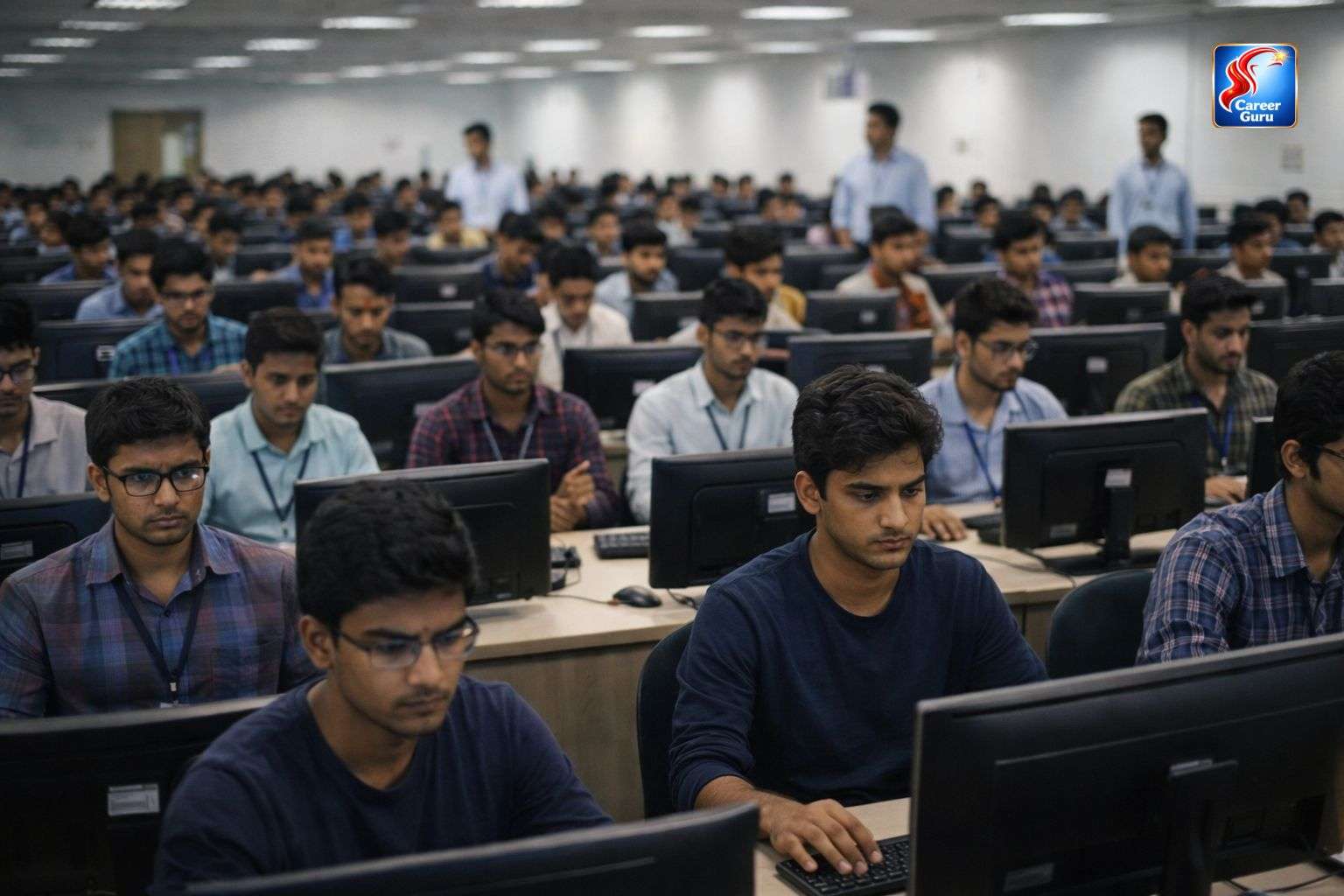
Infosys InfyTQ 2026 exam — students appearing for InfyTQ assessment
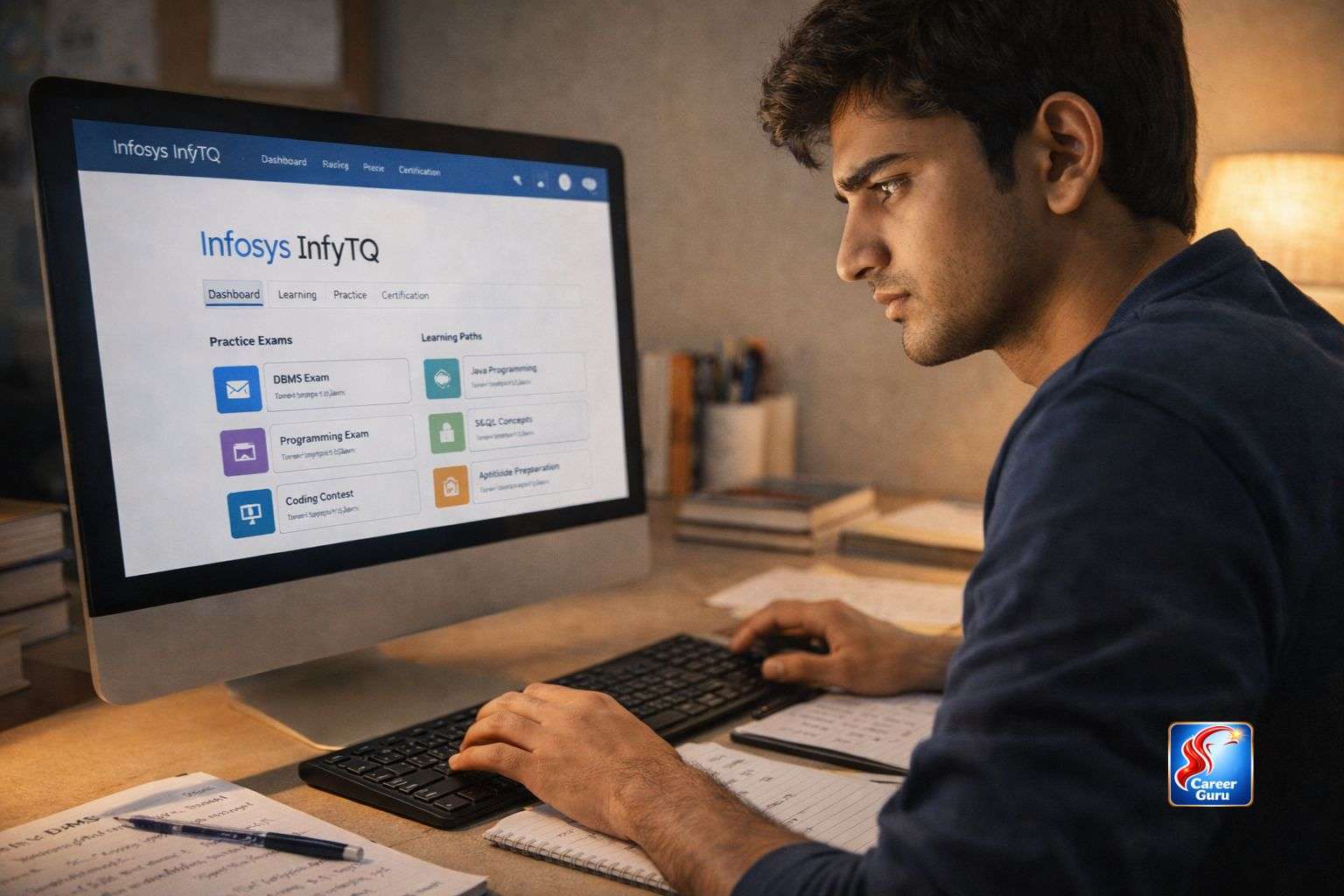
InfyTQ — Infosys Talent Quest — is Infosys’s own platform for assessing and hiring engineering freshers across India. It was originally designed as a learning and assessment platform but has evolved into the primary hiring mechanism for a significant portion of Infosys’s fresher intake in 2026.
Here is what makes InfyTQ structurally important in the current Indian hiring landscape.
It is open to students from any college. Not just the colleges where Infosys conducts campus drives. A student from a tier three college in a smaller Indian city has access to exactly the same InfyTQ assessment as a student from a top NIT. The platform is a genuine equaliser — and that equalising function is precisely why it matters so much to the majority of Indian engineering students who do not attend the colleges that Infosys’s campus team visits most frequently.
It has two distinct outcomes. Performing well on InfyTQ can qualify you for either the Systems Engineer profile — which is Infosys’s standard fresher role at approximately ₹3.6 LPA — or the Digital Specialist Engineer profile which offers approximately ₹9.5 LPA. That is nearly three times the starting salary for what is technically the same entry point into the same company. The difference between those two outcomes is almost entirely determined by how well you perform specifically on InfyTQ’s advanced sections and coding component.
It is a legitimate off campus route. For students who missed campus placements — through poor college placement cell connections, a difficult placement season, or simply not being ready in time — InfyTQ offers a structured, merit-based second chance that does not require any college intermediary.
🔗 Visit: infytq.com 🔗 Related Read: How to Get an Off Campus Job in India 2026
Infosys InfyTQ 2026 — The Exam Pattern You Need to Understand Before You Prepare
Understanding exactly what you are preparing for is the foundation of effective InfyTQ preparation. Let me break down the current assessment structure clearly.
InfyTQ has two primary assessment components that determine your hiring outcome.
The InfyTQ Foundation Assessment
The Foundation Assessment is the first layer of InfyTQ evaluation. It covers four broad areas.
Reasoning Ability Logical reasoning, data interpretation, and analytical thinking questions. This section tests your ability to identify patterns, make logical inferences, and work through structured problems systematically. The questions are not extremely difficult but they require speed and accuracy simultaneously. Students who have not practiced timed reasoning questions consistently underperform here — not because they cannot solve the problems but because they cannot solve them fast enough.
Mathematical Ability Quantitative aptitude covering percentages, ratios, time and work, time and distance, probability, permutations and combinations, and basic algebra. Again — not advanced mathematics. The challenge is speed and accuracy under time pressure. Students who practised aptitude in school but have not kept that skill active through college often find this section harder than expected.
Verbal Ability Reading comprehension, vocabulary, grammar, sentence completion, and error identification. This is the section that engineering students most consistently underestimate. The reading comprehension passages require both reading speed and careful attention to what the passage actually says versus what feels intuitively correct. Practising English comprehension daily in the weeks before InfyTQ is one of the highest-return preparation activities available.
Pseudocode and Programming Logic Basic programming concepts tested through pseudocode reading and output prediction rather than actual coding. Understanding what a loop does, how a function works, what a conditional statement produces — these are the skills this section tests. You do not need to write code here. You need to read and understand it.
The InfyTQ Coding Assessment

InfyTQ coding assessment 2026 — student writing code during timed assessment
This is where the real differentiation happens between Systems Engineer and Digital Specialist Engineer candidates. The coding assessment typically involves one to two programming problems that must be solved in a language of your choice — Python, Java, C, or C++ are all accepted.
The problems at the Systems Engineer level are relatively straightforward — basic string manipulation, array operations, simple sorting. A student with functional programming ability and consistent practice on beginner-level problems can solve these comfortably.
The problems at the Digital Specialist Engineer level are significantly harder — involving more complex logic, data structure application, and algorithmic thinking. Students targeting the Digital Specialist profile specifically need to have practiced medium-difficulty problems consistently over weeks rather than cramming in the days before the assessment.
Partial marks are awarded for code that passes some test cases even if it does not pass all of them. This is important. Never leave a coding problem blank. Submit whatever working solution you have. Partial credit has been the difference between qualifying and not qualifying for many students I have worked with.
The InfyTQ Communication Assessment
Infosys places significant emphasis on English communication ability — more than most other large Indian IT companies at the fresher hiring stage. The communication assessment evaluates written English through an essay or short paragraph writing task and sometimes includes a spoken English component assessed through voice recording.
Students who have strong technical skills but weak English communication consistently underperform in InfyTQ relative to their technical ability. This section is not an afterthought. Prepare for it specifically and separately from your technical preparation.
How to Crack Infosys InfyTQ in 2026 — The Preparation Strategy That Actually Works
Here is the preparation approach I recommend to students targeting InfyTQ. Built from observing which preparation patterns produce which outcomes — not from generic aptitude test advice.
Start Eight Weeks Before Your Planned Attempt
Eight weeks is the realistic minimum for genuine InfyTQ preparation. Students who start two weeks before almost always underperform relative to their potential — not because the content is too difficult but because building speed and accuracy in aptitude and confidence in coding requires time that cramming cannot compress.
Here is how to structure those eight weeks.
Weeks One and Two — Aptitude Foundations
Go back to basics. Quantitative aptitude fundamentals — percentages, ratios, time and work, probability. Do not skip these because you studied them before. Revisit them because InfyTQ tests them under time pressure and your recall speed may have degraded since the last time you practised them seriously.
Use RS Aggarwal’s Quantitative Aptitude as your primary resource. Work through chapter by chapter. Time every practice session from day one. The habit of working under a clock is what builds the speed you need on the actual assessment day.
For reasoning start RS Aggarwal’s Verbal and Non-Verbal Reasoning simultaneously. One chapter per day. The patterns in reasoning questions become mechanical with enough repetition — and mechanical pattern recognition under time pressure is exactly what you are building.
🔗 Visit: indiabix.com
Weeks Three and Four — Verbal Ability and Communication
Read something in English every single day. A news article. A blog post. Anything that requires you to process English prose quickly. Reading speed and comprehension accuracy are not skills you can build in two days before the assessment. They build over weeks of daily practice.
For the communication assessment specifically — practice writing short structured paragraphs on opinion topics. “Is technology making students less social?” “Should engineering colleges make internships mandatory?” Pick a topic, give yourself fifteen minutes, and write a clear, grammatically correct paragraph that states a position and supports it with two or three specific points. That exercise directly mirrors what InfyTQ’s communication section asks you to do.
Weeks Five and Six — Coding Practice
This is where most students spend too little time and pay for it in the coding assessment.
Start with HackerRank’s thirty days of code challenge if you are building coding ability from a low base. It is free, structured, and takes you from basic input-output to meaningful programming problems in a progressive daily format.
For students with stronger programming foundations move directly to InfyTQ-level problems. HackerRank’s problem sets filtered by easy and medium difficulty in your chosen language. LeetCode’s easy problems if you are targeting the Digital Specialist profile specifically.
Choose one language and stick with it for the assessment. Python is the most beginner-friendly option. Java is well-supported. C++ is fastest for competitive-style problems. Whatever you choose — practice exclusively in that language so you are not context-switching on assessment day.
🔗 Visit: hackerrank.com | leetcode.com
Weeks Seven and Eight — Full Mock Tests and InfyTQ Specific Practice
Take at least two complete InfyTQ mock tests per week under timed exam conditions during these final two weeks. Not individual section practice. Full-length simulated assessments that replicate the actual experience of sitting through the complete InfyTQ in one session.
Review every wrong answer thoroughly. Not just what the correct answer was — why it was correct and why your answer was wrong. That distinction is what converts practice into genuine improvement rather than just logging hours.
InfyTQ’s own practice platform — available through the InfyTQ portal — has official practice content that most closely mirrors the actual assessment format. Use it. Official practice material always reflects the current assessment format more accurately than third-party resources.
The InfyTQ Score That Gets You Which Profile — What the Hiring Side Actually Reveals
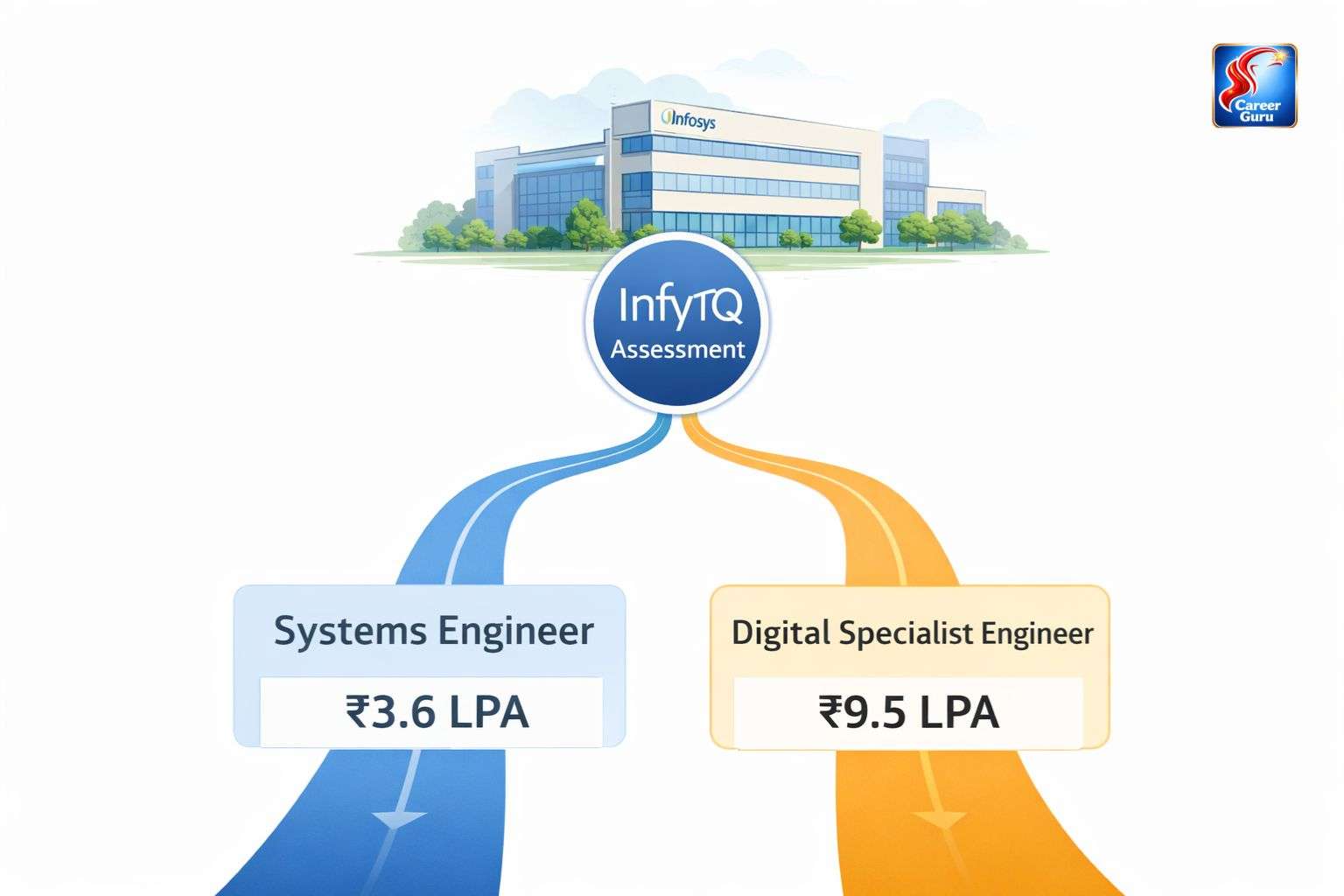
InfyTQ Systems Engineer vs Digital Specialist Engineer 2026 — salary difference and selection criteria
This is the section that no other InfyTQ preparation guide covers because only someone who has observed the process from the hiring side can speak to it honestly.
InfyTQ does not publicly announce precise cutoff scores. The thresholds vary by hiring cycle and by the overall performance distribution of candidates in that cycle. But here is what I have consistently observed about the score profiles that result in each outcome.
Systems Engineer profile consideration typically requires strong performance across the Foundation sections — reasoning, mathematical, and verbal ability — with functional but not exceptional coding performance. A student who scores consistently above average across all Foundation sections and submits working code that passes the basic test cases in the coding assessment is typically in the Systems Engineer consideration range.
Digital Specialist Engineer profile consideration requires strong performance across all Foundation sections and genuinely strong coding performance — code that passes most or all test cases for problems of medium difficulty. The communication assessment performance also weighs more heavily in Digital Specialist consideration than in Systems Engineer consideration.
The practical implication is clear. If you are specifically targeting the Digital Specialist profile — and given the ₹9.5 LPA starting salary you absolutely should be targeting it — you need to invest significantly more preparation time in the coding component than a student who is satisfied with Systems Engineer consideration.
The coding assessment is where the profiles separate. The Foundation assessment is where you qualify. Understand that distinction and allocate your preparation time accordingly.
What Happens After You Clear InfyTQ — The Interview Rounds
Clearing InfyTQ qualifies you for Infosys’s interview process. There are typically two rounds after the assessment.
Technical Interview The Infosys technical interview at the fresher level focuses on your final year project, basic programming concepts, OOP fundamentals, database basics, and occasionally basic data structure questions. The depth is calibrated for freshers — not for experienced professionals. But it does require genuine preparation.
Your final year project is the most important thing to prepare for this round. Know it completely. Know what problem it solves. Know the technologies you used and why you chose them. Know the most challenging part of building it and exactly how you solved that challenge. Know what you would do differently if you built it again.
Infosys technical interviewers specifically evaluate communication clarity alongside technical knowledge. How clearly you explain your project and your technical choices is evaluated as seriously as whether your answers are technically correct. This is where Infosys differs most noticeably from companies like TCS at the interview stage — the communication component is consistently more prominent.
HR Interview The Infosys HR round covers standard questions — tell me about yourself, your strengths and weaknesses, why Infosys specifically, are you flexible about location and work timings. The key differentiator at the Infosys HR stage is the why Infosys question.
Generic answers about Infosys being a great company with a global reputation will not impress an Infosys HR interviewer. They have heard that answer from every candidate who sat in the chair before you. Mention something specific — Infosys’s training program at their Mysuru campus, their work in a specific technology domain you are interested in, a recent initiative or project Infosys has announced. That specificity signals genuine interest rather than desperation for any offer.
🔗 Related Read: How to Prepare for TCS Infosys Wipro Interview in 2026
InfyTQ vs TCS NQT — The Honest Comparison
Students preparing for both assessments simultaneously — which most final year students are — consistently ask me which is harder and how to balance preparation between them.
Here is my honest comparison after watching both processes play out across many hiring cycles.
Difficulty level — InfyTQ and TCS NQT are broadly similar in overall difficulty at the Foundation and standard assessment level. Both require the same core aptitude and basic programming skills. The Advanced sections of TCS NQT for the Digital profile are marginally more rigorous than InfyTQ’s equivalent for the Digital Specialist profile — but the difference is smaller than most students expect.
Communication emphasis — InfyTQ places significantly more emphasis on English communication than TCS NQT. If communication is a weak area for you, InfyTQ requires more specific preparation in this dimension than TCS NQT does.
Salary differentiation — Both platforms offer a significant salary gap between their standard and premium fresher profiles. TCS Digital at ₹7 LPA versus Ninja at ₹3.36 LPA. Infosys Digital Specialist at ₹9.5 LPA versus Systems Engineer at ₹3.6 LPA. If you can only invest heavily in one premium profile preparation — the InfyTQ Digital Specialist profile offers the higher absolute starting salary.
Preparation overlap — The preparation for InfyTQ and TCS NQT overlaps significantly. Quantitative aptitude, logical reasoning, verbal ability, and basic programming skills are core to both. A student preparing seriously for one is simultaneously preparing for the other. The main differentiation is in the specific advanced coding requirements — both require it but at slightly different levels.
🔗 Related Read: TCS NQT 2026 — Complete Guide for Freshers
Internal Links — Read These Next
- 📌 TCS NQT 2026 — Complete Guide for Freshers
- 📌 How to Prepare for TCS Infosys Wipro Interview in 2026
- 📌 How to Crack Campus Placements in India 2026
- 📌 How to Get an Off Campus Job in India 2026
- 📌 Top 10 IT Companies in India Hiring Freshers in 2026
- 📌 Fresher Salary in India 2026
- 📌 Does CGPA Matter for Jobs in India 2026
- 📌 How to Write a Resume for Internship With No Experience in India 2026
- 📌 Best Free Online Courses for IT Students in India 2026
- 📌 Python vs Java vs C++ for Indian Students 2026
FAQs — How to Crack Infosys InfyTQ 2026
FAQ 1 — How many times can I attempt InfyTQ in 2026 and does a previous low score affect my future attempts?
This is one of the most practically urgent questions for students who have already appeared for InfyTQ once and are not satisfied with their result. Let me give you the honest picture.
InfyTQ can be attempted multiple times. Infosys does not permanently penalise students for previous low scores in the way that some students fear. However there are cooling periods between attempts — the specific duration of which can change between InfyTQ cycles, so always verify the current policy directly on the InfyTQ portal before registering for a repeat attempt.
The more important question is not whether you can attempt again but whether a repeat attempt without meaningful preparation in between will produce a different outcome. In my observation the answer is almost always no.
The students who improve significantly between InfyTQ attempts are specifically the ones who treated their first attempt as a diagnostic — identifying precisely which sections cost them the most marks — and then spent the cooling period fixing exactly those sections through targeted practice.
If you scored well in Foundation sections but underperformed in coding — spend the gap period entirely on coding practice. If your Foundation scores were inconsistent — identify your weakest aptitude area and address it specifically. If your communication assessment was weak — practice structured English writing daily until your next attempt.
What will not work is appearing for a second attempt having done nothing differently. The test has not changed. Your preparation has not changed. The outcome will not change either.
Consultant’s note
— I have worked with students who cleared InfyTQ on their third or fourth attempt after failing the first two. The common thread among all of them was not persistence alone — it was persistence combined with honest diagnosis and targeted improvement between each attempt. The students who kept appearing without changing their preparation kept getting similar results. The ones who stopped, diagnosed, fixed, and then returned consistently improved. Treat every attempt as information. Use that information deliberately before your next one.
This is one of the most practically urgent questions for students who have already appeared for InfyTQ once and are not satisfied with their result. Let me give you the honest picture.
InfyTQ can be attempted multiple times. Infosys does not permanently penalise students for previous low scores in the way that some students fear. However there are cooling periods between attempts — the specific duration of which can change between InfyTQ cycles, so always verify the current policy directly on the InfyTQ portal before registering for a repeat attempt.
The more important question is not whether you can attempt again but whether a repeat attempt without meaningful preparation in between will produce a different outcome. In my observation the answer is almost always no.
The students who improve significantly between InfyTQ attempts are specifically the ones who treated their first attempt as a diagnostic — identifying precisely which sections cost them the most marks — and then spent the cooling period fixing exactly those sections through targeted practice.
If you scored well in Foundation sections but underperformed in coding — spend the gap period entirely on coding practice. If your Foundation scores were inconsistent — identify your weakest aptitude area and address it specifically. If your communication assessment was weak — practice structured English writing daily until your next attempt.
What will not work is appearing for a second attempt having done nothing differently. The test has not changed. Your preparation has not changed. The outcome will not change either.
Consultant’s note
— I have worked with students who cleared InfyTQ on their third or fourth attempt after failing the first two. The common thread among all of them was not persistence alone — it was persistence combined with honest diagnosis and targeted improvement between each attempt.
The students who kept appearing without changing their preparation kept getting similar results. The ones who stopped, diagnosed, fixed, and then returned consistently improved. Treat every attempt as information. Use that information deliberately before your next one.
FAQ 2 — Is the Infosys Digital Specialist Engineer profile realistically achievable for students from tier two and tier three colleges in India in 2026?
This question reflects an anxiety I see in a large number of students from non-tier-one colleges — the concern that the Digital Specialist profile is effectively reserved for students from IITs, NITs, and top engineering colleges regardless of how well they prepare.
My honest answer after watching InfyTQ play out across many hiring cycles is this. The Digital Specialist profile is genuinely achievable for students from any college — but it requires a level of coding preparation that significantly exceeds what most students from any college actually invest.
InfyTQ’s assessment does not know which college you attended. It evaluates your performance on the assessment itself.
A student from a tier three college in a smaller Indian city who has solved 150 medium-difficulty problems on HackerRank and LeetCode, has strong Foundation scores across all sections, and submits clean working code that passes most test cases in the coding assessment is evaluated identically to a student from a top NIT with the same performance profile.
What I have observed is that students from tier one colleges tend to have higher average coding preparation levels — not because the colleges teach it directly but because the peer environment in those colleges makes competitive programming and consistent coding practice more culturally normal. That environmental advantage is real. But it is not insurmountable for a motivated student from any college who deliberately creates the same preparation environment for themselves through online platforms and peer accountability.
The practical question is not whether your college makes Digital Specialist achievable. It is whether your coding preparation level makes it achievable. If you have solved genuine medium-difficulty problems consistently over eight to twelve weeks — it is achievable regardless of your college name.
Consultant’s note — I have personally seen students from degree colleges in smaller Odisha cities clear InfyTQ for the Digital Specialist profile. Their college name did not help them and it did not hurt them. Their HackerRank practice history, their consistent InfyTQ mock test performance, and their ability to write clean working code in the assessment did everything.
The platform is genuinely meritocratic in a way that campus placement season — where college brand influences which companies visit — is not. Use that meritocracy to your advantage.
This question reflects an anxiety I see in a large number of students from non-tier-one colleges — the concern that the Digital Specialist profile is effectively reserved for students from IITs, NITs, and top engineering colleges regardless of how well they prepare.
My honest answer after watching InfyTQ play out across many hiring cycles is this. The Digital Specialist profile is genuinely achievable for students from any college — but it requires a level of coding preparation that significantly exceeds what most students from any college actually invest.
InfyTQ’s assessment does not know which college you attended. It evaluates your performance on the assessment itself.
A student from a tier three college in a smaller Indian city who has solved 150 medium-difficulty problems on HackerRank and LeetCode, has strong Foundation scores across all sections, and submits clean working code that passes most test cases in the coding assessment is evaluated identically to a student from a top NIT with the same performance profile.
What I have observed is that students from tier one colleges tend to have higher average coding preparation levels — not because the colleges teach it directly but because the peer environment in those colleges makes competitive programming and consistent coding practice more culturally normal. That environmental advantage is real. But it is not insurmountable for a motivated student from any college who deliberately creates the same preparation environment for themselves through online platforms and peer accountability.
The practical question is not whether your college makes Digital Specialist achievable. It is whether your coding preparation level makes it achievable. If you have solved genuine medium-difficulty problems consistently over eight to twelve weeks — it is achievable regardless of your college name.
Consultant’s note — I have personally seen students from degree colleges in smaller Odisha cities clear InfyTQ for the Digital Specialist profile. Their college name did not help them and it did not hurt them. Their HackerRank practice history, their consistent InfyTQ mock test performance, and their ability to write clean working code in the assessment did everything.
The platform is genuinely meritocratic in a way that campus placement season — where college brand influences which companies visit — is not. Use that meritocracy to your advantage.
FAQ 3 — What is the most common reason students clear InfyTQ but then fail to convert it into an Infosys offer at the interview stage?
This is the question that most InfyTQ preparation guides never address — because they are written by students who cleared the test and assume that clearing it is the hard part. From the hiring side I can tell you that the interview conversion rate from InfyTQ clearance is not as high as most students expect. And the reasons are surprisingly consistent.
The single most common reason students clear InfyTQ but fail at the technical interview stage is inadequate preparation of their final year project. Students spend weeks preparing for the written test and almost no time preparing to speak about their own project confidently. Then an Infosys technical interviewer asks “tell me about your final year project” — the first question in virtually every Infosys technical interview — and the student gives a vague, surface-level answer that immediately signals they do not understand their own work deeply.
Infosys technical interviewers at the fresher level are not trying to catch students out with trick questions. They are trying to find students who can think clearly about technical problems and communicate that thinking coherently.
A student who knows their project thoroughly — who can explain the problem it solved, the technology decisions they made and why, the most challenging aspect of building it and how they resolved it — will almost always clear the Infosys technical interview if their InfyTQ performance is also strong.
The second most common reason is poor performance in the communication component of the HR round. Infosys places more emphasis on communication clarity than TCS or Wipro at the fresher interview stage. Students who have been entirely focused on technical preparation and have not practised clear, structured spoken communication often stumble when asked to explain themselves in the HR round — not because they lack confidence but because they have not practised speaking about themselves professionally.
Consultant’s note — In every InfyTQ interview debrief I have conducted with students over the years the pattern is strikingly consistent. Students who cleared InfyTQ and got the offer almost always say the same thing — “I knew my project inside out and I had practised explaining it many times before the interview.”
Students who cleared InfyTQ but did not get the offer almost always say the same thing — “I was not prepared for how much they focused on my project.” Prepare your project explanation as seriously as you prepare for the written test. It is equally important and far more within your direct control.
What to Do This Week — Your InfyTQ Action Plan
Rather than summarising what you have already read let me give you a specific action plan based on exactly how far you are from your planned InfyTQ attempt.
If your attempt is eight or more weeks away — This week register on the InfyTQ portal if you have not already. Complete your profile fully. Begin RS Aggarwal Quantitative Aptitude from chapter one today. Set a daily practice target of thirty questions with a timer. Open HackerRank and solve five easy problems in your chosen programming language. These four actions this week establish the foundation that the next seven weeks will build on.
If your attempt is four to seven weeks away — This week take one complete InfyTQ mock test from start to finish under timed conditions. Do not look at answers while you are taking it. Review it completely afterwards — every wrong answer, every section where you ran out of time. That diagnostic tells you exactly where to focus your remaining preparation time. Then focus your next week entirely on your two weakest sections.
If your attempt is one to three weeks away — Stop learning new material. You do not have time to build new skills in this window and attempting to do so will undermine your confidence in the skills you already have. This week — take one full mock test daily. Review thoroughly. Practice coding problems at the level you have already reached. Write one short English paragraph daily on any topic. And spend two hours preparing your final year project explanation — because your InfyTQ attempt this week begins the journey toward the interview that follows it.
How to crack Infosys InfyTQ in 2026 is not a mystery. It is a preparation problem. And preparation problems have straightforward solutions when you know exactly what to prepare and in what order.
Start today. The platform is meritocratic. Your preparation is what determines your outcome.
Already preparing for TCS simultaneously? Read our complete guide on TCS NQT 2026 — Complete Guide for Freshers and make sure your preparation covers both assessments efficiently.