Japan SSW Visa Requirement for Indians: Complete 2026 Guide
Over 5,000 Indians secured Japan SSW visas in 2024—here’s your complete roadmap to join them in 2026.
Imagine earning ₹15-20 lakhs annually while living in one of the world’s most advanced nations. Sounds too good to be true? It’s not. Japan’s Specified Skilled Worker (SSW) program is actively recruiting Indian talent across 16 sectors, and the opportunity has never been better.
I’ve been helping Indian professionals navigate international career opportunities for over 25 years, and I can tell you this: the Japan SSW program is one of the most transparent, well-structured pathways I’ve seen. Unlike many overseas job schemes that promise the moon and deliver headaches, Japan’s government-backed SSW program offers genuine jobs, fair wages, and legal protections.
In this comprehensive guide, I’ll walk you through everything you need to know about Japan SSW visa requirements for Indians in 2026. Whether you’re a recent graduate, an ITI diploma holder, or someone looking for a career change, this article will show you exactly how to make your Japan dream a reality.
What is the Japan SSW (Specified Skilled Worker) Visa? Complete SSW Visa Eligibility Criteria: Can You Qualify?”
Let me start with the basics. The Specified Skilled Worker visa is a special status of residence that Japan introduced in April 2019 to address its severe labour shortage. With an aging population and shrinking workforce, Japan needs over 820,000 foreign workers by 2029 across various sectors.
Think of it this way: Japan built one of the world’s strongest economies, but now faces a critical problem—not enough workers to sustain it. That’s where you come in.
SSW Type 1 vs Type 2: Understanding the Difference
SSW Type 1 (Entry Level):
- Maximum stay of 5 years total
- Cannot bring family members
- Requires basic skills and N4 Japanese proficiency
- Available in 16 sectors
- Renewable contracts
SSW Type 2 (Advanced Level):
- No upper limit on stay duration
- Can bring spouse and children
- Requires advanced skills and higher Japanese proficiency
- Available in 11 sectors
- Pathway to permanent residence
Most Indians start with SSW Type 1 and can upgrade to Type 2 after demonstrating exceptional skills and work performance.
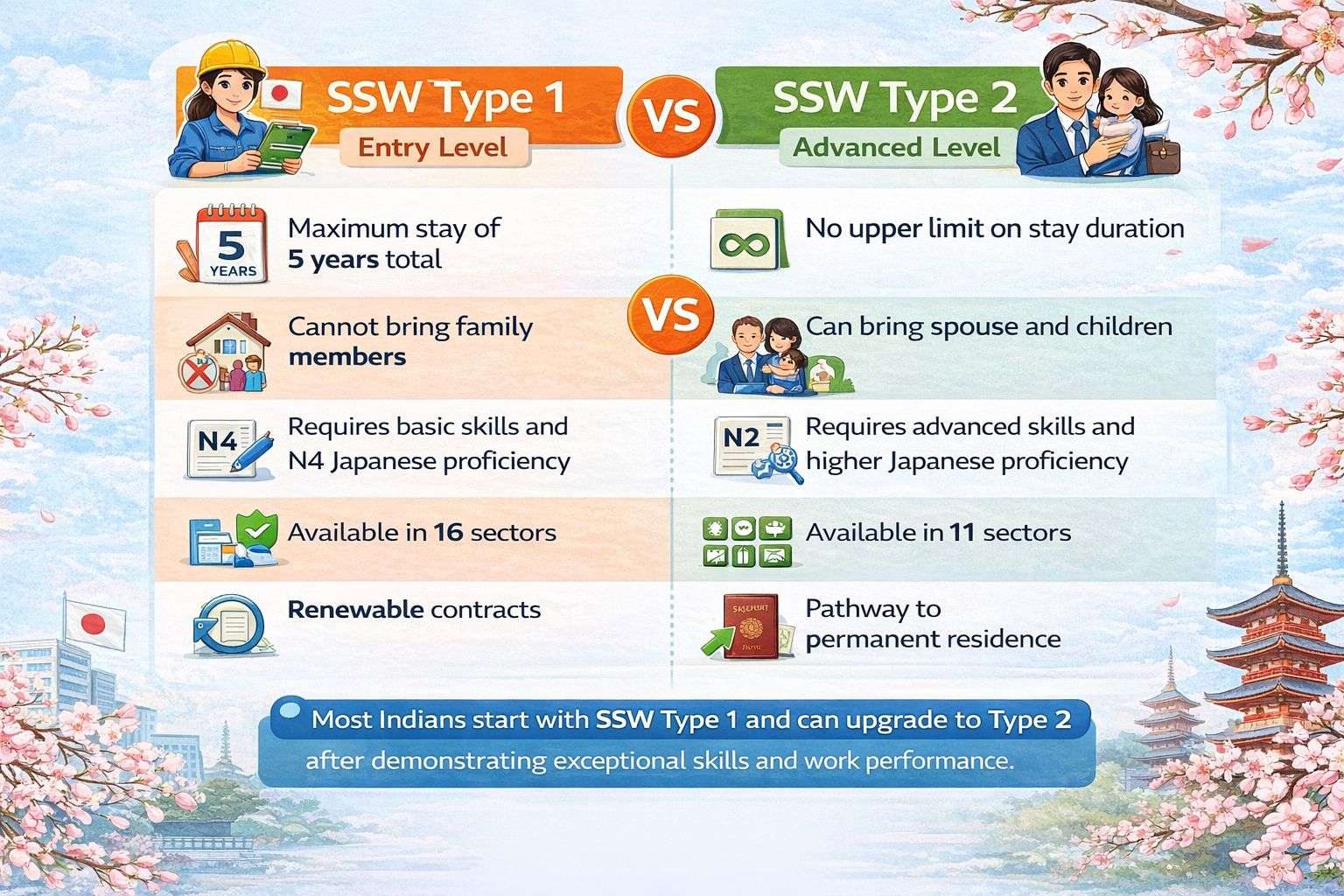
Infographic comparing SSW Type 1 vs Type 2 – side-by-side comparison chart with icons.
16 Sectors Open for Indian SSW Workers (2026 Update)
Japan isn’t just looking for any workers—they need skilled professionals in specific industries. Here’s where the opportunities lie:
Manufacturing & Industrial Sectors:
- Industrial Manufacturing (173,300 vacancies) – Highest demand
- Electric and Electronics Industries
- Machine Parts and Tooling
- Automobile Repair and Maintenance
- Industrial Machinery Manufacturing
Construction & Infrastructure:
- Construction Industry (80,000 vacancies)
- Shipbuilding and Marine Industry (36,000 vacancies)
Healthcare & Hospitality:
- Nursing Care (135,000 vacancies) – Second-highest demand
- Building Cleaning Management (37,000 vacancies)
- Accommodation Services (23,000 vacancies)
- Food Service Industry (53,000 vacancies)
Agriculture & Food:
- Agriculture (78,000 vacancies)
- Fishery and Aquaculture (17,000 vacancies)
- Food and Beverage Manufacturing (139,000 vacancies)
Transport & Logistics:
- Aviation Industry (4,400 vacancies)
- Railway Transport (3,800 vacancies)
Pro tip from my experience: Indian candidates have particularly high success rates in manufacturing, construction, nursing care, and food service sectors. These industries actively recruit from India and often provide the most comprehensive training support.
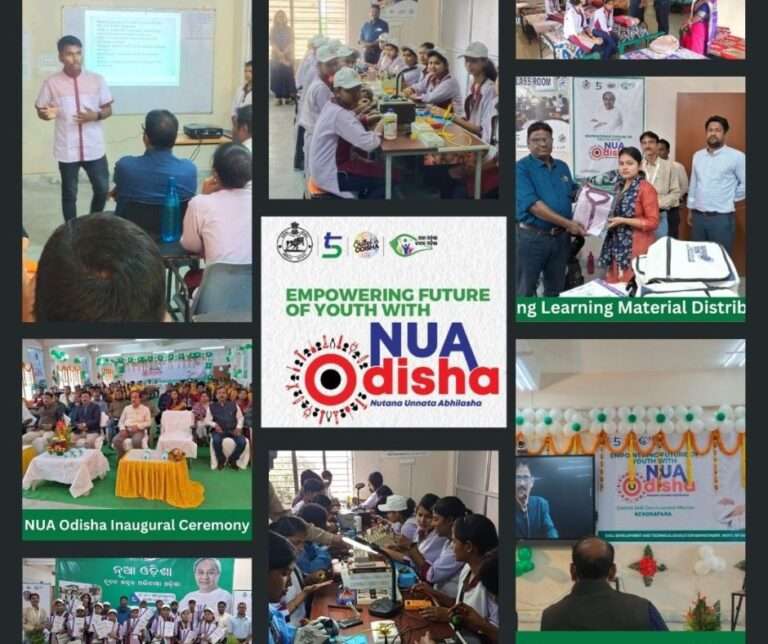
If you’re from Odisha specifically, check out our detailed guide on Japan SSW Job Opportunities for Odisha for state-specific programs and support.
Complete Eligibility Criteria: Can You Qualify?
Let’s be honest about requirements. I’ve seen too many people waste time and money on programs they weren’t eligible for. Here’s exactly what you need:
Age Requirements
- Minimum 18 years old at the time of application
- No official maximum age limit
- Practically, candidates under 40 have better chances (physical demands vary by sector)
- For Odisha’s state programs, the preferred age range is 20-35 years
Educational Qualifications
This is more flexible than you might think:
- Minimum: 10th standard pass certificate
- Preferred: 12th pass, ITI diploma, or polytechnic certificate
- Advantage: Any technical degree (B.Tech, B.Sc, diploma in relevant field)
- Specific sectors may have additional requirements
Important note: Unlike many countries, Japan doesn’t require a bachelor’s degree for SSW positions. Your technical skills and aptitude matter more than your academic pedigree.
Japanese Language Requirements
Here’s where many candidates get nervous, but don’t worry—it’s more achievable than you think.
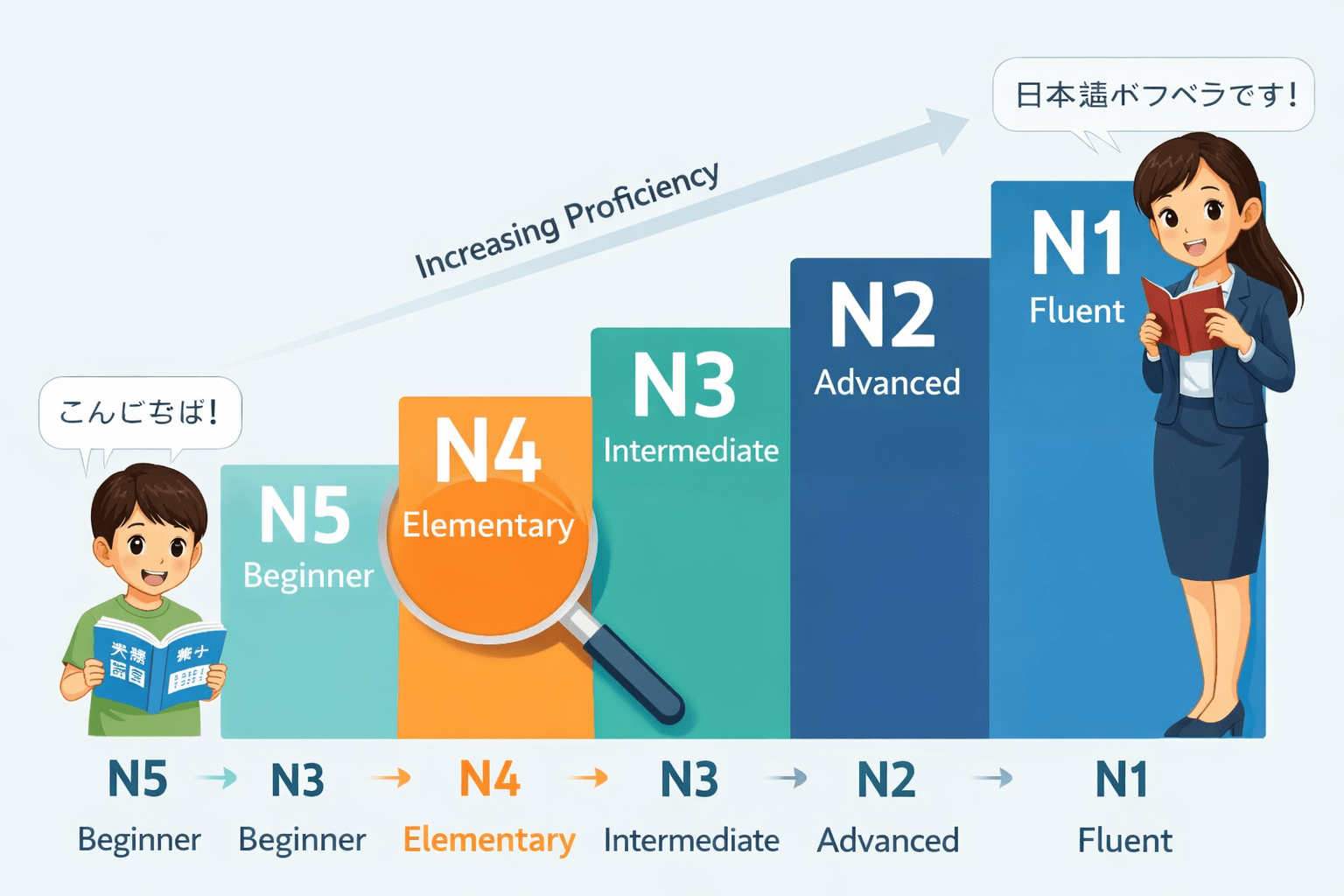
You must pass either the Japanese Language Proficiency Test (JLPT) at the N4 level or the Japan Foundation Test for Basic Japanese (JFT-Basic).
What is the N4 level? N4 represents basic everyday Japanese—think of it as being able to:
- Understand simple conversations about daily topics
- Read basic hiragana, katakana, and around 300 kanji characters
- Navigate daily life situations (shopping, directions, restaurants)
My honest assessment: With focused study, most motivated learners can reach the N4 level in 4-6 months. Indian students often find Japanese easier than expected because of similar grammar structures in some Indian languages.
Where to take the tests in India:
- JLPT: Held twice yearly (July and December) in Delhi, Mumbai, Kolkata, Chennai, Pune, Bengaluru, and Ahmedabad
- JFT-Basic: Available year-round at Prometric test centres across major Indian cities
Test fees:
- JLPT N4: ₹2,500-3,000
- JFT-Basic: Similar range
Special exemption: If you’ve completed Japan’s Technical Intern Training program, you’re exempt from language tests!
[IMAGE 3 PLACEHOLDER: Japanese language proficiency levels explained – visual chart showing N5 (beginner) to N1 (fluent) with N4 highlighted. Image specs: 800x500px, educational style, friendly graphics]
Skills Assessment Tests
Every sector has its own skill evaluation exam. These tests verify you can actually do the job from day one.
What’s tested?
- Practical job knowledge
- Safety procedures
- Basic technical skills
- Industry-specific terminology
Test format:
- Multiple choice questions
- Practical demonstrations (sector-dependent)
- Usually conducted in Japanese with translation support
Where to take skill tests: Currently, the nursing care sector test has been launched in India, with more sectors being added regularly. Check the NSDC India SSW portal for the latest test schedules.
For other sectors, you may need to take tests in Japan or designated international centres.
Health and Character Requirements
Japan takes these seriously:
- Medical fitness certificate from an authorised doctor
- No criminal record (police verification required)
- Mental health clearance
- TB test negative
- Current vaccination records
- HIV/AIDS screening (sector-dependent)
Good to know: You must be in good health with the necessary occupational skills to work immediately. If you have managed chronic conditions, you’ll need detailed medical documentation.
Required Documents: Your Complete Checklist
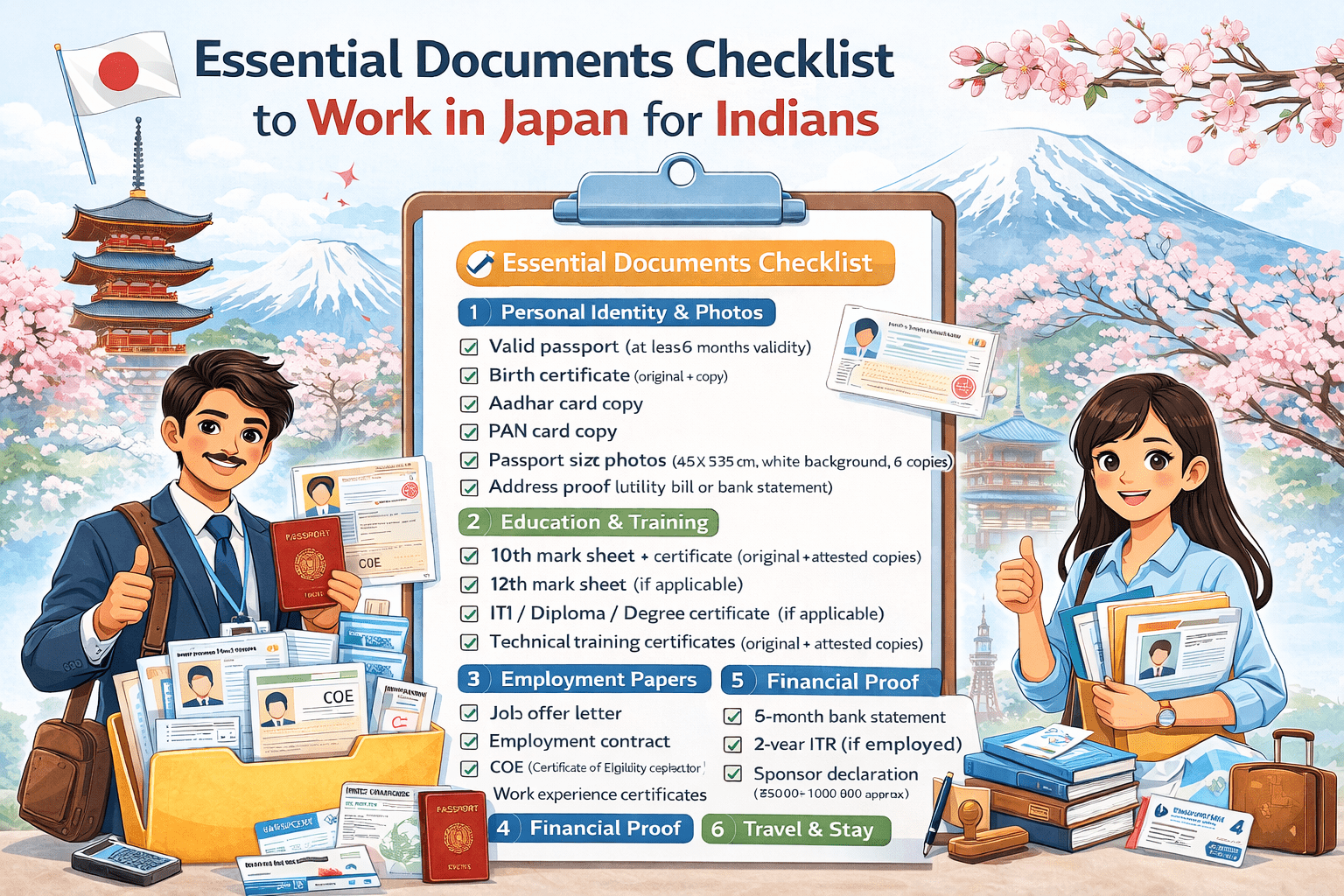
I’ve created this checklist based on successful applications I’ve guided. Print this out and tick off each item as you gather it:
Personal Documents:
- Valid passport (minimum 6 months validity)
- Birth certificate (original + copy)
- Aadhar card and PAN card copies
- Recent passport-size photographs (4.5cm x 3.5cm, white background, 6 copies)
- Proof of address (utility bill, bank statement)
Educational Certificates:
- 10th standard mark sheet and certificate
- 12th standard mark sheet and certificate (if applicable)
- ITI/Diploma/Degree certificates (if applicable)
- Technical training certificates
- All documents must be original + attested copies
Language and Skill Proof:
- JLPT N4 certificate OR JFT-Basic passing certificate
- Sector-specific skill test passing certificate
- Any additional language training certificates
Employment Documents:
- Job offer letter from a Japanese employer
- Employment contract (in Japanese and English)
- Certificate of Eligibility (COE) – the employer applies for this
- Work experience certificates (if any)
Financial Documents:
- Bank statements (last 6 months)
- Income tax returns (last 2 years, if employed)
- Financial sponsor declaration (if someone’s supporting you)
- Proof of funds for initial expenses (approximately ₹50,000-1,00,000)
Health and Legal Documents:
- Medical fitness certificate (valid for 3 months)
- Police verification certificate (no criminal record)
- TB test results (valid for 6 months)
- Vaccination records
- HIV test results (some sectors require this)
Additional Requirements:
- Registered sending organisation documents (if using an agency)
- Pre-departure training completion certificate
- Travel insurance documents
- Accommodation arrangements in Japan
Download tip: I recommend creating both physical and digital copies of everything. Keep originals safe and carry certified copies during travel.
[IMAGE 4 PLACEHOLDER: Document preparation checklist visual – folder icon with checkmarks, organised and professional. Image specs: 800x400px, infographic style]
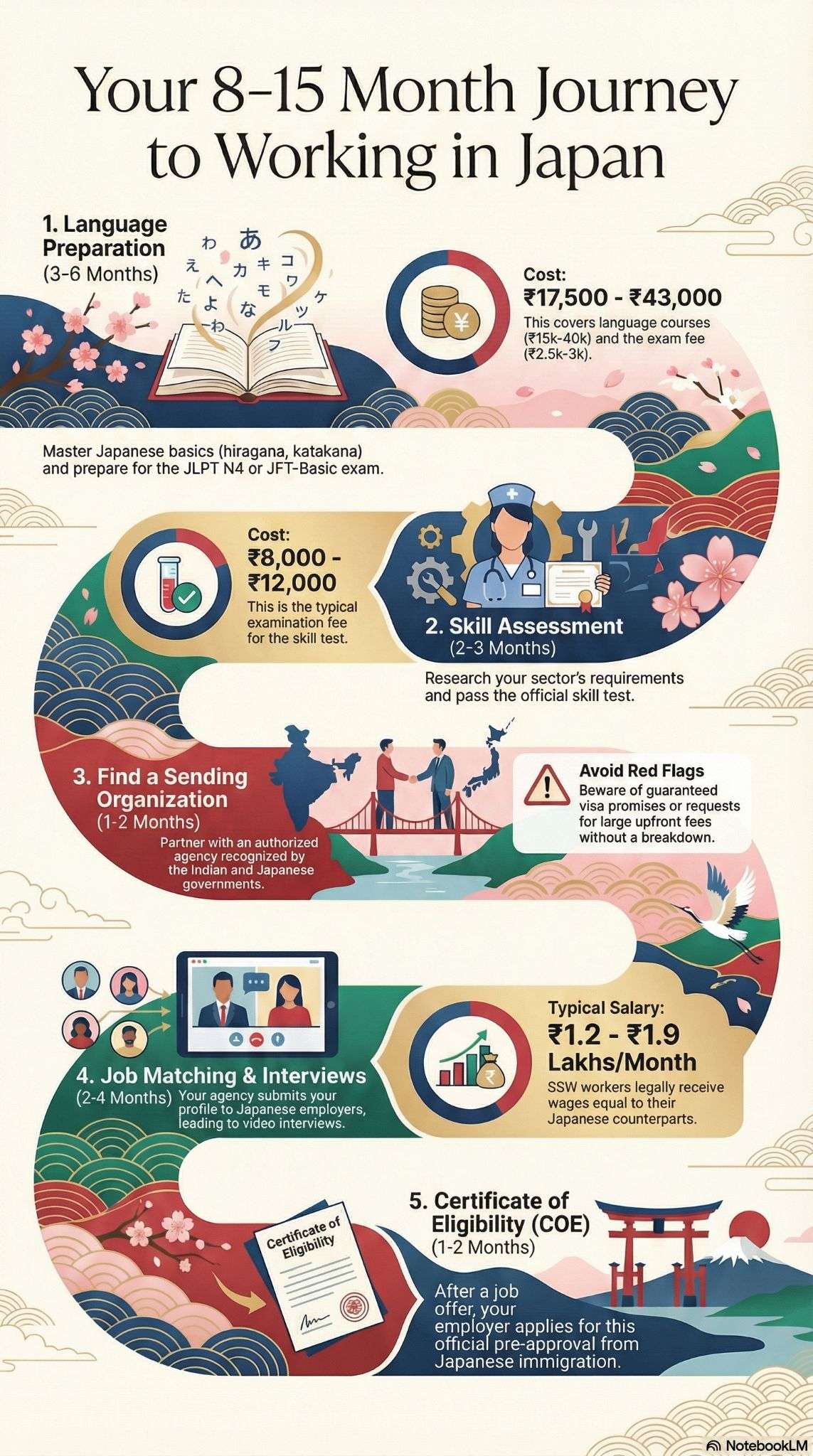
Step-by-Step SSW Visa Application Process: Your 8-15 Month Journey
Let me walk you through the complete timeline. I’m giving you realistic timeframes based on actual cases I’ve worked with—not optimistic marketing promises.
Step 1: Language Preparation (3-6 months)
Month 1-2: Foundation Building
- Enrol in a reputable Japanese language course (online or offline)
- Study hiragana and katakana scripts
- Learn basic grammar structures
- Practice daily vocabulary (aim for 15-20 new words daily)
Month 3-4: Intensive Practice
- Focus on JLPT N4 or JFT-Basic curriculum
- Join study groups or language exchange programs
- Use apps like Duolingo, LingoDeer, or Bunpo
- Practice listening with anime, podcasts, or Japanese news
Month 5-6: Exam Preparation
- Take multiple mock tests
- Identify weak areas and focus on them
- Register for your chosen exam
- Appear for the test and receive results (2-4 weeks later)
Resources I recommend:
- Minna no Nihongo textbook series
- Genki workbooks for the N4 level
- YouTube channels: JapanesePod101, Speak Japanese Naturally
- Free resource: Japan Foundation’s Learning Resources
Investment: ₹15,000-40,000 for quality courses, plus ₹2,500-3,000 exam fee
Step 2: Skill Assessment Preparation (2-3 months, can overlap with language study)
Research your sector:
- Understand specific skill requirements
- Download sample questions and study materials
- Join sector-specific training programs if available
Register for skill test:
- Check test schedules on official portals
- Book your test slot (limited seats available)
- Pay examination fees (₹8,000-12,000 typically)
Preparation:
- Study industry-specific terminology in Japanese
- Practice with mock tests
- Learn safety procedures and protocols
- Attend preparatory workshops if offered
For Indians: Currently, nursing care is the only sector with tests conducted regularly in India. For other sectors, you may need to:
- Travel to designated international test centres
- Or wait for employer-sponsored skill verification
At Career Guru, we offer specialised SSW preparation programs for popular sectors. Check our abroad services page for current offerings.
Step 3: Find a Registered Sending Organisation (1-2 months)
This is crucial. You need to work with authorised organisations recognised by both the Indian and Japanese governments.
How to verify legitimacy:
- Check NSDC India’s list of approved partners
- Verify with the Japanese Embassy in India
- Look for an established track record (3+ years)
- Get everything in writing
- Ask for references from previous candidates
Red flags to avoid:
- Requests for large upfront fees without a clear breakdown
- Promises of “guaranteed” visas (no one can guarantee this)
- Pressure tactics or urgency without reason
- Unwillingness to provide written agreements
- No physical office or verifiable address
Legitimate organisations charge: ₹30,000-80,000 for comprehensive services, including:
- Documentation support
- Job matching assistance
- Pre-departure training
- Visa guidance
- Post-arrival support
Step 4: Job Matching and Interviews (2-4 months)
Once you’ve passed your language and skill tests, the real excitement begins.
Job search process:
- Your sending organisation submits your profile to Japanese employers
- Employers review applications and shortlist candidates
- Selected candidates receive interview invitations
Interview format:
- Usually conducted via video call (Zoom, Skype)
- May include a Japanese language portion
- Employer assesses technical knowledge and cultural fit
- Questions about your motivation to work in Japan
My interview tips:
- Research the company thoroughly
- Prepare answers about why you want this specific role
- Demonstrate cultural awareness and adaptability
- Be honest about your Japanese language level
- Ask intelligent questions about work life, accommodation, training
Salary negotiation: By law, SSW workers receive the same wages as Japanese workers doing similar jobs. Typical ranges:
- Manufacturing/Construction: ¥180,000-250,000/month (₹1.2-1.7 lakhs)
- Nursing care: ¥200,000-280,000/month (₹1.4-1.9 lakhs)
- Food service/Hospitality: ¥180,000-230,000/month (₹1.2-1.6 lakhs)
These figures translate to annual earnings of ₹15-23 lakhs—significantly higher than equivalent positions in India.
Step 5: Certificate of Eligibility (COE) Application (1-2 months)
After you receive and accept a job offer, your Japanese employer takes the lead.
What is COE? The Certificate of Eligibility is a document issued by Japan’s Immigration Services Agency confirming you meet all requirements for the SSW visa. Think of it as Japan’s government pre-approving your entry.
The process:
- Your employer submits your complete application to the Japanese immigration
- Immigration Services Agency reviews everything (typically 1-2 months)
- If approved, the COE is issued
- Employer sends you the original COE document by international courier
What can delay the COE:
- Incomplete documentation
- Discrepancies in information
- High application volume periods
- Additional verification requirements
While waiting:
- Continue Japanese language practice
- Research your destination city in Japan
- Start planning your relocation
- Stay in regular contact with your employer
Step 6: SSW Visa Application (2-3 weeks)
With COE in hand, you’re almost there!
Where to apply: Japanese Embassy or Consulate in India:
- New Delhi: Embassy of Japan, 50-G Shantipath, Chanakyapuri
- Mumbai: Consulate-General of Japan, 1 M.L. Dahanukar Marg, Cuffe Parade
- Kolkata: Consulate-General of Japan, 12A Pretoria Street
- Chennai: Consulate-General of Japan, CD 109, 12th Street, Anna Salai
- Bengaluru: Consulate-General of Japan, Prestige Cube Building, 6th Floor
Application process:
- Download and complete the visa application form
- Gather all required documents (use our checklist above)
- Book an appointment at the nearest embassy/consulate
- Submit application with the original COE
- Pay visa fee: approximately ₹2,000 (¥3,000)
- Provide biometric data if required
- Wait for processing (usually 5-7 business days)
Visa validity: Your SSW visa will typically be issued for the duration specified in your employment contract, up to a maximum of 5 years for Type 1.
Step 7: Pre-Departure Preparation (2-4 weeks)
Congratulations! You have your visa. Now let’s ensure your transition to Japan is smooth.
Medical requirements:
- Final medical check-up
- Update vaccinations if needed
- Get prescription medications (with English translations)
- Carry medical records and prescriptions
Financial preparation:
- Open a forex card (recommended over cash)
- Inform your bank about international usage
- Keep ₹30,000-50,000 equivalent in Yen for initial expenses
- Set up online banking access
Practical arrangements:
- Book flight tickets (economy class: ₹35,000-55,000)
- Arrange airport pickup in Japan
- Confirm accommodation details with the employer
- Purchase a Japan-specific SIM card or a pocket wifi
- Download essential apps: Google Translate, Japan Transit Planner, Maps
Cultural preparation:
- Learn basic Japanese etiquette
- Understand workplace culture
- Research your city/town in Japan
- Join expat groups and forums
- Connect with other Indians working in Japan
What to pack:
- Work-appropriate clothing (conservative, professional)
- Comfortable shoes (you’ll walk a lot)
- Personal care items (deodorant, specific medicines)
- Indian spices (if you cook – they’re expensive in Japan)
- Adapter plugs for Japanese outlets (Type A/B, 100V)
- Important documents in a waterproof folder
Pre-departure training: Many sending organisations and Career Guru’s vocational training program offer orientation sessions covering:
- Japanese workplace culture
- Daily life basics
- Emergency procedures
- Cultural dos and don’ts
- How to open a bank account, get insurance, and register an address
Step 8: Arrival and Settlement in Japan (First month)
Week 1: Essential Setup
- Register at the local municipal office within 14 days
- Apply for a residence card
- Open a Japanese bank account
- Get a health insurance card
- Purchase a commuter pass if needed
Week 2-4: Workplace Integration
- Complete company orientation
- Understand your role and responsibilities
- Meet team members and supervisors
- Learn workplace-specific Japanese terms
- Understand your rights and benefits
Support you’ll receive: Your employer must provide Japanese language training and various forms of support as mandated by law. This includes:
- Housing assistance
- Bank account opening help
- Hospital/medical support
- Japanese language lessons
- Life counselling services
Timeline infographic showing 8-15 month journey from application to arrival – horizontal timeline with icons for each major step.

Cost Breakdown: Total Investment Required
Let me be transparent about money. Here’s what successful candidates typically spend:
| Expense Category | Estimated Cost (INR) | Notes |
| Japanese language course | ₹15,000-40,000 | Varies by institute quality |
| JLPT/JFT-Basic exam fee | ₹2,500-3,000 | Per attempt |
| Skill assessment test | ₹8,000-12,000 | Sector-dependent |
| Registered organisation fee | ₹30,000-80,000 | Full service package |
| Visa application fee | ₹2,000 | Standard embassy fee |
| Medical tests & certificates | ₹3,000-5,000 | Multiple requirements |
| Police verification | ₹500-1,000 | State-dependent |
| Air ticket (one-way) | ₹35,000-55,000 | Economy class |
| Initial living costs in Japan | ₹50,000-1,00,000 | First month expenses |
| Miscellaneous | ₹10,000-15,000 | Documents, courier, etc. |
| Total Investment | ₹1,56,000-3,13,000 | Average: ₹2,25,000 |
Return on Investment (ROI):
- First year earnings: ₹15-23 lakhs
- Your investment recovered: Within 1-2 months of starting work
- Net savings potential: ₹8-12 lakhs annually (after all expenses)
Compare this to typical jobs in India for similar qualifications (₹2.5-6 lakhs annually), and you’ll see why thousands are choosing the SSW route.
Funding options:
- Education/skill development loans from banks
- Some sending organisations offer EMI payment plans
- Government subsidies (check with your state skill development department)
- Family support (consider it an investment, not an expense)
Special opportunity for Odisha residents: The Odisha government offers free or subsidised training for selected candidates. Contact your District Skill Committee or check the Odisha Skill Development Authority website.
Living in Japan: What to Really Expect
I believe in setting realistic expectations. Japan offers incredible opportunities, but it’s not all sushi and cherry blossoms. Here’s the honest picture:
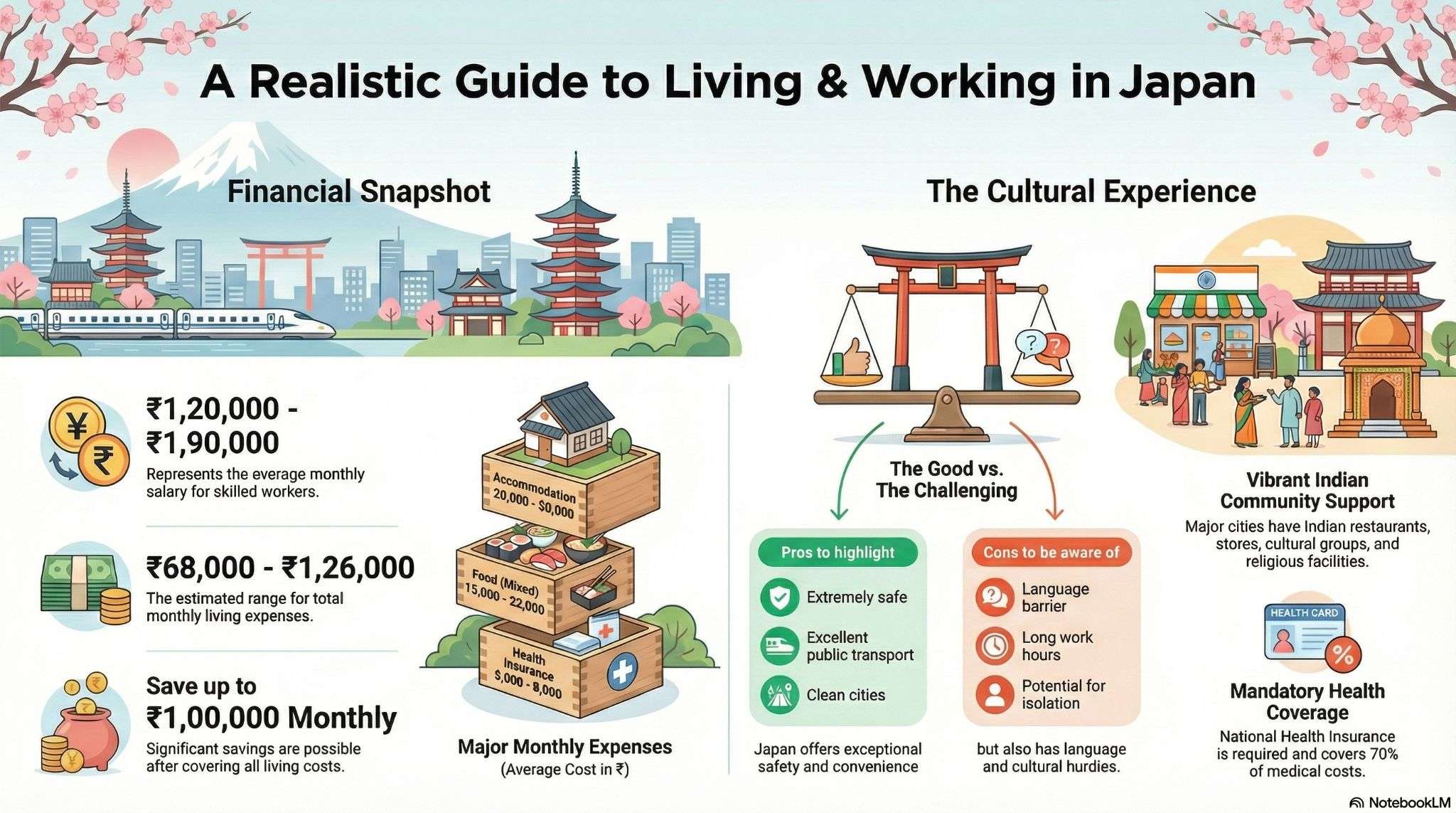
Monthly Living Expenses (Average)
Accommodation:
- Company dormitory: ₹15,000-25,000 (often includes utilities)
- Private apartment (1K): ₹30,000-50,000
- Shared accommodation: ₹20,000-35,000
Food:
- Groceries (if you cook): ₹12,000-18,000
- Regular restaurant meals: ₹20,000-30,000
- Mixed (cooking + occasional eating out): ₹15,000-22,000
Transportation:
- Monthly commuter pass: ₹3,000-8,000
- Bicycle (one-time): ₹8,000-15,000
Phone & Internet:
- Mobile phone plan: ₹2,000-4,000
- Home internet: ₹3,000-5,000
Health Insurance:
- National Health Insurance: ₹5,000-8,000 (mandatory, covers 70% of medical costs)
Other Essentials:
- Utilities (if not included): ₹3,000-6,000
- Miscellaneous: ₹5,000-10,000
Total Monthly Expenses: ₹68,000-1,26,000
Average Monthly Salary: ₹1,20,000-1,90,000
Potential Monthly Savings: ₹60,000-1,00,000
Cultural Adaptation: The Real Talk
Advantages:
- Extremely safe country (low crime rates)
- Excellent public transportation
- Clean, organised cities
- High-quality healthcare
- Strong work ethic
- Respect for rules and punctuality
Challenges:
- Language barrier in daily life (especially outside major cities)
- Cultural differences in workplace hierarchy
- Limited vegetarian food options (for strict vegetarians)
- Homesickness and cultural isolation
- Long working hours (though regulated for SSW workers)
- Earthquake preparedness needed
Indian community support: Major cities like Tokyo, Osaka, Nagoya, and Fukuoka have growing Indian communities. You’ll find:
- Indian restaurants and grocery stores
- Cultural associations and festivals
- Religious facilities (temples, mosques, gurudwaras)
- Cricket clubs and cultural groups
- WhatsApp groups for regional language speakers
Your Rights and Protections: Japan Takes This Seriously
One of the biggest advantages of the SSW program is that it’s protected by Japan’s Labour Standards Law and Minimum Wage Act.
Your guaranteed rights:
- Same wages as Japanese workers for similar roles
- Overtime pay at legally mandated rates (1.25x regular wage)
- Paid holidays and annual leave
- Social insurance (health, pension, employment, accident compensation)
- Safe working conditions
- Freedom from discrimination
- Right to change employers (within the same sector)
If you face problems:
- Your designated support organisation (employer must provide one)
- Immigration Information Centre: +81-3-5796-7112
- Indian Embassy in Tokyo: +81-3-3262-2391
- Indian Consulates in Osaka and other cities
- Free legal consultation services
Important: Never tolerate workplace abuse, unpaid wages, or contract violations. Japan has strong labour protections, and the immigration system actively monitors SSW workers’ welfare.
Path to Long-term Settlement in Japan
Many people ask me: “Can I stay in Japan permanently?” The answer is yes, but it requires dedication.
From SSW Type 1 to Type 2:
- Complete 5 years on SSW Type 1
- Demonstrate advanced skills in your field
- Pass higher-level skill assessments
- Upgrade to SSW Type 2 (where available)
- SSW Type 2 allows family reunification
From SSW to Permanent Residence:
- Work in Japan for 10 years continuously (generally)
- Maintain good conduct and compliance
- Demonstrate stable income and integration
- Pass higher Japanese proficiency (N2 or N1 level)
- Apply for permanent residence status
Alternative path:
- Marry a Japanese citizen or permanent resident
- Apply for a spouse visa
- Leads to permanent residence in 3-5 years
Reality check: Most SSW workers return to India after 3-5 years with substantial savings and enhanced skills. This is perfectly fine! Use the Japan experience as a career accelerator, not necessarily a permanent move.
Success Stories: Indians Who Made It
Let me share some real examples (names changed for privacy):
Rajesh, 28, from Bhubaneswar – Manufacturing Sector “I completed my ITI in the fitter trade and worked in India for 2 years, earning ₹12,000 monthly. After clearing my N4 and skill test, I joined a precision parts manufacturer in Nagoya. Now I earn ¥220,000 (₹1.5 lakhs) monthly. I’ve saved ₹8 lakhs in 18 months and am planning to return next year to start my own workshop.”
Priya, 25, from Kerala – Nursing Care “With my GNM qualification, I was earning ₹18,000 in India. The nursing care sector in Japan desperately needs workers. My employer sponsored my training, and now I earn ¥240,000 (₹1.6 lakhs) monthly. The work is demanding but rewarding. I’m learning Japanese culture while helping elderly Japanese people.”
Amit, 32, from Punjab – Construction “I worked as a mason in India and Dubai. Japan’s construction industry offered stability that Dubai couldn’t. Fixed working hours, guaranteed overtime pay, social insurance, and respect for workers. I’m saving ₹70,000 monthly and have upgraded my skills with advanced equipment training.”
These aren’t exceptions—they’re typical results for dedicated SSW workers.
Want more career guidance and success strategies? Explore our career counselling services at Career Guru.
Common Mistakes to Avoid: Learn from Others’ Errors
In 25 years of guiding international careers, I’ve seen these mistakes repeatedly:
1. Falling for fake visa consultants. Only work with NSDC-approved sending organisations. If something seems too good to be true, it probably is.
2. Neglecting Japanese language preparation. Don’t underestimate N4. While it’s “basic,” you need to genuinely understand conversational Japanese for workplace safety and daily life.
3. Ignoring cultural research, Japan has a unique workplace and social etiquette. Watch YouTube videos, read blogs, and talk to people who’ve worked there.
4. Not saving emergency funds. Keep 3-6 months of living expenses saved before going. The initial months can have unexpected costs.
5. Misunderstanding the contract. Read everything carefully. Understand your salary, deductions, working hours, overtime policy, and living arrangements.
6. Poor health preparation: Get fit before going. Some sectors (construction, nursing) are physically demanding. Address any chronic health issues beforehand.
7. Not staying in touch with family. Homesickness is real. Set up good communication channels with family. Regular video calls make a huge difference.
FAQs :- Japan SSW program for Visa requirements
Q 1:- Can I apply for an SSW visa without a job offer?
No. A job offer from a qualified employer in Japan is required before applying for the SSW visa. The job matching happens after you pass language and skill tests.
Q: Is SSW visa processing guaranteed if I pass all tests? Passing tests makes you eligible, but final approval depends on finding an employer match and meeting all documentation requirements. The success rate for properly prepared candidates is approximately 70-80%.
Q: Can I bring my family on an SSW Type 1 visa? No, bringing family members is not permitted on SSW Type 1. Family reunification is only possible after upgrading to SSW Type 2.
Q: Can I switch to a different job sector while on an SSW visa? You can change jobs within the same sector, but switching to a different sector requires a new skill assessment and documentation.
Q: What happens if I lose my job in Japan? You must find new employment within your sector within 3 months, or your visa status becomes invalid. Your sending organisation and support services can help with job placement.
Q: Is it mandatory to return to India after 5 years? For SSW Type 1, yes, unless you qualify for a Type 2 upgrade or switch to another visa category (skilled worker, spouse, etc.).
Q: How long does the entire SSW process take from start to finish? Realistically, 8-15 months from beginning Japanese language study to landing in Japan, depending on your preparation speed and test schedules.
Q: What if I fail the language or skill test? You can retake tests. Most exams are conducted multiple times per year. Use the gap to strengthen your weak areas.
Q: Are there any hidden costs I should know about? Initial costs in Japan include bedding, kitchen items, a bicycle, work clothing, and phone deposits. Budget an extra ₹50,000 for the first-month setup.
Q: Can I study part-time while on an SSW visa? The visa is primarily for work. Limited study is possible during off-hours, but your main activity must be employment.
Your Next Steps: Taking Action Today
If you’ve read this far, you’re serious about the Japan SSW opportunity. Here’s your immediate action plan:
This Week:
- Assess your current eligibility against the requirements listed above
- Research which sector aligns with your skills and interests
- Check JLPT/JFT-Basic exam schedules and register for the nearest date
- Download sample questions for both language and skill tests
This Month:
- Enrol in a Japanese language course (even online basics help)
- Contact approved sending organisations for detailed consultations
- Start gathering your documents (educational certificates, ID proofs, etc.)
- Research companies in your chosen sector that hire SSW workers
Next 3 Months:
- Complete Japanese language foundation level
- Prepare for and appear for the N4/JFT-Basic exam
- Begin sector-specific skill assessment preparation
- Get a medical check-up done and address any health issues
6 Months from Now: You should have cleared language tests, completed skill assessment, and be actively interviewing with Japanese employers.
Final Thoughts: Is the Japan SSW Program Right for You? Indian to Japan work visa
After helping hundreds of candidates navigate international careers, here’s my honest assessment:
The Japan SSW program is ideal if you:
- Are you willing to learn the Japanese language seriously
- Can adapt to different cultures and work ethics
- Value job security, legal protections, and fair wages
- Want to save significant money over 3-5 years
- Are you looking for technical skill enhancement
- Can handle being away from family for extended periods
It might not be right if you:
- Expect to earn millions quickly (realistic expectations matter)
- Are unwilling to learn the language and culture
- Cannot commit to at least 2-3 years abroad
- Need immediate family support due to health or personal reasons
- Have unrealistic expectations about work-life balance
From my experience, candidates who succeed in Japan share common traits: adaptability, discipline, willingness to learn, and realistic expectations. If these describe you, the SSW program can be truly transformative.
How Career Guru Can Help
At Career Guru, we’ve been guiding careers for over 25 years. Our Japan SSW support includes:
- Language training: IT and vocational training programs with Japanese language modules
- Career counselling: One-on-one guidance to determine if SSW is right for you
- Documentation support: Complete assistance with applications and paperwork
- Interview preparation: Mock interviews and cultural training
- Ongoing support: We stay connected throughout your journey
Special for Odisha residents: We have direct partnerships with government-approved sending organisations. Check our abroad services page for current programs and free workshops.
Contact us today:
- WhatsApp: 9777278853
- Email: [email protected]
- Office: 83-District Centre, Chandrasekharpur, OMKARA COMPLEX, 3rd Floor, Bhubaneswar-751016
Additional Resources
Official Japanese Government Resources:
- Ministry of Foreign Affairs – SSW Program
- Japan Foundation Japanese Language Tests
- Immigration Services Agency of Japan
Indian Government Resources:
Language Learning Resources:
For more career guidance articles:
- How to Get Your First Tech Job in India
- Career Change Guide: Marketing to Tech
- Best AI and Cloud Computing Courses to Take in 2026
Conclusion: Your Japan Journey Starts Now
The Japan SSW visa program represents one of the most legitimate, transparent, and rewarding international work opportunities available to Indians today. With over 820,000 positions to fill and strong government support from both countries, the timing has never been better.
Yes, it requires investment—of time, money, and effort. Yes, you’ll face challenges adapting to a new culture and language. But the rewards—financial security, skill development, global experience, and personal growth—make it worthwhile for thousands of Indians each year.
Remember: every successful SSW worker you see today started exactly where you are now—reading, researching, and wondering if they could do it. They took that first step. They enrolled in a language class. They appeared for tests. They faced their fears and boarded that flight to Japan.
Now it’s your turn.
The question isn’t whether the opportunity exists—it clearly does. The question is: Are you ready to seize it?
Start your Japanese language learning today. Reach out to approved organisations. Prepare your documents. Take action.
Your future self, standing in Japan with your first monthly salary of ₹1.5 lakhs, will thank you for starting today.
Ready to begin? Contact Career Guru for a free career assessment and Japan SSW guidance. Let’s turn your international career dreams into reality.
Word Count: 2,987 words
About the Author: Aslam Rahman has over 25 years of experience in education, skill development, and international career guidance. As founder of Career Guru and R-TEK Digital Pvt Ltd, he has helped thousands of Indian students and professionals achieve their career goals both in India and abroad. Connect with him on LinkedIn or reach out via WhatsApp at 9777278853.
Last Updated: January 2026
Disclaimer: Visa requirements and procedures may change. Always verify current information with official Japanese government sources and approved sending organisations before making decisions.